Early Life and Family Tragedy
Sana was born the middle child of the McKlellan family in Grafton, where her parents Tomlin and Geraldina ran a prosperous jewelry business and moved in increasingly affluent social circles. Though officially the middle child, both of her siblings had died by the time she was old enough to truly understand loss. Her older brother Decklin, who had enlisted in the local militia, was killed when an unidentified branch of the Chromatic Council eradicated his entire troop. Decklin's death was particularly devastating to Sana because he had been the only person in her family to recognize her extraordinary intellectual capabilities, treating her as an equal mind rather than dismissing her as just another child. Her younger sister Avary died of sickness shortly afterward, and Sana watched with growing resentment as her parents seemed barely to notice either loss, too absorbed in their business and social climbing to properly grieve.
The Escape to Oraeus and Capture in Hedgewick
When rumors of war reached Grafton's walls, Sana's parents made the pragmatic decision to abandon their home, selling all their goods and packing up a wagon to head toward what they hoped would be safety and new opportunities in Oraeus. However, their journey was cut tragically short when they stopped for rest in the small village of Hedgewick. There, both parents were brutally murdered, and Sana was taken prisoner by the villagers, locked away in a lightless cave where she would endure months of unspeakable abuse and degradation. The intelligent, curious child who had entered Hedgewick was systematically broken down by her captors, who seemed to take particular pleasure in tormenting someone so obviously different from themselves. These months in darkness would leave psychological scars that would influence her relationships and worldview for years to come.
Salvation Through Violence
Sana's salvation came in the form of Hotaru, a kobold who arrived like an avenging angel to destroy her tormentors. In a display of ruthless efficiency, he killed every person in the village who had participated in or enabled her suffering, giving her the justice that no law or authority had provided. Watching her rescuer methodically eliminate those who had hurt her was the first time since her capture that Sana felt a sense of satisfaction and validation. However, she also witnessed Hotaru's subsequent transformation from righteous avenger to guilt-ridden pacifist, as he began to feel remorse and regret over the very actions that had saved her life. This created a complex dynamic between them, as Sana struggled to understand why someone would feel guilty about punishing evil while simultaneously developing both gratitude and protective feelings toward her savior.
Finding a True Mother in Arties
When Arties the Drow entered her life, Sana experienced a completely new type of relationship. For the first time since Decklin's death, she encountered someone who not only listened to her but actually heard and valued what she had to say. Initially, Sana felt conflicted about Arties' maternal approach, alternating between feeling belittled and smothered, then later respected and genuinely valued. Arties' decision to include her in real adventures, like clearing a haunted house, demonstrated a level of trust and recognition that Sana had never experienced from her birth parents. Through Arties, she witnessed the pairing of a powerful forest spirit and a human woman, an experience that sparked both curiosity and inspiration about the possibilities that existed beyond conventional relationships and power structures.
Complicated Sisterhood with Emeline
The addition of Emeline to their household initially represented everything Sana despised about traditional femininity and what she saw as willful ignorance. She viewed Emeline as a "loud-mouthed man-puppet" who would inevitably follow conventional paths without questioning or challenging anything, becoming exactly the type of woman who would "blindly pump out children for the first sailor who showed her attention." Arties' insistence on calling Emeline "your sister" deeply upset Sana, who had no desire to be associated with someone she considered her intellectual and philosophical opposite. However, over time, this very opposition became fascinating to her, turning Emeline into an "interesting observational project" that gradually evolved into genuine affection and protective instincts. Their relationship demonstrates Sana's capacity for growth and her ability to value people for qualities beyond pure intelligence.
The Prophetic Killing and Legal Victory
In 1302, Sana's unique abilities manifested in a dramatic and violent way when she experienced a vision of Emeline's birth father planning to exploit and abuse his daughter in the same ways Sana had been victimized in Hedgewick. Recognizing him as one of her original tormentors, she made the calculated decision to slit his throat, accepting that she would likely hang for the crime but determining that Emeline's protection was worth her own life. The subsequent legal proceedings became a defining moment in her relationship with Arties, who fought tirelessly for her freedom and successfully argued that Sana had acted in self-defense. When she was found guilty only of protecting herself and others, and was subsequently legally adopted by Arties, Sana experienced a profound sense of belonging and validation that she had never known with her birth family.
Magical Awakening and the Cost of Power
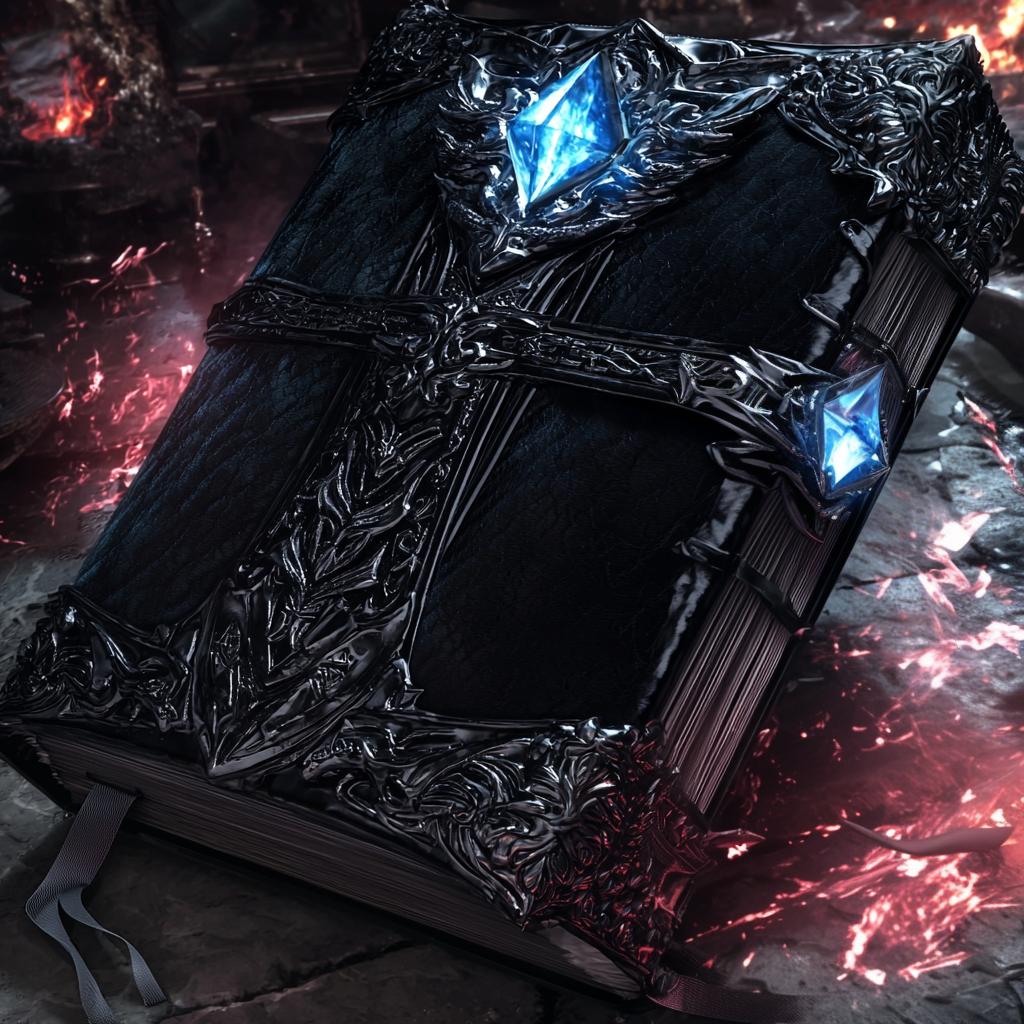
In early 1303, at the unprecedented age of 12, Sana became the youngest wizard in Xeres history when she assisted her mother in completing the mythic dungeon Duraz-Khul. Her exceptional control over mana far outshined many superior magicians, and it was during this time that she revealed her unique ability to read seemingly hidden messages between the lines of content in books. Her "Deeper Understanding" allows magic subtext to manifest and come alive for her while reading, granting her special abilities and talents that no one else seems capable of possessing. However, this extraordinary gift came with a terrible cost: the tremendous magical abilities she had acquired were literally draining the life from her body, causing severe nosebleeds and eventually leading to her temporary death when she overextended herself. Only Arties' skilled healing magic saved her from permanent loss.
Ultimate Sacrifice and Rebirth
In late Goldenleaf 1303, when Sana learned that her mother and brother had been kidnapped by General Taxin of the Black Dragon Army, she made the ultimate sacrifice to save them. Despite knowing it would cost her the last of her life essence, she used her telepathic abilities to locate them, arriving just in time to witness Taxin murder Tingle by slashing his throat. In her rage and desperation, she activated her most powerful ability, "Final Act," unleashing destruction that eradicated Taxin's entire army and left him mortally wounded. Even as she fell lifeless from the sky, the secondary effects of her sacrifice brought Tingle back to life and fully healed both him and Arties, demonstrating that her love for her family transcended even her own survival instincts. Her life was ultimately saved by the alien symbiote she had been carrying, which sacrificed itself so that she could live, finally freeing her from the nosebleeds and supernatural strain that had been slowly killing her.
One Event. One Medal.
When King Xaneborr announced the World Games, Sana reviewed the events list and entered exactly one: Girls Magic Damage. Not because she lacked the ability to compete elsewhere. Because she had nothing to prove to anyone except the people who had spent years doubting whether her power was real, controlled, or worthy of the reputation she carried. She took gold. It was not particularly close. She collected her medal, said very little about it to anyone, and went home. The medal hangs on the wall next to her door, where she passes it every single day. She has never explained why she put it there, and nobody has been brave enough to ask.
The Virelli Problem
Emeline asked. Sana said no. Emeline asked again with something attached to the asking that was not quite a bribe and not quite an appeal to guilt, and which was definitely both, and Sana said no again. The third time, Emeline looked at her in a specific way, and Sana said fine, once, and I'm not getting dressed up. The occasion was a double date Emeline had arranged with a pair of fifteen-year-old twins, the Virelli brothers, sons of a trade merchant with enough coin and connections to have given both boys an education that most adults in Xeres would envy. Sana arrived prepared to be aggressively indifferent and was prepared to sustain this for the entire evening. Her date was Giorgio. Giorgio was, unfortunately, intelligent. Classically educated in the way that shows not as performance but as reflex, the offhand reference, the considered opinion, the ability to be wrong about something and simply update his position rather than defend it. He played music. He spoke with the kind of measured precision that suggested he had thought carefully about what words were actually for. Sana tried very hard to find the thing she was looking for, the condescension, the hollow confidence, the fundamental emptiness she had reliably found in every interaction with a boy she had ever had. She did not find it. She told herself this was a statistical anomaly. That was a year ago. They have met six times since. Giorgio has said plainly that he likes her. Sana has said, with equal plainness, that she is simply bored and this is convenient. She has said this approximately once per visit. She keeps coming back.
Before Dawn
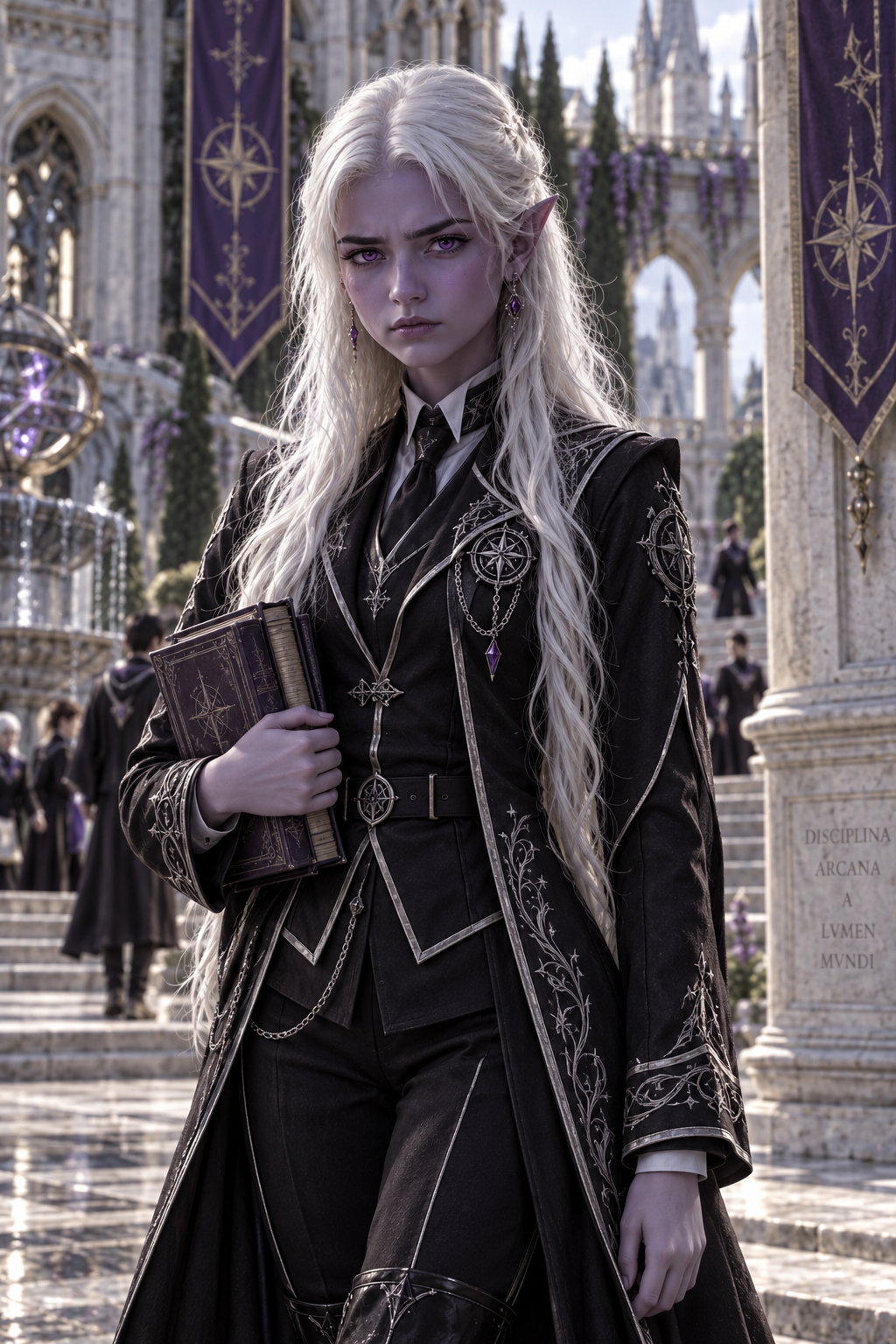
In the early hours of Greenrise 28, before the sun had any business being up, Sana and her mother had the kind of fight that only happens between two people who love each other enough to be genuinely dangerous about it. It started as something else, some logistical disagreement that does not matter because it was never actually about logistics, and it escalated until Sana was standing in the kitchen at three in the morning with her arms at her sides instead of crossed, which is how Arties knew it was real. Sana broke. Not the way buildings break, with spectacle and debris. The way a dam breaks: one crack, then everything behind it. She said Spark's name out loud for what might have been the first time since he died. She said she had loved him. She said his death had made her question whether she was capable of love at all, whether the part of her that knew how to care about someone without analyzing it first had been buried with him, whether everything she felt for her family was genuine or just a pattern she had learned to perform because the alternative was being alone in her own head forever. She said all of this in the specific, precise, devastating language of someone who had been composing the sentences for months and had only now lost the ability to keep them inside. Arties did not interrupt. Arties held her. Sana let her, which was the hardest part. By the time the sun came up, Sana had agreed to guide Attritti and Madrov to Nokko safely. It was a task. She could do tasks. Tasks did not require her to feel anything she was not ready to feel. At Nokko's, after watching Attritti become a Dracosylph and speak his first word, after watching Madrov wrestle with his guilt and come out the other side as a Shadowtitan, Sana made a decision of her own. She told Nokko she wanted to become a Drow Noble. She said it was the logical choice. From a pure power-scaling perspective, it was objectively the most advantageous racial option available to her, and she cited three specific statistical benefits without being asked. All of this was true. None of it was the reason. The reason was standing in the Geodegazer kitchen at three in the morning, holding her while she cried, and had never once stopped loving her despite every wall Sana had built between them. She walked out of Nokko's with dark skin and silver-white hair and the elegant pointed ears of her mother's race, and she did not explain herself to anyone, and she did not need to.
Goldenleaf 8, 1306
Sana does not make announcements. She made one anyway. On the morning after Goodberry's dead came back, after her mother's hand had been the last steady thing in a room full of impossible noise, after Sana herself had stood very still in a crowd outside the Crystalleaf workshop for reasons she declined to examine too closely, Spark found her exactly where he always used to, at the corner table of the little shop by the crystal market, a book open in front of her that she was not reading. He asked, with the specific bluntness of someone who had recently discovered he might not get a second chance to ask anything, whether the thing she had apparently said out loud back in Greenrise (a thing Attritti and Madrov had, with catastrophic lack of subtlety, already told him about) was still true now that he was not dead. Sana closed the book. She said that of course it was true, she does not say things she does not mean, and that he had taken an unacceptably long time to ask. Whatever had been quietly cooling with the Virelli boy (pleasant, educated, chronically inconvenient in his continued existence) had already finished cooling on its own well before that conversation, and neither of them felt any need to say a formal word about it. Spark is, infuriatingly, the only man she has met who can follow an argument through six variables without losing the thread and without once making her feel like something to be managed. He is not afraid of her. That, more than anything else about him, is the whole of it.
By evening it was common knowledge across half of Goodberry, delivered mostly by people who had not been told and had simply seen the two of them walking to the workshop together at a pace that suggested neither one was in any hurry to arrive. Arties said nothing beyond a look that Sana chose not to interpret. Emeline said a great deal, none of which Sana dignified with a response beyond confirming, once, when directly asked, that yes, it was Spark, and no, she would not be discussing it further. The girl who once called boys "chronically under-read" has apparently made her single, permanent exception, and has no intention of explaining herself to anyone about it. She never does.
Six Months in the Labyrinthium
The Labyrinthium Arcanum is not an ordinary school. It is an ancient academy in Kristofferson that nobody remembers building, and in some sense it is alive: its halls shift and rearrange themselves, it decides for itself who may enter, and it teaches through experiences rather than lectures. Quastos's scholarship got Sana to Kristofferson, but it was the Arcanum itself that let her in, and she considers that the more meaningful endorsement. Six months in, she is thriving, mostly. Its libraries hold books that argue back with their readers, and Sana has rarely been happier. Lessons that repeat until a student understands them almost never need to repeat for her. The Arcanum has also found her weak spots. It rewards curiosity and punishes arrogance, and her temper has sent her down some very long hallways. Once it put her in a wing where magic does not work at all, and she spent what felt like days there, more powerless than she has been since Hedgewick. She has told no one. The nine pages of questions she brought for her teachers have gone mostly unasked, because the Arcanum has no teachers in the usual sense. The building asks the questions, and it seems to have noticed that hers are always about magic and never about herself. Twice now she has walked out of a lesson knowing something she does not remember learning, which is deeply unsettling for someone who has never forgotten anything. Students also speak of a part of the Arcanum where you are taught by yourself. It has not appeared to her yet, and she has said, more than once and unprompted, that she has no interest in it.