From Dockworker's Son to Ship's Boy
Stephen Crews was born to a struggling dockworker and a tavern cook in a forgettable port town, far from the respectable shores of Tully, where survival depended on quick wits and quicker hands long before any formal education entered the picture. By age twelve, he was working as a ship's boy on merchant vessels, learning navigation and combat alongside the fine art of creative inventory management that would serve him well in future endeavors. His quick mind and quicker hands ensured his rapid ascent through the ranks, though not always through legitimate means; he discovered early that the world rewarded those who seized opportunities rather than waiting for them to be offered. The harsh realities of merchant sailing, where captains were exploited by nobility and trading companies alike, planted seeds of resentment that would eventually blossom into something far more dangerous than simple discontent.
The Birth of Iron Eye
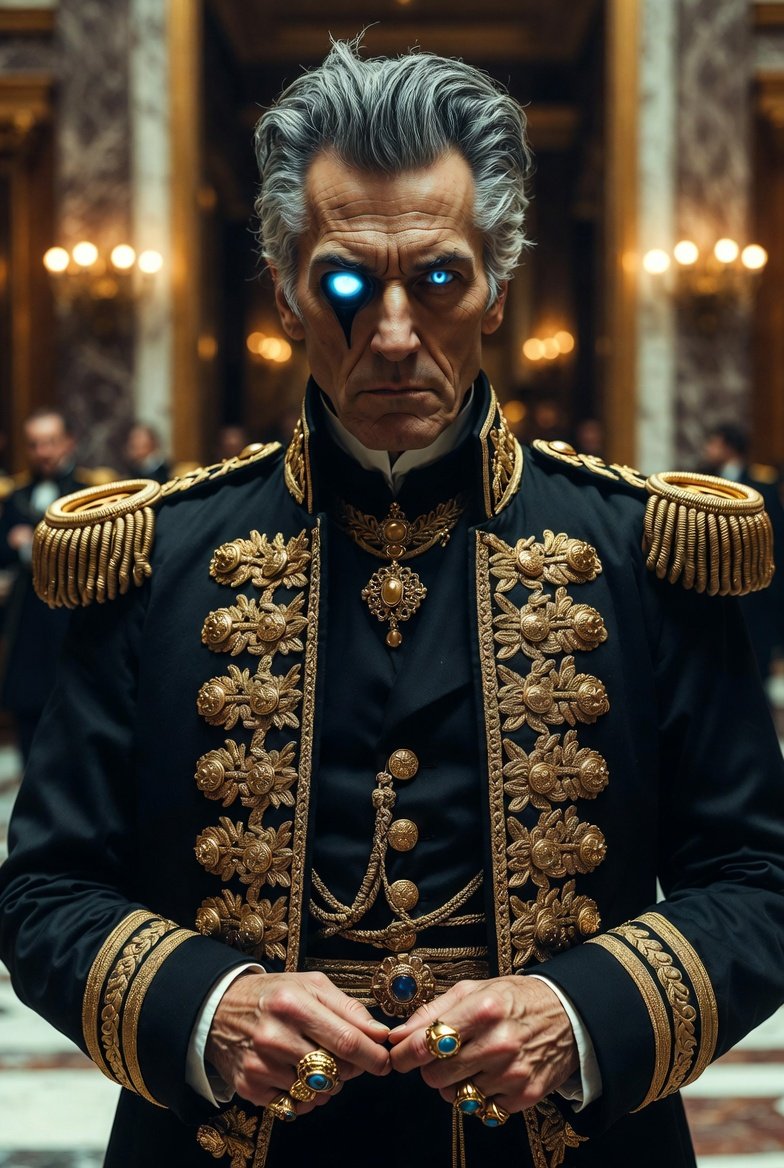
At twenty-three, after years of observing how merchant captains were exploited by nobility and trading companies alike, Crews orchestrated a bloodless mutiny on the merchant vessel Intrepid Fortune that would define his philosophy for decades to come. Rather than executing the captain as was tradition among mutineers, he offered him a choice: join the new enterprise or be left with supplies on a nearby island. The captain, recognizing Crews' leadership qualities and harboring his own grudges against their employers, chose to stay and became Crews' most trusted advisor. This approach of offering choices rather than dealing death became Crews' signature, allowing him to accumulate loyal followers rather than fearful subordinates. For nearly twenty years, his fleet grew to five ships known as the Shadow Fleet, notorious for their precision raids that somehow always targeted vessels belonging to the most exploitative trading companies or most corrupt nobles. The pivotal moment came during a brutal encounter with a rival pirate that left him half-blinded; rather than hiding the injury, he commissioned a master craftsman to create his distinctive steel eye, turning a weakness into his most recognizable feature and earning the name "Iron Eye" that would become legendary.
The Calculated Surrender
At age forty-five, when his flagship was cornered by three naval vessels and outgunned for perhaps the first time in his career, Crews made a decision that shocked his crew: he surrendered. His crew expected contingency plans or a fight to the death, but the pirate captain had recognized one of the naval commanders as someone whose family he had once spared during a raid years earlier, and he gambled everything on that single act of mercy from his past. This calculated risk paid off spectacularly; instead of the gallows, Crews was offered a deal where his tactical knowledge would be exchanged for clemency. For five years, he served as a naval consultant, helping design strategies against his former allies in the piracy world; this betrayal earned him hatred from his former peers but opened doors to legitimacy that had been closed to him for decades. With his accumulated wealth, much of it hidden away during his pirating days, and these newfound connections, Crews established himself as a "retired merchant captain" in Tully, purchasing properties and cultivating an image as an eccentric but shrewd businessman who had simply been very successful in legitimate trade.
Becoming Tully's Ambassador
Within Tully's society, opinions on Crews remained deeply divided between those who admired his reinvention and business acumen and those who whispered about blood money and questionable past deeds that could never be entirely washed clean. When Tully's previous ambassador was assassinated, the city found itself in crisis, needing someone who understood danger and was unbound by traditional diplomatic constraints. Mayor Benjamin Crane, despite a history of business rivalry with Crews, recognized in the former pirate the perfect candidate for this dangerous position. Crews accepted the ambassadorial appointment partly to prove he could succeed in "legitimate society" on his own terms, partly to escape mounting boredom in retirement, and partly out of genuine concern for Tully's future. He threw himself into the role with the same calculated risk-taking that kept him alive at sea, understanding that diplomacy required the same fundamental skills as piracy: reading people, identifying leverage, and knowing when to negotiate versus when to apply pressure.
When Tully Fell
The attack on Tully came with a horror that even Crews' decades of violence had not prepared him for, as Oraeus deployed Eldritch Beasts that savaged and corrupted the city with supernatural malevolence beyond conventional warfare. Crews found himself coordinating desperate evacuation efforts while watching the city he had grown to genuinely care about fall under an onslaught that conventional military tactics could not counter; the beasts seemed to feed on fear itself, growing stronger as the defenders' morale crumbled. He barely escaped with his life aboard one of the last ships to leave the harbor, watching from the deck as Tully was consumed by forces that seemed to mock everything he understood about combat and strategy. The guilt of survival while others remained trapped gnawed at him during the evacuation, particularly the knowledge that his tactical genius was utterly useless against enemies that defied natural law. In those dark days of Tully's occupation, Crews felt the specter of irrelevance he had always feared becoming reality; what good was a strategist when the enemy played by no comprehensible rules?
Ferrying the Southern Coalition
When Xaneborr began organizing the liberation of Tully while Arties prepared to assault Oraeus itself, Crews found new purpose in the only role available to a man whose city was occupied: logistics. He threw himself into ferrying troops and supplies from Oraeus to Verdant Hold, where the Southern Coalition was staging their operations under Arties' leadership. The work was unglamorous and frustrating for someone accustomed to command, reduced to running supply lines like a common merchant rather than planning strategies or leading forces into battle. Yet Crews understood that wars were won on logistics as much as tactics, and he used every contact from his pirating days to secure additional vessels, safe routes, and reliable crews for the supply runs. His ships became lifelines for the Coalition, carrying not just supplies but also intelligence gathered from various ports, and his old smuggling routes proved invaluable for moving resources without attracting unwanted attention. Though it galled him to play such a supporting role, Crews recognized that his greatest contribution to Tully's liberation might be ensuring that those who could fight had everything they needed to do so effectively.
The Battle of Verdant Hold
Months after Tully's liberation by Xaneborr's forces, the Chromatic Council launched their assault on Verdant Hold in an attempt to crush the Southern Coalition once and for all. Crews, who had been making a supply run when the attack began, suddenly found himself in a position where his ferry captain role could transform into something far more significant. He rallied his three ships full of pirate retirees, men and women who had followed him through hell itself during their seafaring days and now jumped at the chance for one more fight. While the main battle raged on land, Crews led his small fleet in a devastating attack on the Council's water-bound forces from behind, utilizing every dirty trick and unconventional tactic he had learned during twenty years of piracy. The Council's naval commanders, accustomed to conventional maritime warfare, found themselves completely unprepared for Crews' approach, which treated their formation not as a military engagement but as targets for precision raids. His attack shattered their naval support at a critical moment in the battle, contributing significantly to the Southern Coalition's victory and the final elimination of the Chromatic Council. In that battle, Crews proved that his tactical genius was far from irrelevant and that old pirates could indeed teach new enemies devastating lessons about underestimating experience.
Return to a Liberated City
Following the victory at Verdant Hold and the elimination of the Chromatic Council, Crews returned to a liberated Tully that bore scars from Oraeus' occupation but still stood proud on its coastal hills. The city welcomed him back not just as an ambassador but as someone who had proven his loyalty when Tully needed him most, ferrying supplies and ultimately helping secure the victory that ended the Council threat forever. He found that his ambassadorial position now carried weight it had never possessed before, as other cities recognized that Tully's representative was someone who would act decisively when diplomacy failed and who commanded resources beyond what his official title suggested. Crews settled back into his role with genuine contentment, having found that balance between his pirate past and his legitimate present; he no longer needed to prove himself to Tully or to himself, secure in the knowledge that when his city faced its darkest hour, he had risen to meet the challenge in the only way he knew how. He serves now as Tully's ambassador with pride, bringing to diplomatic negotiations the same blend of charm, intimidation, and strategic thinking that once made him one of the most successful pirate captains on the western seas.