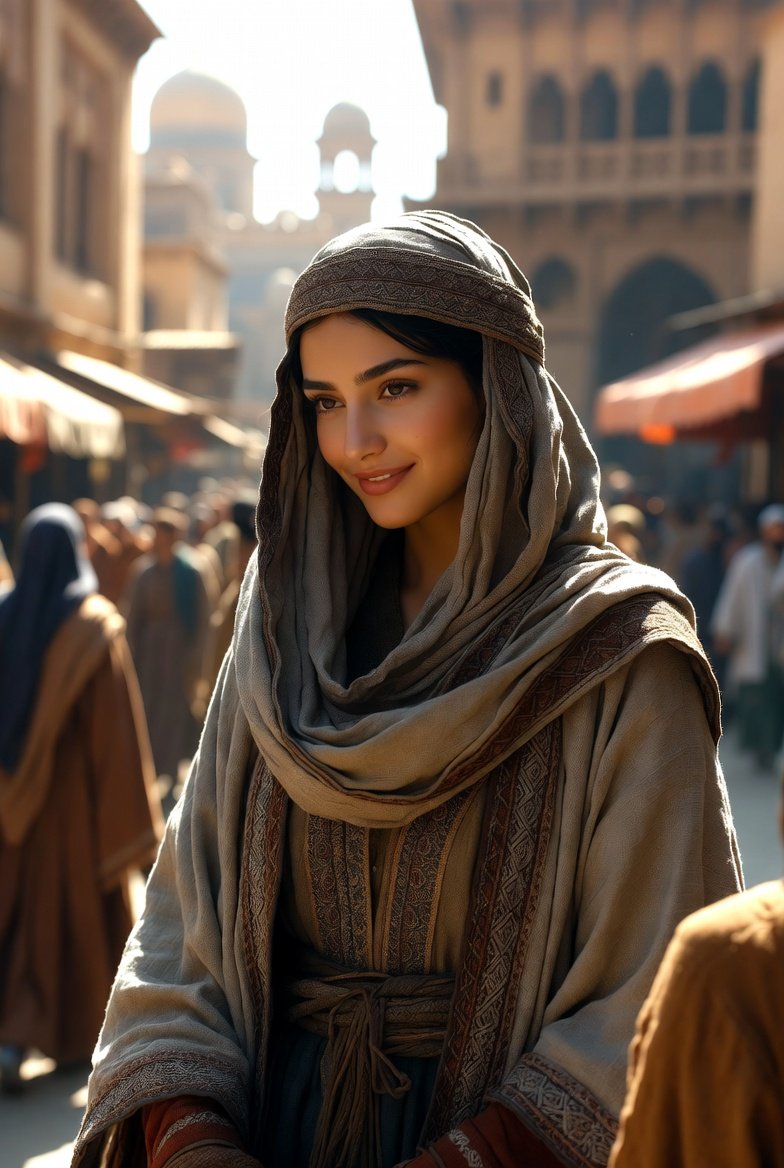
Heritage of Healing in Uir
Born into a family of healers in Uir's Temple Ward, Samira grew up surrounded by both traditional medicine and progressive healing practices, learning from an early age that the two approaches could complement rather than contradict each other. Her mother was a respected midwife who served in the Sultan's palace, attending to the births of nobility and commoners alike with equal dedication, while her father specialized in herbal remedies in the Great Bazaar, known throughout the city for his ability to create medicines for ailments that stumped other practitioners. From an early age, Samira showed an unusual talent for calming expectant mothers, seeming to instinctively understand their fears and needs, combined with an intuitive understanding of healing herbs that impressed even her experienced parents. The warmth in her hands, which would later become her trademark, manifested during her childhood, and her family recognized it as a gift that marked her for the healing profession.
Training at the Temple of the Dusk Lord
Samira's formal training began at the Temple of the Dusk Lord, one of Uir's most prestigious institutions for medical education, where she learned to combine traditional midwifery techniques passed down through generations with more modern medical practices developed through systematic study and experimentation. Her natural empathy and steady hands quickly marked her as exceptional among her peers, someone who possessed not just technical skill but the temperament necessary for managing the unpredictable nature of childbirth. By her sixteenth year, she was assisting with difficult births throughout Uir's various districts, from the palace to the poorest neighborhoods, earning recognition for her ability to bridge the gap between wealthy and poor patients. She treated all with equal care and respect, believing deeply that every mother and child deserved the same level of attention and dignity regardless of their social station or ability to pay.
Service During the Sandstorm Season
During a particularly severe sandstorm season that trapped many of Uir's poorest residents in their homes without access to medical care, Samira organized a group of healers to visit the city's most neglected districts. They didn't just provide emergency medical treatment but also taught basic medical care and sanitation practices that could prevent future crises, recognizing that knowledge was often more valuable than temporary intervention. This experience profoundly affected Samira, showing her the importance of bringing medical knowledge to communities that lacked access to proper healthcare and the difference that education could make in preventing needless deaths. She began to see her calling not just as treating individual patients but as establishing sustainable medical infrastructure in places where it was desperately needed. When she heard about the growing town of Goodberry and its need for trained medical professionals, she saw an opportunity to make a real difference in a developing community.
Arrival in Goodberry and Establishing Practice
The decision to leave Uir wasn't easy, as it meant departing from her family, her established reputation, and the familiar comforts of a great city, but Samira saw it as her calling to help establish proper medical care in developing communities that were building their futures. She brought with her not only her skills and carefully assembled medical supplies but also a vision of creating a network of trained midwives and healers throughout the region, multiplying her impact by teaching others. Her methods combined the best of Uir's ancient healing traditions with practical innovations, always emphasizing the importance of cleanliness, patient dignity, and detailed record-keeping that could help future practitioners learn from each case. She quickly earned the trust of Goodberry's community through her professional competence and genuine compassion, treating the settlement's expectant mothers with the same care she would have given to nobility in Uir's palace. It was during this time that she met Farid, a merchant who had also come from Uir and who appreciated both her dedication to her work and her deep connection to their shared cultural heritage.
The Night of Sowing and Unexpected Motherhood
Everything changed during what would later be called the "Night of Sowing," a mysterious event that resulted in approximately five percent of Goodberry's population becoming pregnant simultaneously, including Samira herself. The unprecedented wave of pregnancies pushed her skills to their absolute limit, as she suddenly found herself responsible for coordinating care for dozens of expectant mothers while also experiencing pregnancy for the first time. The irony of the situation wasn't lost on her; she who had guided so many women through this journey now found herself walking the same path, experiencing firsthand the fears, discomforts, and anticipation she had previously only observed professionally. Her relationship with Farid deepened rapidly as they navigated this unexpected development together, and they married in a simple ceremony that reflected their practical natures and shared values. Through her own pregnancy, Samira gained insights that years of professional experience could never have provided, understanding on a visceral level what her patients endured.
Birth of Rafi and Temporary Retirement
On Goldenleaf 14, 1303, Samira and Farid welcomed their son Rafi into the world, a healthy human boy whose arrival transformed Samira's understanding of both her profession and herself. The experience of giving birth, despite her extensive knowledge and preparation, proved more challenging and profound than she had anticipated, teaching her lessons about vulnerability, trust, and the sacred nature of the mother-child bond that no amount of professional training could have conveyed. In the days and weeks following Rafi's birth, Samira made a decision that surprised many who knew her work-focused nature: she chose to temporarily retire from active midwifing to focus entirely on her son's most important formative months and years. This wasn't abandoning her calling, she explained to those who questioned her choice, but rather honoring it more deeply by recognizing that her own child deserved the same devoted attention she had always insisted every infant required. She remains available for emergency consultations and continues to train other women in basic midwifery, but her primary focus has shifted to Rafi and to experiencing firsthand the journey she has helped so many others navigate.