Description
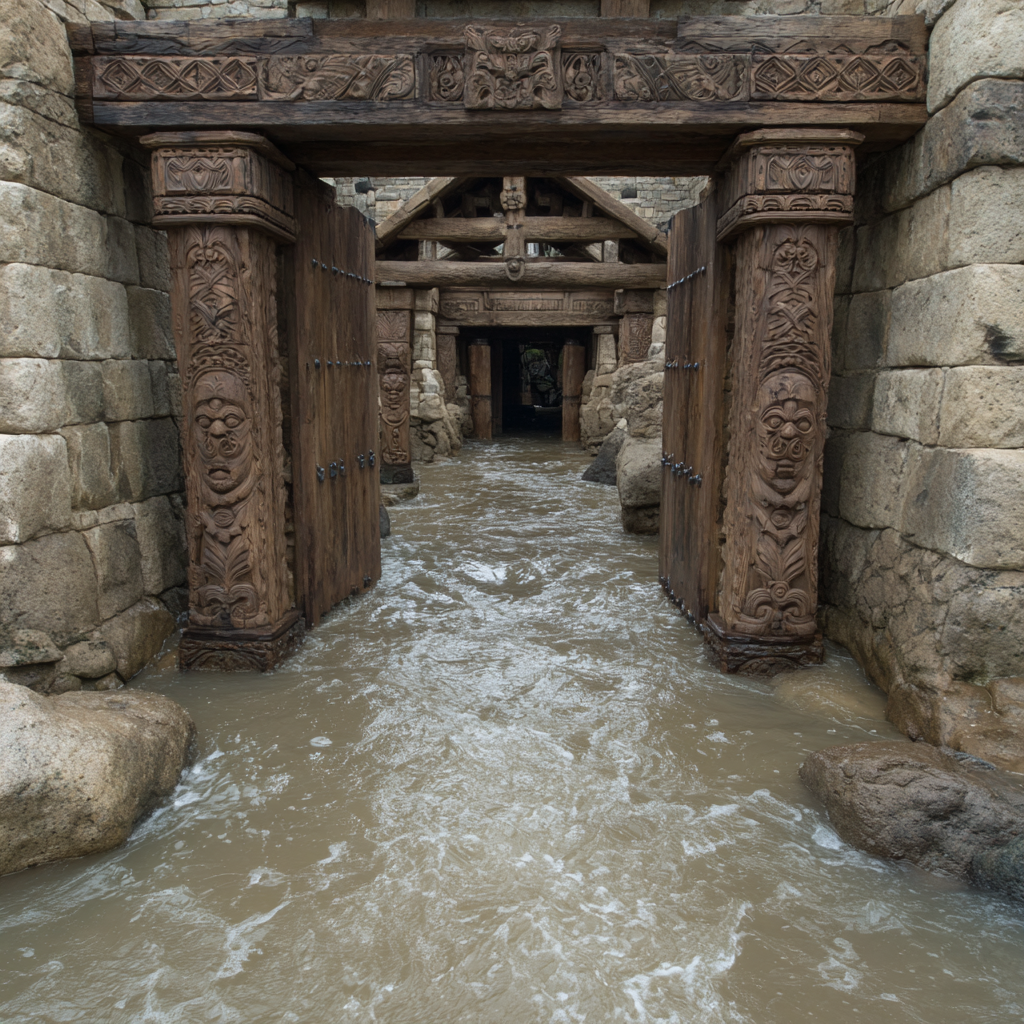
Each major gate is constructed from layers of thick ironwood planks reinforced with bronze fittings, mounted in grooved stone pillars sunk deep into the sandbar foundations. The gates slide vertically within these grooves, operated by a system of counterweights, ropes, and wooden gears housed in protective shelters beside each gate. When lowered, the gates sit flush with the channel bottom, allowing water to flow freely over them. When raised, they create barriers that redirect surging tidal waters exactly where the defenders wish them to go. The gate faces are carved with images of Tangaroa controlling the seas, and each bears inscriptions asking the ocean god to lend his power to the settlement's defense.
The true genius of the system lies in the carefully excavated defensive channels that connect the gates. During low tide, these channels appear as shallow trenches in the sand, easily crossed and seemingly innocuous. However, when the tide begins to rise and the gate operators execute their defensive protocol, the channels transform into raging torrents of chest-deep water flowing at dangerous speeds. The gate keepers can selectively open or close different gates to flood specific approach routes while keeping others dry, creating a dynamic maze of water barriers that can be reconfigured within minutes based on where threats appear.
At strategic points along the channels, the Vaitafe engineers have incorporated catch basins and retention pools. These cleverly designed features trap and hold seawater even as the main tide recedes, maintaining permanent water obstacles in crucial defensive zones. Stone-lined settling ponds allow silt and debris to drop out, keeping the water clear enough to see through while denying enemies the cover of murky conditions. Wooden grates beneath the water surface prevent swimming infiltrators from using the channels to approach the walls, while the grates' spacing allows the free flow of water and small marine life.
The gate control stations are built as small fortified positions, essentially miniature towers where the gate operators can work while protected from enemy missiles. Each station contains backup manual controls in case the main mechanisms are damaged, detailed tide tables carved into wooden boards, and signal flags to coordinate actions between different gates. The operators train extensively to read the tide conditions, understanding exactly how long each gate configuration will take to flood and how different moon phases affect the volume and speed of water flow. During an attack, skilled gate operators can time their actions to coincide with incoming tides, multiplying the defensive effect by using the ocean's own momentum. The Tidal Gates stand as proof that the Vaitafe people do not merely live alongside the sea, they have made it an active ally in their defense.
Benefits
When activated during high tide, enemies attempting to cross flooded channels must make DC 20 Swim checks or be swept away, and the rushing water counts as difficult terrain even for successful swimmers. The gate operators can reconfigure the water barriers as a standard action, adapting defenses to meet threats from different directions. Additionally, the retained water pools provide a consistent source of fresh seafood (small fish and crustaceans trapped during gate operations), generating 50 pounds of seafood weekly. This upgrade generates 5 Prestige, as the ingenious water-based defenses showcase both the engineering prowess and deep understanding of the tidal environment that define Vaitafe culture.