Description
The trap placement follows a sophisticated pattern known only to the settlement's defenders. Safe approach routes wind through the trapped zones in seemingly random patterns, marked by subtle signs that the Vaitafe have learned to recognize: certain shells arranged in specific ways, particular pieces of driftwood positioned at exact angles, or small stone cairns that appear natural but carry meaning to trained eyes. These markers are deliberately obscure, appearing as nothing more than the random detritus of the tides to outsiders, yet they guide defenders safely through the killing field. The trap specialists regularly walk these safe routes to maintain both the markers and their own familiarity with the passages.
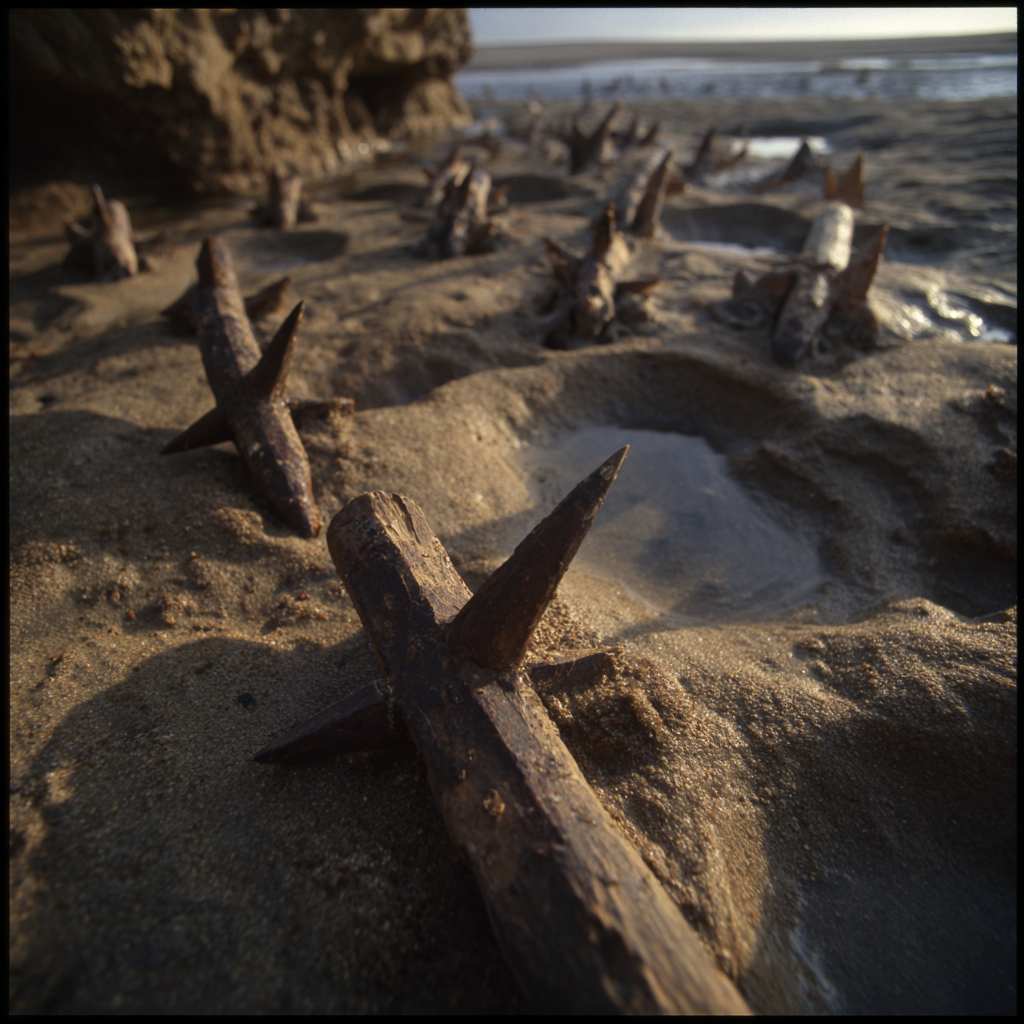
The spike traps come in several varieties, each suited to different tactical situations. Simple single-spike traps consist of individual stakes positioned to catch unwary feet, causing painful puncture wounds that slow attackers and potentially cripple them. Cluster traps feature multiple stakes grouped closely together in shallow pits disguised with thin layers of sand and seaweed, creating zones where even a careful step might land on multiple spikes. The most insidious are the tilting traps, where weighted stakes lie flat beneath the sand until pressure triggers a spring mechanism made from bent wood and rope, causing the spikes to snap upward with enough force to penetrate leather boots and even light armor.
Maintenance of the spike field is a constant and meticulous task. After each high tide, the trap specialists must inspect the entire network, ensuring that tidal action has not displaced or exposed the traps. Sand must be carefully redistributed to maintain proper concealment, damaged stakes must be replaced, and the spring mechanisms of tilting traps require regular checking to ensure they remain functional despite the harsh salt water exposure. The specialists also adjust trap positions seasonally as shifting sandbars alter the approach routes, always maintaining the deadly maze while preserving the hidden safe paths.
The psychological effect of the spike traps often proves as valuable as their physical damage. Enemy forces that discover the traps through painful experience become hesitant and slow, carefully testing each step and losing cohesion as formations break apart. The knowledge that any patch of innocent-looking sand might conceal a crippling wound saps morale and turns what should be a simple approach into a nerve-wracking ordeal. Meanwhile, defenders who know the safe routes can move through the trapped zones with confidence and speed, pressing attacks against enemies who dare not advance quickly. The Spike Traps transform the settlement's tidal approaches from a potential vulnerability into a deadly killing ground that heavily favors those who call this place home.
Benefits
Enemy forces approaching during low tide must make DC 18 Perception checks to notice the traps. Failure results in 2d6 piercing damage from stepping on spikes, and victims must succeed at a DC 18 Fortitude save or have their movement speed reduced by half for 24 hours due to foot injuries. Each 10-foot square of trapped sand has a 40% chance of containing a trap. Enemy forces aware of the traps must move at half speed through the approaches, negating any charge bonuses and making them vulnerable to ranged attacks from the settlement. This upgrade generates 3 Prestige, as the clever and deadly defenses demonstrate the Duke's strategic acumen and the Vaitafe people's mastery of their tidal environment.