Description
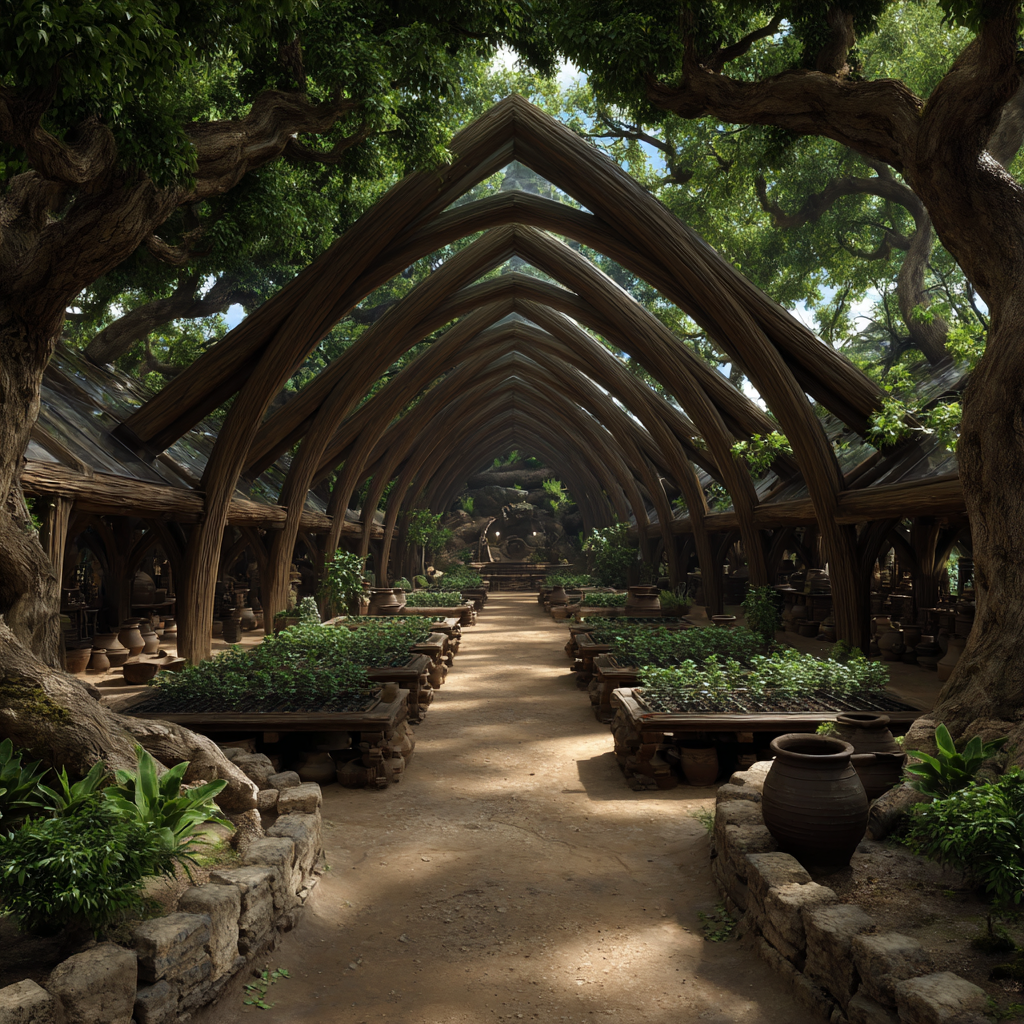
The Willow Whispers Nursery occupies a gently sloping hillside near the Crystal Streams where water access is reliable and the southern exposure provides optimal sunlight throughout most of the day. The facility spreads across four acres divided into specialized zones, each designed to meet the specific needs of different plant types during their vulnerable early growth stages. The entrance is marked by an archway formed from two ancient willows whose branches have been trained to grow together overhead, creating a living gate that gives the nursery its name and establishes the reverent, peaceful atmosphere that pervades the entire operation. These willows are said to whisper to each other and to the plants being raised here, sharing wisdom accumulated over centuries and blessing each seedling with the strength and resilience needed to thrive. Beyond the archway, crushed stone paths wind between growing areas, designed wide enough for carts to navigate while keeping foot traffic away from delicate plants. The entire facility is enclosed by a woven willow fence that keeps out foraging animals while maintaining the natural aesthetic, its living posts sprouting fresh growth each spring that is carefully trimmed to maintain the fence's integrity without destroying its organic character.
The propagation greenhouses form the nursery's heart, three long structures built from living wood frames covered with panels of magically treated glass that trap heat while allowing light penetration. The first greenhouse focuses on starting seeds, its interior divided into countless small sections where seeds from hundreds of species are carefully planted in specially mixed soils tailored to each plant's requirements. Seedling trays line wooden benches arranged in rows, each tray labeled with the plant species, planting date, and expected germination timeline. Temperature and humidity are carefully controlled through a combination of ventilation windows that can be opened or closed as needed and a network of shallow water channels running beneath the benches that radiate gentle warmth absorbed during sunny days. The second greenhouse handles cuttings and grafting, where propagation specialists take small branches or roots from mature plants and encourage them to develop into independent specimens, a technique that allows rapid multiplication of desirable varieties and preserves exact genetic characteristics. The third greenhouse serves as a hardening-off space where young plants gradually acclimate to outdoor conditions, spending progressively more time exposed to natural weather before being moved permanently outside. Each greenhouse features its own water supply with collection barrels catching rainwater from the roof, supplemented by stream water when natural precipitation proves insufficient. The accelerated growth properties of the grove mean seedlings mature far faster than normal, with species that typically require years to reach transplanting size instead ready in mere months.
Outside the greenhouses, the open growing fields contain thousands of young trees in various stages of development, organized by species and size. Small saplings barely a foot tall stand in close rows, their roots protected by mulch and their tender stems marked with colored ribbons that indicate their species and age. Larger specimens approaching six or eight feet have been spaced further apart to allow proper crown development, each one staked and tied to prevent wind damage while encouraging straight growth. The fields are organized to replicate natural forest succession, with shade-tolerant species growing beneath temporary canopies while sun-loving varieties occupy open areas. Water is distributed through an ingenious irrigation system of channels and gates that allows any section to be flooded or drained as needed, ensuring each species receives appropriate moisture without waste. Dedicated sections grow specific categories of plants: the reforestation area raises native species intended to restore damaged forest areas or expand the grove's boundaries, the ornamental section cultivates flowering trees and decorative shrubs for landscaping applications, the fruit and nut orchard produces young trees for agricultural use, and the rare species preservation area grows endangered or uncommon plants that might otherwise disappear from the region. Each section is tended by specialists who understand the unique needs and characteristics of their charges, monitoring growth, treating diseases before they spread, and maintaining detailed records that track every plant from seed to transplant.
The nursery also maintains extensive herb gardens where medicinal, culinary, and aromatic plants are propagated for distribution throughout the settlement and sale to outside markets. These gardens are designed as living textbooks, with plants arranged by family and labeled with detailed information about their uses, growing requirements, and harvesting methods. Students from the settlement and visiting herbalists can walk these gardens to learn plant identification and cultivation techniques, making the nursery an educational resource as well as a production facility. A potting shed provides workspace for preparing containers, mixing soils, and packaging plants for transport, its interior walls lined with shelves holding clay pots of every size, coils of twine for securing branches, labels and ink for marking specimens, and tools kept meticulously clean and sharp. Adjacent to the potting shed, a small office houses the nursery's records, comprehensive journals documenting every plant grown, experimental crosses attempted, propagation successes and failures, and observations about how different species respond to the grove's unique conditions. This accumulated knowledge represents a botanical treasure trove that grows more valuable each season as the staff discovers new techniques and insights that could benefit plant cultivation efforts across all of Xeres.
The Willow Whispers Nursery operates under a philosophy that views each plant as a living legacy being passed forward to future generations. The staff treats their work with reverence, understanding that the trees they plant today may stand for centuries, providing shade, food, shelter, and beauty long after the planters themselves have returned to the earth. The nursery distributes plants freely for settlement landscaping and reforestation projects, viewing this as investment in the community's future rather than lost revenue. Commercial sales to other settlements, estates, and botanical gardens generate income while spreading the Elderwood Grove's reputation as a center of horticultural excellence. Special commissions for rare or unusual species command premium prices from collectors willing to wait months or years for the nursery to successfully propagate difficult specimens. The nursery has established relationships with druidic circles throughout the region, exchanging seeds, cuttings, and knowledge in a cooperative network that strengthens botanical diversity everywhere. Visitors often comment that the nursery feels sacred, a place where the endless cycle of growth and renewal is honored and facilitated, where human hands work in partnership with natural processes to ensure the forest's expansion and enrichment continues generation after generation. The willows at the entrance do indeed whisper, their rustling leaves seeming to carry messages of encouragement to every seedling, every sapling, every young tree preparing to take its place in the great green tapestry that is the Elderwood Grove and the wider world beyond.
Benefits
The Willow Whispers Nursery generates 160 gold per month in profit from plant sales, divided between ornamental trees and shrubs, fruit and nut tree saplings, rare and specialty species, and herb starts. The nursery provides unlimited trees, shrubs, and plants at no cost for settlement landscaping, reforestation, and agricultural expansion, significantly reducing costs for future development projects. The comprehensive plant collection and expert staff grant a +2 bonus to Knowledge (nature) checks related to plant cultivation, identification, or propagation. The facility generates 7 Prestige, reflecting the settlement's role as a guardian of botanical diversity and its long-term commitment to enriching the natural world rather than merely harvesting from it.