Description
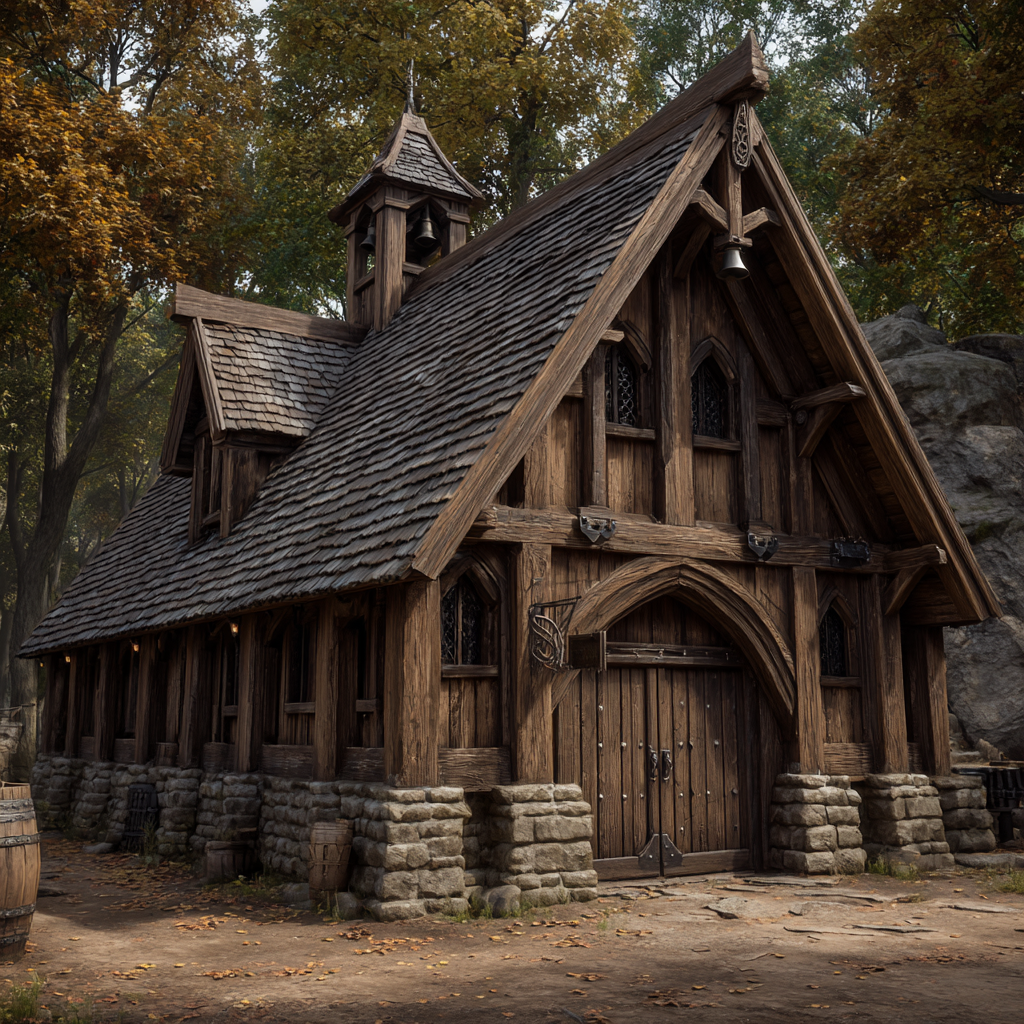
The Tithe Barn is a modest but sturdy structure positioned near the settlement's administrative center, where it can be easily accessed by merchants, tax collectors, and the Duke's representatives. The building measures thirty feet long and twenty feet wide, constructed from thick timber harvested from naturally fallen trees within the grove. The walls are built using traditional post-and-beam construction, with vertical posts supporting horizontal beams and the gaps between filled with carefully fitted planks. The wood has been treated with natural oils and resins to resist moisture and decay, giving the exterior a rich, honey-colored appearance that weathers gracefully while maintaining its structural integrity through seasons of rain, snow, and sun.
The roof rises steeply to shed rain and snow efficiently, covered with overlapping wooden shingles cut from rot-resistant cedar. This steep pitch creates a small loft space inside, accessed by a sturdy ladder, where less frequently needed records and archived documents are stored in sealed wooden crates. The main roof includes a small cupola at its peak, fitted with shuttered openings on all four sides that can be opened to provide ventilation during warm weather or closed to retain heat during winter. This cupola also houses a bell that the Tithe Master rings each morning to signal the barn is open for business and each evening when it closes, creating a reliable temporal marker for the settlement's commercial activities.
Inside, the barn is divided into two distinct areas separated by a sturdy wooden partition with a lockable door. The front section serves as an office and receiving area, equipped with a broad wooden desk where the Tithe Master conducts business, carefully recording each transaction in bound ledgers. Shelves line the walls, holding reference materials, tax schedules, merchant records, and copies of trade agreements. A substantial iron strongbox, secured with multiple locks and bolted to the floor, holds coins and valuable items awaiting transport to Goodberry. Windows on either side of the entrance admit natural light during the day, while oil lanterns hanging from ceiling hooks provide illumination for evening work.
The rear section functions as a secure storage vault for collected goods and materials that comprise the tithe. Heavy shelving units built from thick oak planks hold crates, barrels, and sacks of various goods, all clearly labeled with contents, value, and collection date. Climate control is maintained through strategic placement of ventilation grates that allow air circulation while preventing moisture buildup that could damage stored goods. The floor is raised on wooden platforms to protect against ground moisture, and the ceiling height is generous enough to allow stacking of containers while maintaining easy access to everything stored. A second door at the rear of the building allows for efficient loading when representatives from Goodberry arrive to collect the accumulated tithe.
The Tithe Barn operates on a strict schedule and according to clear regulations established by agreement between the Duke and the governing body of Goodberry. All commercial enterprises within the Elderwood Grove must register with the Tithe Master and report their earnings monthly. The ten percent tithe applies to all income generated through trade, sale of goods, provision of services, or any other commercial activity conducted within the settlement's boundaries. The Tithe Master maintains meticulous records of all transactions, ensuring accuracy and preventing disputes. Once per month, representatives from Goodberry arrive with secure wagons to collect the accumulated tithe, inspecting the records and verifying that all obligations have been met. This system of transparent accounting and reliable payment maintains the good relationship between the Elderwood Grove and Goodberry, ensuring the dimensional settlement continues to benefit from the protection, trade connections, and magical support that Goodberry provides. The Tithe Barn, though small and purely functional, represents the settlement's commitment to honoring its agreements and participating responsibly in the larger community.
Benefits
The Tithe Barn enables the settlement to engage in legal commerce by providing proper collection and recording of the mandatory ten percent tithe owed to Goodberry. All commercial enterprises must register here before operating. The systematic collection and transparent record-keeping prevents disputes and maintains good relations with Goodberry. The Tithe Barn takes 10% of all gold generation and sends it back to Goodberry as a form of 'tax.' The barn generates 2 Prestige, reflecting the settlement's fiscal responsibility and adherence to proper administrative procedures.