Description
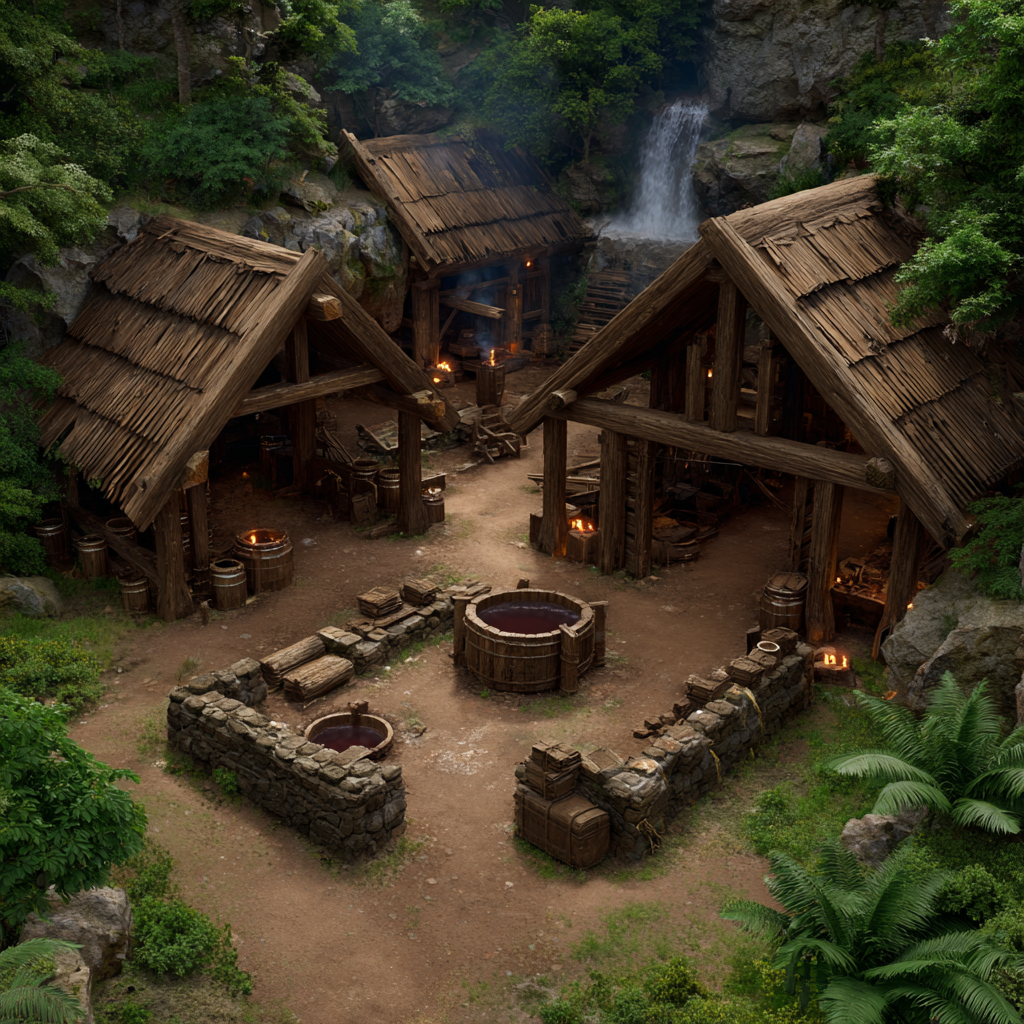
The Tanner's Hollow is strategically located in a natural depression downwind from the main settlement, where the prevailing breezes carry the distinctive smells of hide processing away from residential areas while still keeping the facility within reasonable walking distance. The hollow is sheltered by a ring of mature oak and hemlock trees whose bark provides the tannins essential to the leather-making process. A small tributary of the Crystal Streams runs through one side of the hollow, providing the constant supply of fresh water necessary for soaking and rinsing hides. The workspace consists of several open-sided structures with sloped roofs to shed rain, allowing maximum airflow to help disperse odors while protecting the work areas and drying materials from the weather.
The first station in the tanning process is the fleshing area, where fresh hides are stretched over smooth log beams positioned at a comfortable working height. Here, tanners use curved stone and bone scrapers to carefully remove all remaining meat, fat, and membrane from the flesh side of the hide, a painstaking process that requires both strength and precision. The removed material is not wasted but instead collected in bark containers to be rendered for tallow or composted back into the forest floor. Nearby, soaking vats carved from large logs hold hides submerged in water mixed with wood ash, a natural alkali that helps loosen hair and prepares the skin for tanning. The vats are arranged in a series, allowing hides to progress through increasingly clean water baths as they advance through the preparation stages.
The actual tanning area features multiple large wooden vats filled with tanning solution made from oak and hemlock bark that has been stripped, shredded, and steeped in water to extract its tannins. The solution has a distinctive reddish-brown color and earthy smell, and hides must soak in progressively stronger solutions over the course of weeks, slowly absorbing the tannins that will preserve them and give them their characteristic color and durability. The accelerated properties of Elderwood Grove reduce the typical tanning time by eighty percent, allowing leather to be produced in weeks rather than months, yet the quality remains exceptional. Tanners check the vats daily, moving hides between solutions and monitoring the progress of the tanning by feel and appearance.
Adjacent to the chemical tanning area sits the brain-tanning station, where hides destined to become the softest, most supple leather receive special treatment. This ancient method uses emulsified animal brains, which contain natural oils and enzymes that penetrate the hide and create leather of remarkable softness and flexibility. The process requires intensive hand-working, stretching and manipulating the hide repeatedly as it dries to break down the fibers and achieve the desired texture. A smoking rack stands nearby, where brain-tanned hides are hung over smoldering fires of specific woods chosen for their preservative smoke and pleasant scent. The smoke not only waterproofs the leather but also gives it a beautiful golden to deep brown color and a distinctive aroma that marks it as a product of traditional craft.
The finishing area occupies the final station, where completed leather is softened through repeated flexing, oiled with rendered fats to maintain suppleness, and sometimes decorated with natural dyes or tooled with bone implements to create patterns. A large drying rack built from poles lashed between trees displays finished hides in various stages, from freshly completed pieces to those being conditioned and aged before use or sale. Storage sheds built from woven bark contain finished leather organized by thickness, size, and quality, ready to supply the settlement's many needs. The Tanner's Hollow produces leather for countless purposes: clothing and moccasins that move silently through the forest, bags and pouches for carrying goods, fletching leather for binding arrow points, drum heads that resonate with perfect tone, and armor pieces that provide protection while remaining flexible. The tanners work with reverence for the animals whose hides they process, ensuring that nothing is wasted and that each piece of leather represents the highest quality their ancient craft can achieve.
Benefits
The Tanner's Hollow produces exceptional leather goods. The workshop generates 275 gold worth of processed leather each month. The hollow maintains a stock of leather in various weights and qualities available to settlement craftspeople at a 25% discount from market prices, supporting the broader crafting economy. Additionally, any leather armor crafted from materials processed here gains a +1 bonus to AC due to superior flexibility and durability (this enhancement is nonmagical and does not stack with magical bonuses). This upgrade generates 3 Prestige.