Description
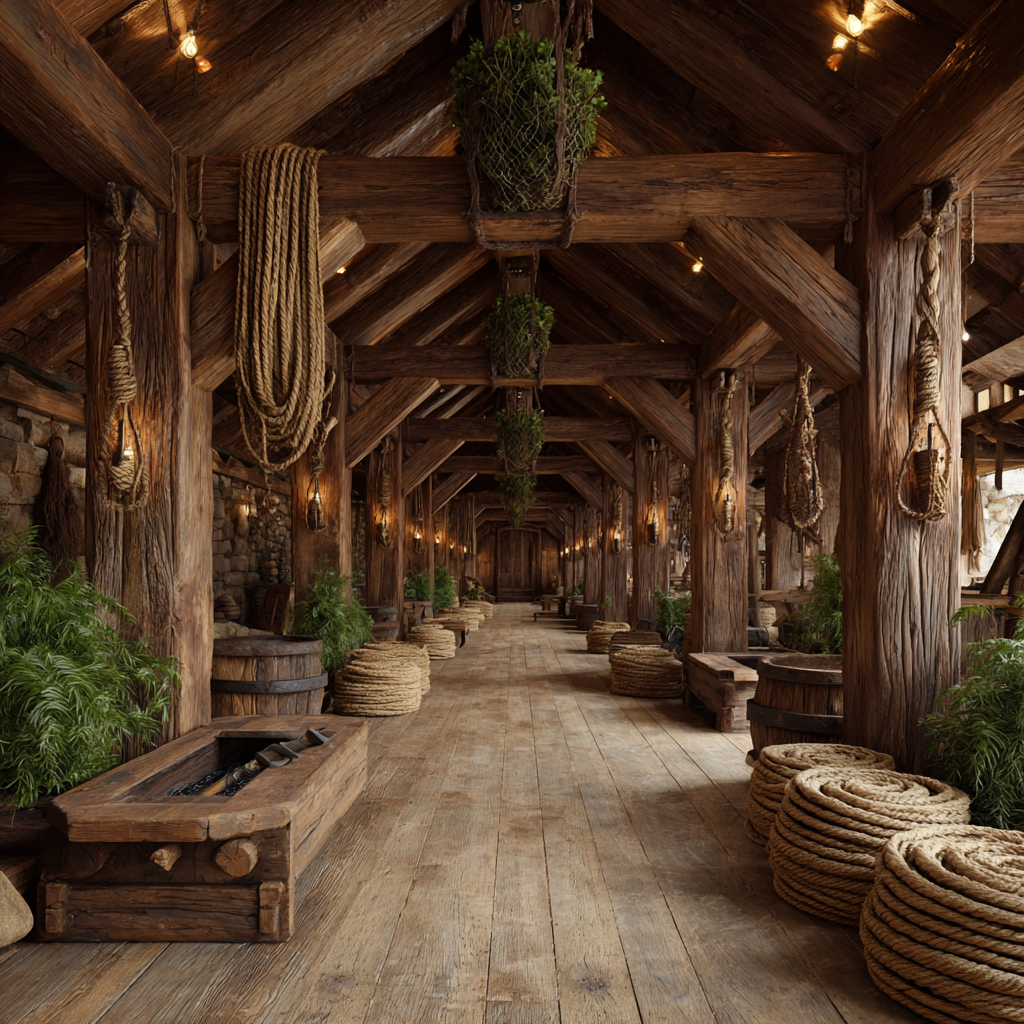
The Rope and Cordage Workshop occupies a long, narrow building positioned parallel to one of the Whispering Paths, its unusual dimensions dictated by the need for extended working length when creating long pieces of rope. The structure features an open front that can be shuttered in bad weather, allowing ropemakers to work with maximum visibility and allowing finished rope to extend far beyond the building itself when necessary. The walls are constructed from vertical poles with woven fiber panels between them, a fitting choice for a building dedicated to fiber work. The roof is steeply pitched to shed rain quickly, as moisture is both friend and enemy to the ropemaker: necessary for keeping fibers pliable during work, but damaging to finished products if allowed to linger. Ventilation is excellent, with the open design ensuring that the distinctive earthy smell of plant fibers never becomes overwhelming.
The preparation area occupies the rear third of the workshop, where raw materials are received, sorted, and processed for use. Bundles of inner bark from basswood, cedar, and willow trees hang from overhead beams, each type selected for specific properties: basswood for strength, cedar for rot resistance, willow for flexibility. Dried plant stalks from nettles, milkweed, and hemp-like plants are stacked in wooden bins, waiting to be processed into usable fiber. Vines collected from the forest, including wild grape and various climbing plants, are coiled and hung to cure, their natural flexibility making them perfect for certain applications. A large wooden trough holds water where fibers are soaked to restore pliability before working, and a selection of wooden mallets and beating stones are used to soften tough materials and separate usable fibers from woody cores. The accelerated growth properties of Elderwood Grove mean that fiber plants reach maturity incredibly quickly, providing a nearly endless supply of raw materials for the ropemakers' craft.
The heart of the workshop is the rope walk, a cleared space extending beyond the building where the actual rope-making takes place. A ropemaker's wheel stands at one end, a wooden apparatus with multiple hooks that rotate when cranked, twisting individual strands of fiber into progressively thicker cordage. For thinner twine and light cord, the ropemaker works at a bench with a drop spindle, the ancient tool spinning steadily as it twists fibers into strong thread. The process requires constant attention and skilled hands, feeding new fibers in at precisely the right moment to maintain consistent thickness and strength. As the rope forms, it is carefully coiled to prevent tangling, and the rhythmic sound of the turning wheel and the swish of moving fibers creates a peaceful, meditative atmosphere that suits the careful nature of the work.
A specialized section of the workshop is dedicated to creating spliced rope and decorative knotwork. Here, experienced ropemakers take finished cordage and transform it into specific tools: climbing ropes with carefully placed hand loops, cargo nets with perfectly uniform spacing, halters and leads for animals, decorative wall hangings featuring complex knots and patterns, and replacement lines for the various pulley systems used throughout the settlement. A teaching area features diagrams of useful knots drawn on bark sheets and practice stations where apprentices learn the fundamentals of rope-making before progressing to full-scale production. Sample ropes of various thicknesses and materials hang on display, showing the range of products the workshop can produce and serving as reference for customers seeking specific types of cordage.
The storage and finishing area houses completed rope products organized by thickness, length, and material type. Thin twine suitable for binding arrow fletchings occupies one shelf, while massive coils of thick rope capable of hauling logs rest on the floor below. All finished rope is treated with natural oils or beeswax to improve water resistance and extend its working life. A waterproofing station near the storage area allows for additional treatment of rope destined for outdoor use or exposure to water, coating it with pine resin or other protective substances. The workshop produces rope and cordage for every conceivable purpose: climbing lines for accessing the canopy, securing materials for construction projects, fishing line for the Crystal Streams, bowstrings for archers, binding material for countless crafts, decorative cordage for ceremonies, and sturdy rope for hauling and lifting heavy loads. The ropemakers take pride in their essential craft, knowing that their work literally ties the settlement together, providing the binding and connecting materials that make so many other activities possible.
Benefits
The Rope and Cordage Workshop produces essential binding materials for the entire settlement. The workshop generates 200 gold worth of rope and cordage each month. Any rope crafted here has 50% more hit points than standard rope of the same thickness due to superior fiber selection and twisting techniques, making it significantly more durable and reliable. This upgrade generates 2 Prestige.