Description
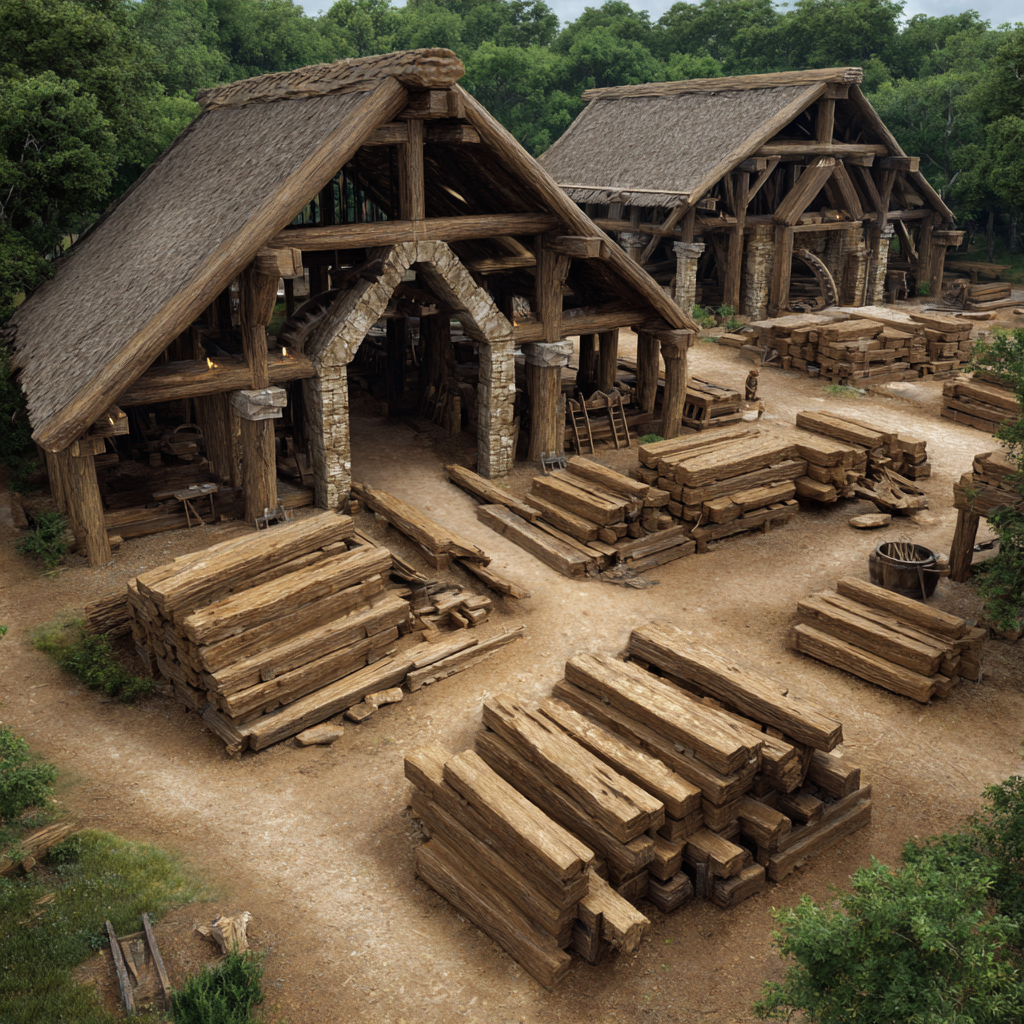
The Lumber Yard occupies a cleared area of approximately five acres positioned near Autumn's Edge where the forest transitions to more open terrain, providing space for equipment, storage, and operations while remaining close enough to the grove for efficient timber transport. The yard is organized into distinct zones that move raw logs through a logical progression from arrival to finished product. The receiving area features a wide stone-paved courtyard where oxen-drawn sleds deliver newly fallen trees collected from throughout the grove by specialized harvesting teams who patrol constantly, identifying deadfall, lightning strikes, wind-damaged specimens, and trees that have died from age or disease. These teams are trained druids or rangers who can assess whether a fallen tree is genuinely dead or merely dormant, ensuring no living wood is ever harvested. They perform brief ceremonies over each collected tree, thanking it for its service to the forest and acknowledging the value it will provide in its next life as lumber. The receiving area includes a sawyer's station where incoming logs are evaluated for quality, species identified, and initial processing decisions made based on wood characteristics, size, and intended market. A comprehensive ledger records every tree processed, documenting where it was found, how it died, what species it was, and how its wood was ultimately used, creating an unbroken chain of accountability that proves the yard's commitment to ethical sourcing.
The primary processing area houses the yard's most impressive piece of equipment: a water-powered saw mill built along a channeled section of one of the Crystal Streams. The mill features a massive circular saw blade nearly six feet in diameter, driven by a water wheel that harnesses the stream's flow to provide consistent cutting power. Logs are secured to a movable carriage that feeds them steadily into the spinning blade, allowing workers to make precise cuts that transform round logs into square timbers, flat planks, or specialized shapes. The saw operator is a master craftsman who can judge grain direction, identify hidden knots or flaws, and position each cut to maximize yield while producing lumber of appropriate dimensions for different markets. The mill produces several standard products including heavy structural beams six inches square and up to twenty feet long prized by builders for framing large structures, planking in various widths from four to twelve inches used for flooring and walls, dimension lumber cut to common construction sizes, and specialty cuts for furniture makers, shipwrights, and craftsmen with specific requirements. The water power allows the mill to operate continuously during working hours, processing several large logs per day depending on their size and the complexity of cuts required. Sawdust and wood chips generated during cutting are not wasted but collected in bins for use as mulch, animal bedding, or fuel for heating, ensuring every part of each tree finds purpose.
Adjacent to the saw mill sits the seasoning yard where freshly cut lumber is stacked for drying, a critical process that removes moisture from the wood and prevents warping, cracking, or decay in finished products. The yard features rows of covered sheds with open sides that protect lumber from direct rain while allowing air circulation essential for proper drying. Lumber is stacked in carefully arranged piles with thin strips of wood called stickers placed between each layer, creating air gaps that promote even drying throughout the stack. Different wood species require different drying times, with dense hardwoods like oak taking up to a year to properly season while softer woods like pine may be ready in just a few months. The yard's elevated drying racks benefit from the grove's accelerated time properties, reducing seasoning periods to approximately 20 percent of normal duration and allowing the yard to maintain faster inventory turnover than conventional operations. A master seasoner monitors moisture content using both traditional techniques such as checking weight and inspecting end grain, and modern methods including moisture meters that provide precise readings. Only when lumber reaches optimal dryness is it moved to the finished goods storage area, ensuring customers receive material ready for immediate use without risk of future dimensional changes.
The finishing and specialty area provides value-added services that command premium prices. Here, skilled craftsmen use hand planes, scrapers, and sandstones to smooth rough-sawn lumber into finished surfaces ready for fine woodworking. A planing station equipped with precision tools can reduce lumber to exact thicknesses and create perfectly flat surfaces. A joinery area prepares specialty items like tongue-and-groove flooring, lap-joint siding, and mortise-and-tenon framing components that arrive at construction sites ready for assembly. The yard also maintains a small carving workshop where particularly beautiful wood sections displaying exceptional grain patterns, burls, or natural coloring are transformed into decorative panels, mantels, or raw blanks for sculptors and artisans. Bark and branches unsuitable for lumber are not discarded but processed separately, with bark going to the tanner's supply or being chipped for garden mulch, while branches are bundled as firewood or crafted into rustic furniture, fencing, and decorative elements. The yard's reputation for quality and ethical sourcing attracts customers from across the region, with merchants arriving quarterly to purchase bulk shipments of standard lumber, while individual craftsmen visit regularly to hand-select specific boards for special projects. The sales office maintains relationships with builders, furniture makers, and construction firms in major cities, ensuring steady demand and favorable prices.
The Lumber Yard operates under Duke Hotaru's personal oversight, with strict protocols ensuring operations never compromise the grove's health or violate druidic principles. Rangers regularly assess whether the rate of tree fall can sustainably supply the yard's operations, adjusting production levels if natural mortality rates decline. A portion of profits are dedicated to reforestation efforts, though in the magically enhanced grove, natural regeneration typically exceeds harvest rates. Workers receive training in proper tree identification, respectful handling of wood, and the spiritual significance of their work, fostering pride in contributing to an operation that generates prosperity without causing harm. The yard has become a model for sustainable forestry, proving that economic success and environmental stewardship are not contradictory but complementary goals. Visitors from other settlements often tour the facility, learning techniques they can adapt to their own regions. The lumber produced here carries a certification mark burned into each board, identifying it as ethically sourced Elderwood lumber and commanding premium prices from customers who value both quality craftsmanship and environmental responsibility. The yard stands as proof that nature's gifts, when received with gratitude and processed with skill, can support a thriving economy while honoring the forest that makes it all possible.
Benefits
The Lumber Yard generates 240 gold per month in profit from timber sales after accounting for operating costs, labor, and equipment maintenance. The yard's ethical sourcing certification grants a +2 bonus to Diplomacy checks when negotiating with druidic organizations, environmental groups, or quality-conscious builders. The yard generates 6 Prestige, reflecting the settlement's successful demonstration that economic productivity and environmental ethics can coexist, and its growing reputation as a source of premium, responsibly sourced lumber.