Description
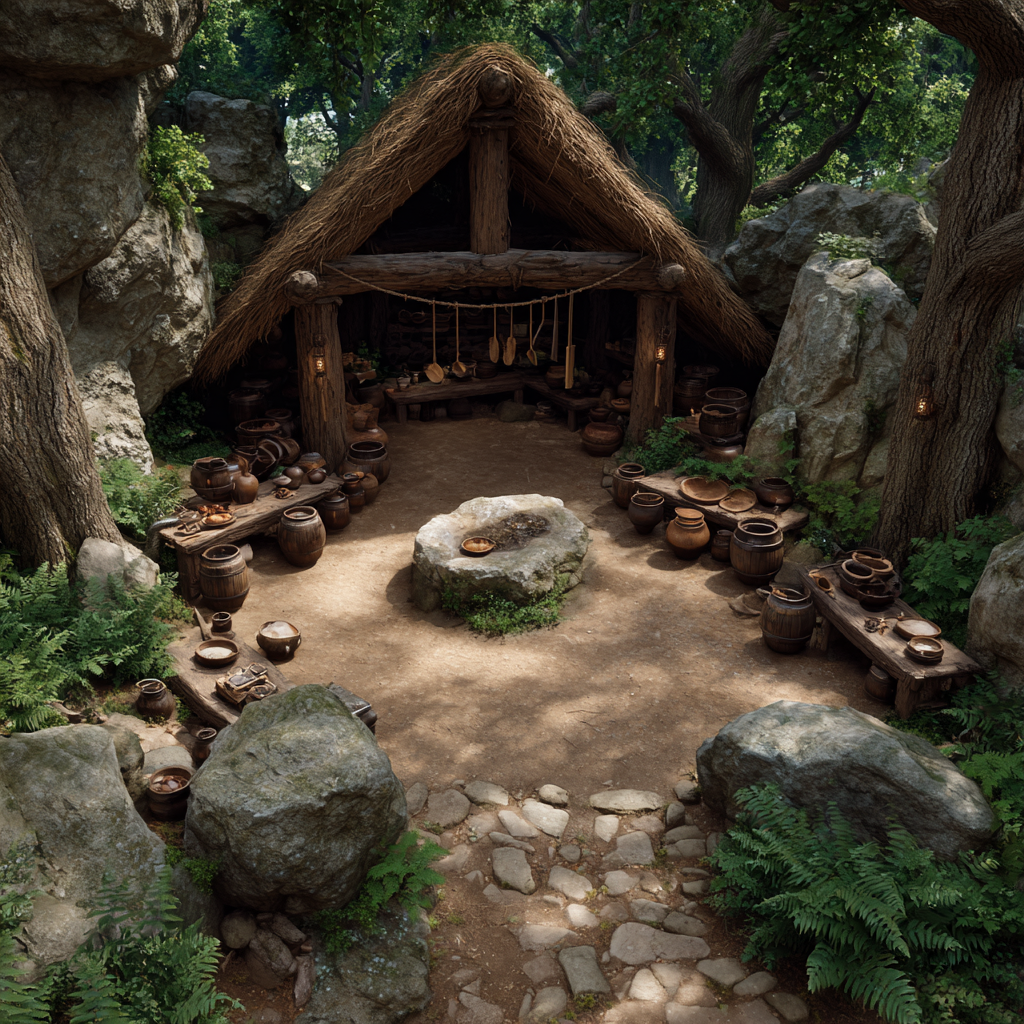
The Fermentation Grove occupies a peaceful dell nestled between several ancient oaks whose massive canopies create a dome of perpetual shade over the forest floor below. The location was chosen specifically for its microclimate, where the thick canopy blocks direct sunlight year-round while allowing filtered light to create a dim, cool environment. Temperatures in this shaded hollow remain remarkably stable, hovering between 55 and 65 degrees Fahrenheit throughout most of the year, which falls within the ideal range for most fermentation processes. The air is noticeably cooler here than in the surrounding forest, and a small spring bubbles up at one edge of the dell, providing fresh water for washing equipment and containers. The dell floor has been cleared of undergrowth and covered with smooth river stones, creating clean, level surfaces for working while allowing drainage and preventing mud. Several flat-topped boulders serve as natural work tables, their stone surfaces cool to the touch and easily cleaned. A simple shelter stands at the center of the grove, constructed from woven willow branches and thatched with overlapping bark sheets that shed rain while allowing air circulation.
Within and around the shelter, the tools and vessels of fermentation are carefully organized. Dozens of clay crocks of varying sizes line wooden shelves, each one glazed on the interior to create a non-reactive surface suitable for acidic fermentation. These crocks range from small half-gallon vessels perfect for experimental batches to massive five-gallon containers capable of producing enough sauerkraut to feed the entire settlement through winter. Wooden barrels constructed from oak and sealed with beeswax stand in neat rows, each one destined for specific purposes based on its size and wood treatment. Some barrels are reserved exclusively for brewing fermented beverages, while others are used only for pickling vegetables in brine. Stone weights of graduated sizes sit stacked nearby, used to keep fermenting vegetables submerged beneath their liquid, preventing exposure to air that could cause spoilage. Glass jars salvaged from traders or crafted by the settlement's artisans hold smaller fermentation projects, their transparent walls allowing the fermentation master to monitor progress without disturbing the contents. A collection of wooden paddles, long-handled spoons carved from different woods, and various straining cloths hang from hooks inside the shelter, each tool designated for specific tasks to prevent cross-contamination between different fermentation projects.
The fermentation process follows careful protocols refined over generations and adapted to the grove's unique accelerated growth properties. Fresh vegetables arrive from the gardens and are immediately processed, washed in the cold spring water, and prepared according to the specific fermentation method being employed. For sauerkraut, cabbage is shredded finely, salted precisely by weight, and packed tightly into crocks where it will ferment in its own juices. Pickled vegetables are submerged in carefully measured brines, with herbs and spices added to develop complex flavors. Fermented beverages begin with precise mixtures of grains, fruits, or honey combined with water and natural yeast cultures maintained by the fermentation master. Each crock or barrel is covered with clean cloth secured with cord, allowing gases to escape while preventing insects and debris from contaminating the contents. The vessels are then arranged in specific locations around the grove based on their temperature requirements: items needing cooler temperatures go closer to the spring, while those benefiting from slightly warmer conditions are positioned farther from the water source. Thanks to the grove's temporal properties, fermentation that would normally require weeks happens in a fraction of the time, yet the flavors develop with the same depth and complexity as traditional long fermentation, producing products that taste as though they have been carefully aged for months.
The variety of fermented products created in the grove is impressive and constantly expanding as the fermentation master experiments with new recipes and techniques. Sauerkraut and kimchi provide tangy preserved vegetables rich in beneficial cultures. Pickled cucumbers, beets, carrots, and mixed vegetables offer flavorful variety to winter meals. Fermented hot sauces made from forest peppers add spicy complexity to simple foods. Cultured butter and soft cheeses produced from milk provided by the settlement's dairy animals gain distinctive flavors from the grove's unique environment. Traditional fermented beverages range from simple fruit wines to complex grain-based drinks, each one developing character during its time in the wooden barrels. Vinegars produced from previous batches of wine or cider serve both culinary and preservation purposes. Even medicinal ferments appear among the crocks, as certain herbs release their beneficial properties more effectively when fermented, creating tonics and remedies used by the settlement's healers. The fermentation master maintains detailed records of each batch, noting ingredients, timing, temperatures, and results, slowly building a comprehensive reference that captures both successful techniques and cautionary tales of experiments that went awry.
The Fermentation Grove serves the settlement in ways that extend beyond simple food preservation. The fermented foods provide crucial probiotics that support digestive health, particularly important during winter when fresh foods are scarce and dietary variety diminishes. The acidic nature of fermented vegetables helps preserve vitamin C, preventing scurvy during long periods without fresh produce. Fermented beverages, consumed in moderation, provide social lubrication during festivals and celebrations while also serving medicinal purposes, as certain fermented drinks are believed to aid digestion and settle upset stomachs. The grove becomes a gathering place for those interested in the fermentation arts, with the master teaching techniques to apprentices and curious residents who want to learn the craft for their own households. The distinctive aromas that sometimes waft from the grove, ranging from the sharp tang of working sauerkraut to the sweet, yeasty smell of fermenting fruit, become familiar and even comforting to settlement residents, markers of abundance being transformed into security against future need. During harvest season, the grove bustles with activity as fresh produce is processed as quickly as it arrives, but even during quiet periods, there is always work to be done: monitoring active fermentations, bottling finished products, cleaning equipment, maintaining the starter cultures that drive the fermentation processes, and planning for the next season's preservation needs. The Fermentation Grove stands as proof that the settlement has mastered not just growing food but transforming it, using ancient microbial allies to create products that nourish, preserve, and delight the community throughout all seasons.
Benefits
The Fermentation Grove can process up to 1,000 pounds of fresh produce per month into fermented products that remain edible for 6 months. The facility produces approximately 200 gallons of fermented beverages annually, which is sold, generating 200 gold in monthly income. This upgrade generates 2 Prestige, as mastery of fermentation techniques demonstrates sophisticated food culture and preservation knowledge.