Description
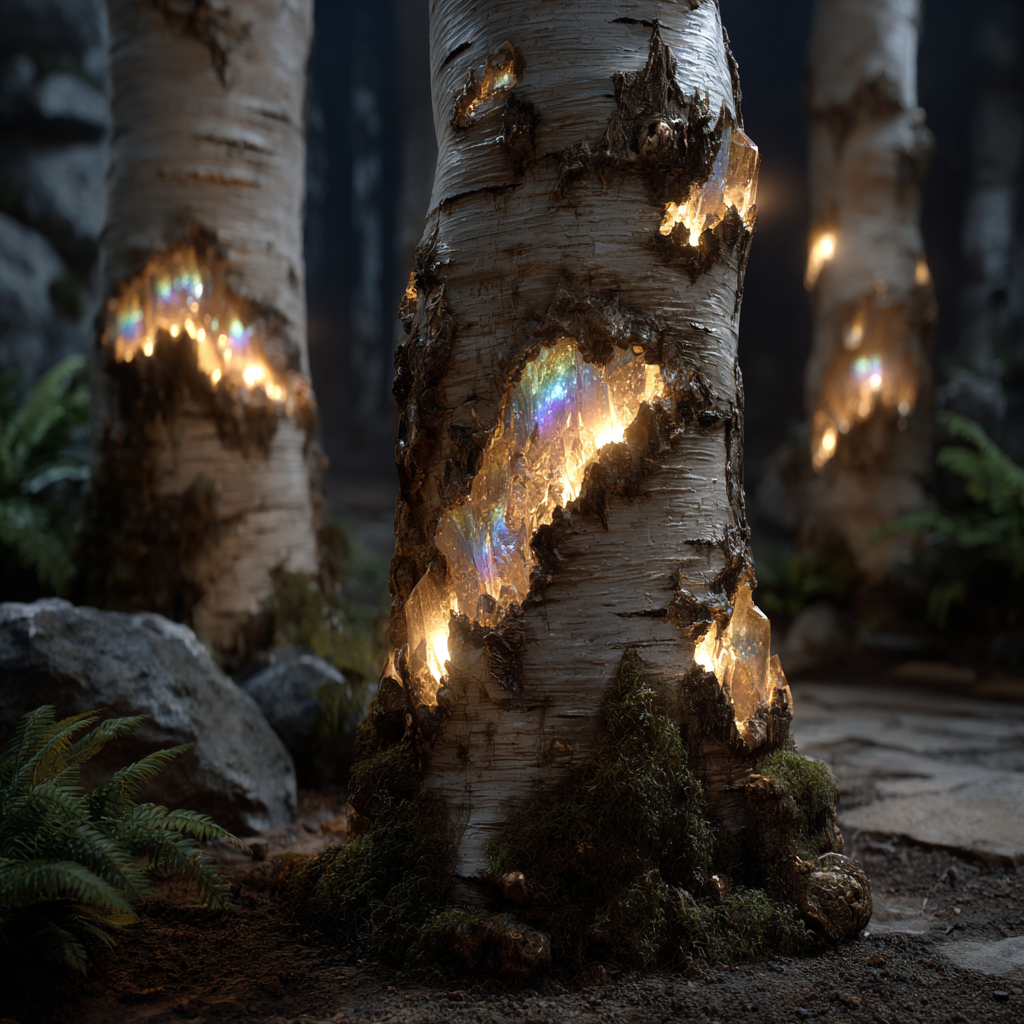
The Silverbark Grove occupies a carefully chosen location near Mossglow Hollow where natural magical currents flow close to the surface, creating an environment rich with ambient arcane energy that permeates the soil and air. The thirty trees that comprise the grove are all white birch, a species chosen for its naturally pale bark and rapid growth, but these are no ordinary birches. Through an intensive multi-year cultivation process involving both druidic plant-shaping magic and arcane transmutation rituals, these trees have been fundamentally altered at a cellular level, their bark transformed into a material that naturally conducts and channels magical energy as efficiently as precious metals conduct electricity. The transformation is visible even from a distance, as the trees' bark exhibits a distinctive metallic luster, appearing to shimmer with liquid silver when light strikes it at certain angles. Unlike normal birch bark that peels naturally in papery layers, silverbark adheres tightly to the living wood beneath, requiring careful harvesting techniques to remove usable sheets without damaging the tree. The bark itself is cool to the touch regardless of ambient temperature, and when tapped gently, it produces a musical chiming sound rather than the dull thud of ordinary wood, as if the surface contains countless microscopic crystals that resonate at specific frequencies.
Creating a silverbark tree requires beginning with healthy young birch saplings no more than two years old, as older trees prove resistant to the deep structural changes necessary for successful transformation. The selected saplings are transplanted to the grove site and planted in soil that has been specially prepared with powdered gemstones, metallic filings from silver and copper, and crushed crystals that possess natural magical resonance. For the first year, the trees receive only normal care aside from monthly applications of water infused with dissolved spell components, gradually introducing magical elements into their systems through the root structure. During the second year, druidic plant-shaping specialists begin the actual transformation process, working with arcane enchanters in carefully coordinated rituals performed at each new moon. The druids coax the tree's living essence to accept and integrate the changes while the enchanters infuse transmutation magic directly into the trunk, slowly converting ordinary cellulose and lignin into the unique quasi-metallic material that characterizes silverbark. The dimensional magic of Goodberry's bubble accelerates this normally decade-long process to just two years, though the trees must still pass through every necessary stage of transformation, simply experiencing them at faster than normal speed. By the third year, the trees begin producing their first harvestable silverbark, though the material quality continues improving for several more years as the trees mature and the magical transformation becomes more deeply integrated into their fundamental nature.
The harvested silverbark possesses remarkable properties that make it invaluable for magical crafting. The material is lightweight yet rigid, with about the same density as ordinary birch bark but exhibiting far greater structural strength, resisting tearing, crushing, and puncturing with resilience approaching thin leather. Its surface can be easily carved, shaped, rolled, or molded when treated with specialized oils derived from moonflowers and alchemical reagents, making it ideal for creating wands, staff cores, scroll cases, component pouches, arcane focus amulets, and countless other magical implements. Most importantly, silverbark naturally conducts magical energy with exceptional efficiency, reducing the amount of power lost during spell channeling by approximately fifteen percent compared to traditional materials like metal or bone. Spellcasters who use silverbark wands and staves report that their implements feel almost alive in their hands, responding to their intentions with subtle warmth and vibration, as if the material itself is eager to serve as a conduit for their will. The bark retains faint traces of the living tree's essence even after harvest, giving items crafted from it an organic quality that resonates particularly well with nature magic, though all schools of spellcasting benefit from its excellent conductivity. When enchanted, silverbark accepts and holds magical imbuements more readily than most materials, requiring fewer component materials and less time to complete the enchantment process, typically reducing costs by ten to twenty percent.
Harvesting silverbark demands specialized expertise and careful timing to avoid harming the living trees that produce it. The grove keepers are experienced druids who can communicate directly with the trees, sensing when bark is ready for harvest and confirming that removal will not damage the tree's health. Silverbark regenerates relatively quickly compared to normal bark, with a tree producing harvestable sheets approximately three times per year, but each harvest must be carefully planned to ensure the tree retains adequate protective covering throughout the process. The actual harvesting technique involves using specialized curved blades made from ironwood, working during the full moon when the bark's magical properties are at peak strength and the material separates most cleanly from the underlying wood. The harvester works methodically around the trunk, carefully scoring the bark in vertical lines and then peeling away rectangular sections measuring roughly one foot wide by two feet tall. The removed bark is immediately placed between sheets of silk cloth that have been blessed by moon druids, preventing the material from curling and maintaining its flexibility during the curing process. Within twelve hours of harvest, the bark is treated with a special oil that preserves its magical conductivity and prevents brittleness, then stored flat in a climate-controlled facility where it will cure for two weeks before being ready for use in crafting.
The grove serves multiple functions beyond simple bark production. It has become a pilgrimage site for wandmakers, staff crafters, and enchanters from throughout the region, who come seeking to purchase silverbark or commission custom implements crafted by the grove's resident artisans. A small workshop adjacent to the grove specializes in creating wands, staves, and arcane focuses from fresh silverbark, with master craftspeople who understand both the material's physical properties and its magical potential. These artisans collaborate closely with client spellcasters, customizing each implement's size, shape, balance, and aesthetic to match the user's preferences and magical style. The workshop has become renowned for producing some of the finest magical implements available anywhere, with nobles, adventuring companies, and magical academies all maintaining standing orders for silverbark goods. During the full moon of each month, the grove hosts gatherings where enchanters, druids, and scholars exchange knowledge about magical materials, enchantment techniques, and the ongoing research into silverbark's properties and potential applications. These scholarly meetings have established the Elderwood Grove as a center of learning for magical crafting, attracting visiting experts who contribute their own insights while learning from the settlement's accumulated expertise. The prestige associated with owning a silverbark implement crafted in the Elderwood Grove extends far beyond simple functional value, representing membership in an exclusive community of discerning spellcasters who appreciate the finest tools of their trade.
Benefits
The Silverbark Grove produces 150 sheets of silverbark per month year-round due to the accelerated regeneration within Haven's dimensional bubble (each sheet measuring approximately 1 square foot). Silverbark sheets sell for 1,000 gold monthly income. Wands crafted from silverbark grant a +1 bonus to spell save DCs for spells cast through them due to the material's superior magical conductivity (this bonus is from the material quality, not an enchantment). Staves crafted from silverbark increase their maximum charges by 2. Silverbark can be used as the material component for any spell requiring wood, and when used this way, the spell's caster level is treated as 1 higher for determining effects. This upgrade generates 15 Prestige, representing the settlement's mastery of rare magical material cultivation and establishing it as a premier source of high-quality spell implements throughout the region.