Sheep Pastures
Description
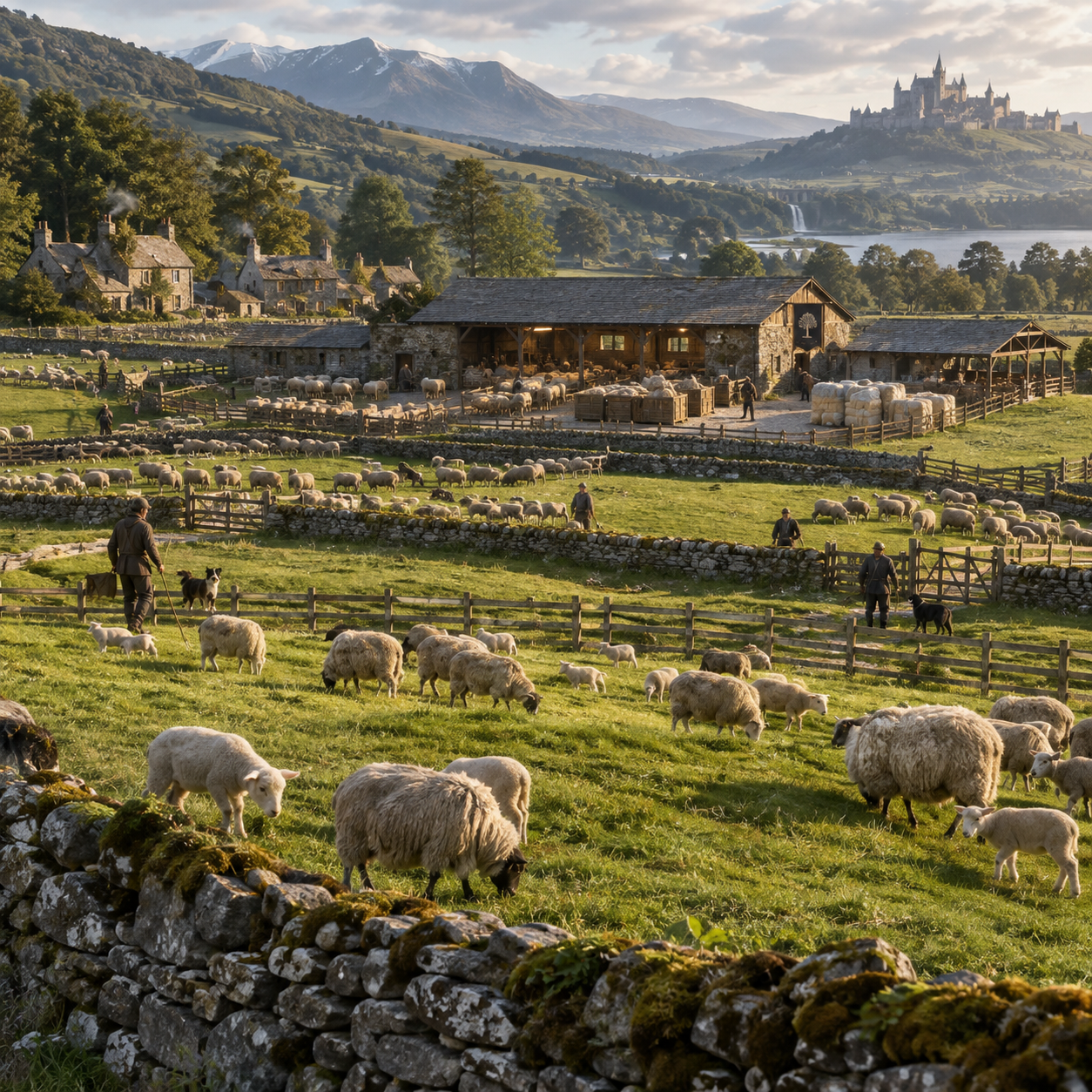
Rolling out across the more open portions of the estate's enchanted farmland, the Sheep Pastures are a quiet and deeply productive addition to Goodberry's landscape. From a distance, the pastures have a gentle, unhurried quality to them. White and grey shapes drift across the grass in slow, aimless-looking clusters, tended by shepherds who know every animal by sight and temperament. Up close, the operation reveals itself to be considerably more organized than it appears.
The pastures themselves are divided into rotating grazing sections by low dry-stone walls and sturdy post fencing, allowing different sections to rest and regrow while the flock works another. The enchanted soil of the estate means the grass here is thick, nutritious, and resilient, and the flock thrives noticeably better than sheep kept on ordinary land. Animals gain weight more readily, fleeces grow denser and softer, and lambing seasons see higher survival rates than farmers on the outside would consider natural.
At the center of the operation sits the Shearing Barn, a broad, well-ventilated structure where the annual shear takes place over the course of several weeks each spring. Experienced shearers move through the flock with practiced efficiency, and the raw wool is immediately sorted by grade, bundled, and moved to the Wool Processing Yard next door. There, washers, combers, and carders work the raw fiber into clean, prepared wool ready for the Weaving Room or for sale as a commodity.
Separate lambing pens are maintained within the barn for the late winter birthing season, where shepherds and midwives attend the ewes through the night when needed. The estate's climate control keeps the barn warm and draft-free during this vulnerable period, and lamb mortality runs exceptionally low as a result.
A small rendering shed handles the less glamorous side of the operation. Sheep that do not survive or have reached the end of their productive lives yield mutton for the butchery and kitchens, tallow for candles and leather treatment, and lanolin extracted from the raw wool and sold to the apothecary and perfumery. Nothing from the flock goes to waste.
Shepherds live in modest cottages at the pasture's edge, close enough to respond quickly to predators, illness, or a breach in the fencing. Their dogs, bred and trained over generations, handle much of the actual herding work and are regarded by the shepherds with the same quiet affection they extend to the flock itself. On Goodberry's quieter evenings, the sound of shepherd pipes drifting in from the pastures has become something residents associate with home.
The Workforce
Sheep farming is a year-round commitment with no true off-season. Lambing in winter, shearing in spring, grazing management through summer, and butchering and wool preparation in autumn mean that every worker listed below is employed continuously across the full year.
| Role | Count | Notes |
|---|---|---|
| Shepherds | 20 | Managing the flock across the rotating pasture sections daily |
| Shepherd's Apprentices | 10 | Learning the trade; handle basic herding and fence checks |
| Lambing Attendants | 6 | Overseeing births, treating newborns, and supporting struggling ewes |
| Shearers | 12 | Professional shearers retained year-round; peak work in spring |
| Wool Sorters and Graders | 8 | Classifying raw fleece by fineness, length, and cleanliness |
| Wool Washers and Carders | 14 | Cleaning, drying, and carding raw wool into prepared fiber |
| Rendering Workers | 6 | Processing tallow, lanolin, and mutton from culled animals |
| Fencing and Grounds Crew | 6 | Maintaining dry-stone walls, post fencing, and pasture drainage |
| Shepherd Cottages Staff | 4 | Cooking and maintaining the cottages for the shepherd families |
| Pasture Overseer | 1 | Managing the full operation, scheduling shears, and handling sales |
| Total Employed | 87 | Direct workforce within the pastures and processing yard |
Benefits
The Sheep Pastures feed directly into several of the estate's other operations, making them quietly valuable well beyond their own income. Raw wool becomes a primary material supply for the Weaving Room and the Textile Mill. Mutton supplies the Town Butchery and the estate's own kitchens. Tallow feeds the Candleworks. Lanolin goes to the Apothecary and the Perfumery. The pastures do not simply generate income in isolation; they reduce costs and amplify the output of every downstream operation they supply.
- The estate generates 2,600 gp per month from wool sales, mutton, tallow, and lanolin.
- The Weaving Room, Weaving Room Advanced, Weaving Room Masterwork, and Textile Mill each gain a passive +10% increase to their monthly income while the Sheep Pastures are active, reflecting a steady and cheap supply of raw wool.
- The Town Butchery's monthly income increases by 200 gp from the reliable mutton supply.
- The Candleworks and Apothecary each gain a passive +100 gp per month from tallow and lanolin inputs respectively.
- The estate's kitchens always have access to fresh mutton, reducing monthly household food costs by 100 gp.
- Any character who spends at least one full day resting on the estate may wrap themselves in a Geodegazer wool blanket. They gain a +1 bonus to saving throws against cold damage for the following week.
Special Rules
Enchanted Wool. Because the sheep graze on the estate's magically fertile farmland, roughly one fleece in every fifty produces wool with an unusual quality. It is unusually soft, takes dye in richer colors than normal wool, and holds a faint warmth that has nothing to do with its thickness. The Haute Couture Atelier considers this wool exceptional; any garment crafted there from enchanted wool sells for double its normal value.
Predator Threat. Once per season, the GM may introduce a predator drawn to the flock. This could be a mundane wolf pack, a displaced magical creature from a neighboring territory, or something stranger. If the threat is not dealt with within one week of discovery, the estate loses 400 gp from that month's income and one workforce slot is temporarily reduced as workers recover. Resolving the threat through combat or diplomacy earns the party goodwill from the shepherd families and a token reward from the Pasture Overseer.
Prize Flock. After six months of continuous operation, the estate's sheep develop enough of a reputation that a neighboring lord or merchant guild approaches the estate about purchasing breeding stock. The GM may treat this as a one-time windfall of 1,500 to 4,000 gp depending on how the negotiation is handled, as well as an opportunity to establish a new NPC relationship.