Natural History Museum
Description
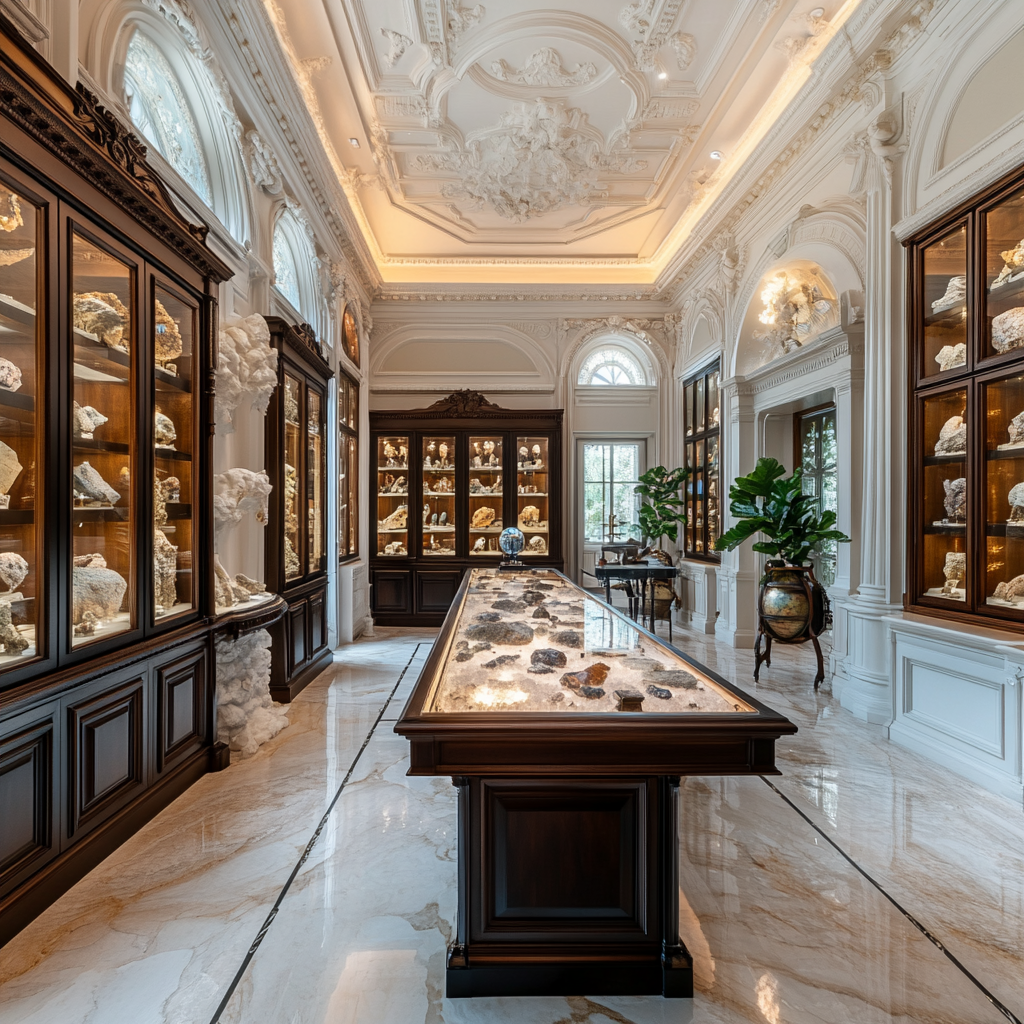
The room is designed with both aesthetics and preservation in mind. The walls are lined with glass-fronted cabinets and display cases, each meticulously designed to protect the delicate specimens within.
One section of the room is dedicated to geology. Here, an array of minerals and crystals sparkle under carefully positioned lights, their labels detailing composition and origin. Larger geological specimens, such as cross-sections of rock formations or petrified wood, are displayed on sturdy pedestals.
The biological specimens occupy a significant portion of the room. Preserved insects are pinned in display cases, their iridescent wings and intricate structures visible in minute detail. Taxidermized animals, from tiny hummingbirds to larger mammals, are arranged in lifelike poses, representing diverse ecosystems.
An herbarium section houses pressed and preserved plant specimens, some hundreds of years old, stored in special folders and available for careful study. Nearby, glass jars contain specimens preserved in liquid, from rare deep-sea creatures to reptiles and amphibians.
At the center of the room stands a large table equipped with magnifying glasses, allowing for detailed examination of smaller specimens. This area also serves as a workspace for cataloging new additions to the collection.
One corner is set up as a small research area, with a desk, comfortable chair, and bookshelves filled with field guides, scientific journals, and taxonomic references. A globe in this area is marked with the locations where various specimens were collected.
The Natural History Museum is more than just a display of specimens; it's a celebration of the Earth's biodiversity, a tool for education, and a source of endless fascination for those curious about the natural world.
Benefits
This room generates 1 Prestige by itself, but increases by 1 for every 10 unique rocks, fossils, minerals or ore on display.