Description
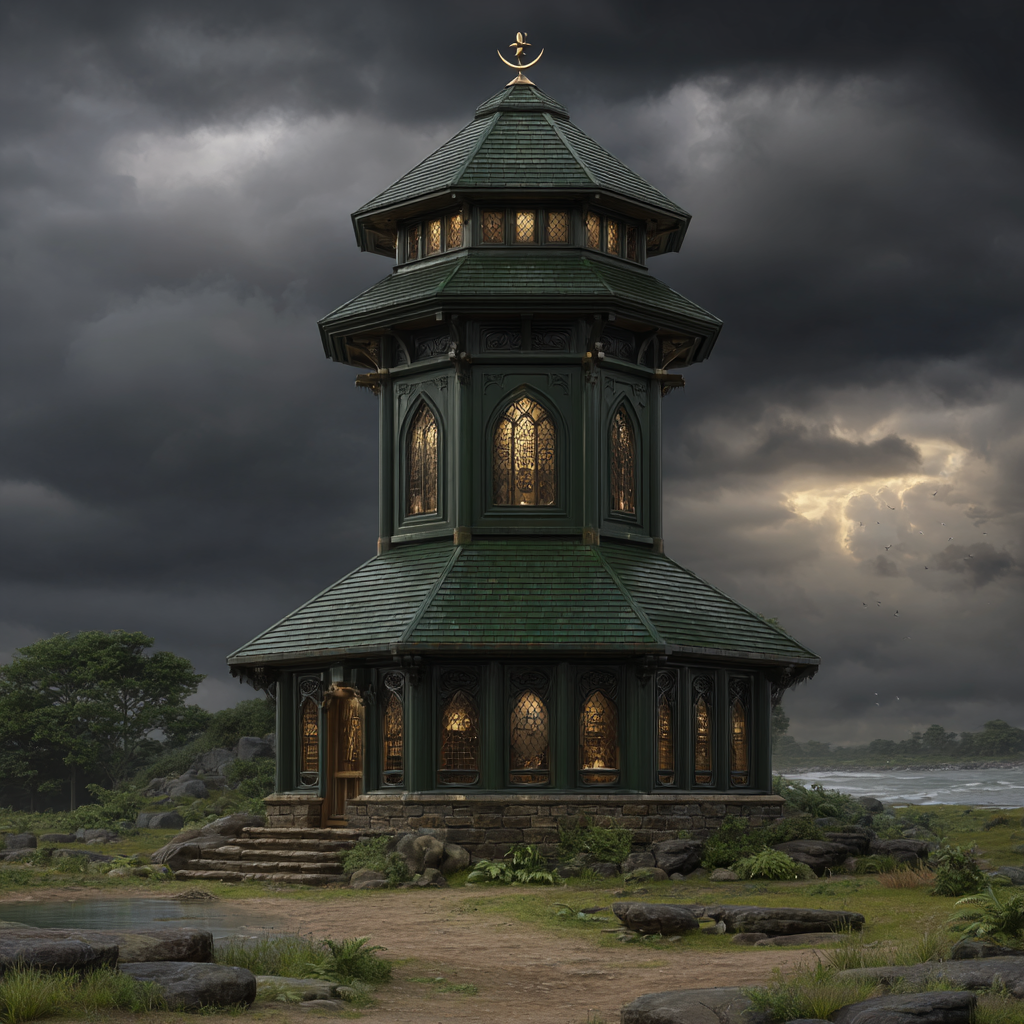
The Weather Prediction Station stands as the tallest structure in the entire settlement, built on the highest point of the central Spine Bar where elevation and positioning provide panoramic views in all directions. The main tower rises forty feet into the air, constructed from sturdy hardwood beams reinforced with iron brackets salvaged from shipwrecks and carefully treated to resist the constant assault of salt air and storm winds. The tower's base is octagonal, measuring twenty feet across each face, with each wall featuring large windows oriented toward a cardinal or intercardinal direction. This design ensures that weather observers can monitor approaching storm systems, cloud formations, and atmospheric conditions from any angle without leaving the shelter. The peaked roof is covered with copper sheeting that has developed a distinctive green patina, and a weather vane carved in the shape of a tidecaller tern spins freely at the apex, its movements closely watched by observers below.
The ground floor serves as a comprehensive weather recording chamber, its walls lined with shelves holding bound journals that document decades of meteorological observations. Each day's weather is meticulously recorded in multiple formats including written descriptions, symbolic representations using traditional Vaitafe weather glyphs, and numerical measurements of temperature, wind speed, and atmospheric pressure. Large slate boards cover one entire wall, updated hourly with current conditions including wind direction marked with carved tokens, cloud type identified using traditional names like "fish scale sky" and "mare's tail," and precipitation amounts measured in calibrated collection vessels. A massive table in the center of the room displays detailed maps of the region, marked with colored pins showing the tracks of previous storm systems and the characteristic paths that weather patterns follow during different seasons. Weather predictors use these historical patterns combined with current observations to forecast conditions up to three days in advance with remarkable accuracy.
The upper observation deck occupies the second level, accessible by a sturdy ladder and featuring wraparound windows that can be opened or shuttered depending on conditions. Here, traditional weather reading instruments hang alongside more systematic measurement tools, creating a unique blend of ancestral wisdom and practical science. Strips of specially prepared seaweed hang from the ceiling, their moisture absorption indicating humidity levels and approaching rain. Hollow bamboo tubes of varying lengths produce different tones when wind passes through them, allowing observers to gauge wind speed by the pitch of the haunting melodies they create. Alongside these traditional tools, carefully calibrated barometers track atmospheric pressure changes that signal approaching storms, while anemometers with spinning cups measure precise wind speeds. A rain gauge carved from a single piece of bamboo with measurement marks etched along its length sits on an exposed platform outside the windows, emptied and recorded four times daily.
Outside the tower, a series of specialized observation posts fan out across the surrounding area, each dedicated to monitoring specific weather indicators using traditional Vaitafe methods. One post features perches where trained seabirds are observed, as changes in their behavior reliably predict storms hours before instruments detect atmospheric shifts. Another station monitors wave patterns and ocean swells, reading the subtle changes in water movement that signal distant weather disturbances long before they arrive. A third post maintains careful watch on distinctive cloud formations, particularly the towering thunderheads that build over the ocean during storm season and the characteristic anvil shapes that warn of dangerous squalls. Students of weather prediction spend months learning to interpret these natural signs, understanding that survival in the Tidal Expanse requires reading dozens of subtle indicators rather than relying on any single measurement or observation.
The Weather Prediction Station functions as the settlement's early warning system and planning authority for any activity affected by weather conditions. Each morning before dawn, the senior weather predictor climbs to the observation deck to assess conditions and provide the day's forecast, which is then communicated throughout the settlement through a system of signal flags hoisted on the tower. A red flag warns of approaching storms and dangerous conditions, yellow indicates unsettled weather requiring caution, and white signals favorable conditions for extended activities. Fishing crews, harvesting parties, and construction projects all plan their schedules around these forecasts. During storm season, the station maintains constant watch, with observers working in rotating shifts to ensure no dangerous weather system approaches undetected. When severe storms threaten, the station sounds a distinctive alarm using a massive shell horn that can be heard across the entire settlement, giving people time to secure boats, reinforce structures, and take shelter before the worst weather arrives. The predictors have saved countless lives through their vigilant monitoring and accurate forecasts, earning deep respect throughout the community. The station also serves as a training ground where promising students learn the complex art of weather reading, spending years mastering the integration of traditional observation techniques with systematic measurement and record-keeping that together provide prediction accuracy far exceeding either method alone.
Benefits
The Weather Prediction Station provides critical forecasting that improves safety and efficiency throughout the settlement. All checks related to preparing for weather events gain a +3 bonus, and the settlement receives advance warning of dangerous storms at least 12 hours before they arrive. Fishing and harvesting operations optimized around weather forecasts generate an additional 150 gold per month by avoiding dangerous conditions and maximizing productive time. The presence of such an advanced meteorological facility generates 4 Prestige.