Description
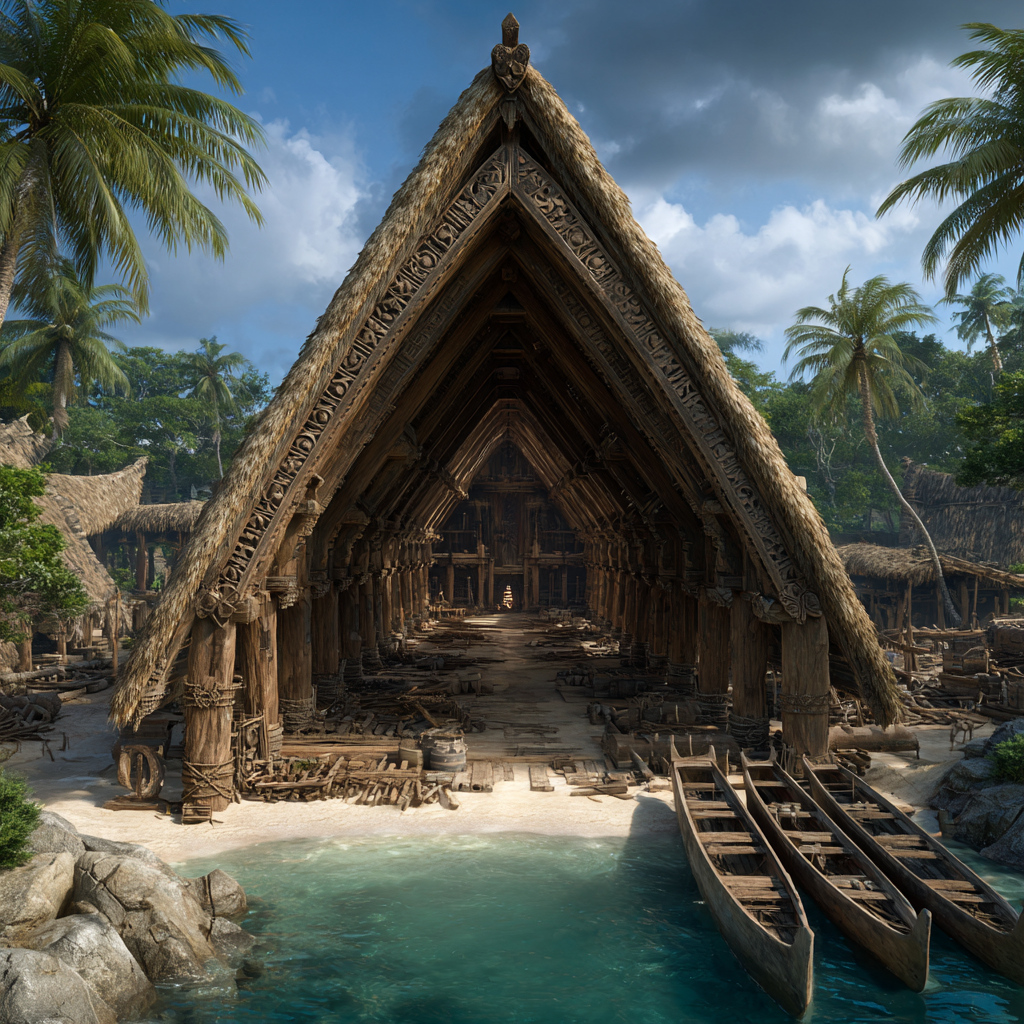
The roof itself is a masterwork of practical engineering, constructed from overlapping layers of woven harakeke mats topped with thick cordgrass thatching. The steep pitch allows rain to sheet off quickly while the substantial thickness provides insulation against the intense sun that beats down during low tide. Carved support posts, each one decorated with stylized representations of sea creatures and wave patterns, hold the massive roof beams aloft. These posts are treated with a mixture of fish oil and tree resin that has been boiled with seaweed, creating a protective coating that resists both rot and the corrosive effects of constant salt exposure.
The working floor is constructed from thick planks of driftwood timber that have been carefully selected, shaped, and fitted together. The wood has weathered to a beautiful silver-gray color, and the surface has been worn smooth by countless feet over the months of construction and use. Along the center of the floor runs a series of carved cradles, each one sized to hold a waka of different dimensions during construction or repair. These cradles can be adjusted using wooden wedges and lashing, allowing craftsmen to work on vessels at comfortable angles. Tool racks line the interior posts, holding an impressive array of specialized implements including adzes of various sizes, bone and stone scrapers, awls made from sharpened fish bones, and carefully maintained chisels fashioned from salvaged metal found in the Storm Debris Zone.
One entire wall of the shed is dedicated to wood storage, with horizontal racks holding lengths of timber in various stages of seasoning. The Vaitafe have learned to work with whatever the sea provides, and the collection includes everything from massive driftwood logs that have washed up during storms to carefully harvested pieces of the ironwood-like trees that grow in the settlement. Each piece is marked with carved symbols indicating when it was collected, what treatment it has received, and what stage of drying it has reached. In the accelerated environment of Goodberry's dimensional bubble, wood that would normally need years to properly season is ready for use in mere months, though the craftsmen still exercise patience to ensure each piece reaches optimal condition.
The open sides of the shed allow for excellent ventilation, essential when working with the aromatic oils and resins used to seal and protect the finished canoes. During particularly windy days, woven screens can be quickly lashed into place to provide protection while still allowing air to circulate. The eastern side of the shed features a large open area where finished waka can be carefully lowered to the sand below using a system of ropes and pulleys, making it easy to launch newly completed vessels or haul existing ones up for maintenance. A well-worn path leads from this launching area down to the nearest tidal channel, marked with stones to ensure safe passage even when the tide is rushing in.
Benefits
The Waka Shed allows the settlement to construct and maintain traditional outrigger canoes. With this facility operational, the settlement can build one single-hull waka (seating 2-4 people) every two months, or one double-hull waka (seating 6-10 people) every four months. These vessels are essential for fishing, pearl harvesting, exploration, and trade. The shed also provides space for ongoing maintenance and repair, extending the life of existing canoes by decades. Additionally, having a proper boatyard attracts skilled canoe-makers to the settlement, improving the overall quality of all watercraft. This upgrade generates 2 Prestige.