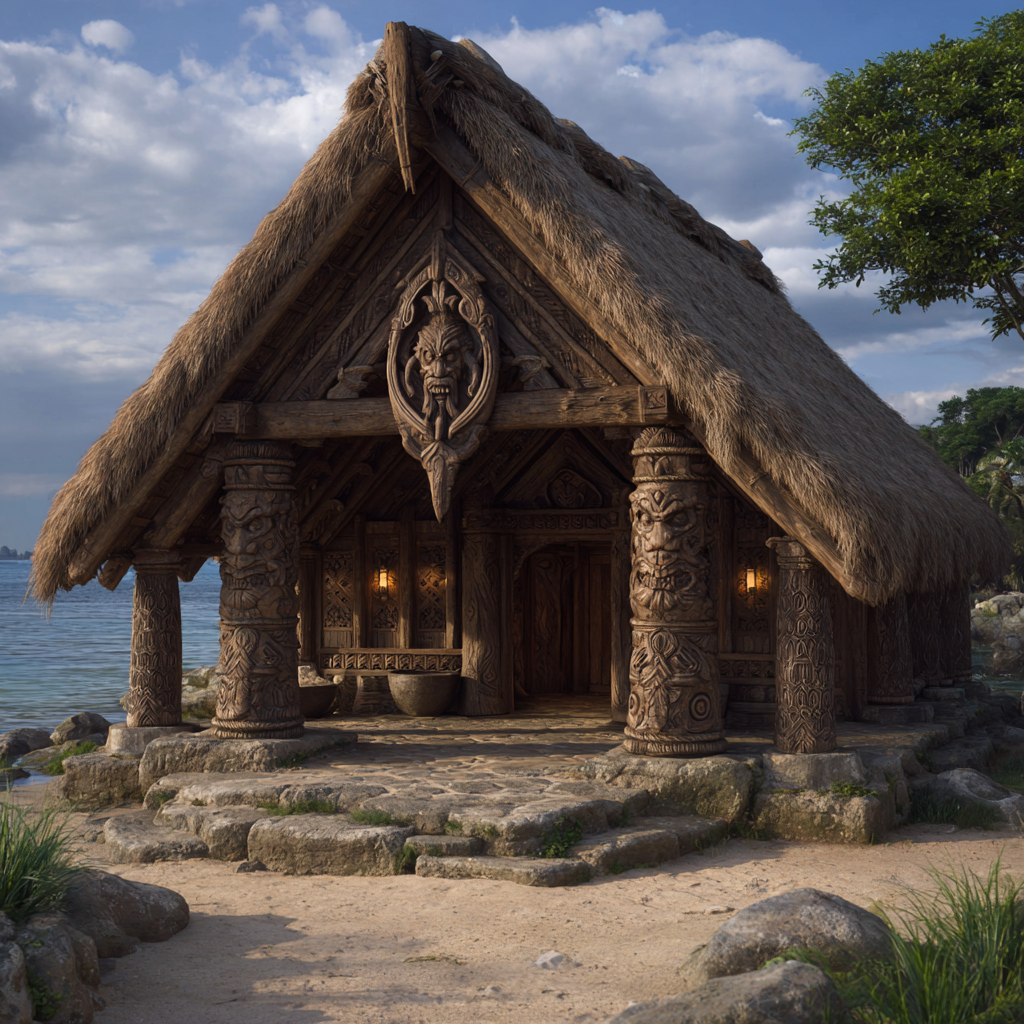
Description
Entry to the Tohuanga is gained through a covered porch where visitors must pause to wash their hands and feet in a stone basin filled with seawater blessed by the settlement's spiritual leaders. This ritual cleansing, performed before crossing the threshold, is both practical hygiene and sacred tradition. The doorway itself is framed by carved posts depicting Tangaroa, the ocean god, whose protection is invoked over all who seek healing within. Above the entrance, a carved wooden panel bears traditional symbols of health and restoration: the spiral of life, the curving wave of renewal, and the protective form of the manta ray.
The interior space, measuring thirty feet long and twenty feet wide, is divided into three distinct areas by decorative woven screens that provide privacy while allowing air to circulate freely. The front reception area contains low benches where those seeking treatment wait their turn, along with wooden shelves displaying various healing implements: stone mortars and pestles for grinding medicines, carved wooden bowls for mixing poultices, and collections of shells used in diagnostic rituals. Woven mats cover the floor, replaced weekly to maintain cleanliness, and the walls are adorned with hanging bundles of dried kelp, sea lavender, and other coastal plants used in traditional healing.
The middle section serves as the primary treatment area, containing two elevated platforms covered in thick sleeping mats where patients can recline during examinations and treatments. Each platform has storage beneath for healing supplies, while overhead, bundles of medicinal herbs hang from the rafters to dry, filling the space with a complex mixture of scents: the sharp tang of sea fennel, the sweet earthiness of beach morning glory, and the clean, green smell of fresh kelp. Natural light filters through gaps in the woven walls, supplemented by shell oil lamps when working after dark. A small brazier sits ready to warm healing oils or burn aromatic plants whose smoke is believed to carry prayers for recovery to the ancestors.
The rear section contains the tohunga's private workspace, where medicines are prepared and sacred healing instruments are stored. Here, shelves are lined with sealed gourds containing powdered shells used to treat stomach ailments, jars of rendered sea turtle fat mixed with medicinal herbs for treating burns and wounds, and small wooden containers holding precious dried samples of rare healing plants found only in certain tidal pools. A workbench holds the tools of the healer's craft: bone needles for stitching wounds, obsidian blades for precise cutting, and an array of carved wooden tools used for massage and manipulation of injured joints. The most sacred items, including ceremonial objects used in spiritual healing, are kept in a beautifully carved wooden chest that only the tohunga may open.
Benefits
The Tohuanga generates 2 Prestige, as access to traditional healing demonstrates the settlement's ability to maintain cultural practices while surviving in a harsh environment. Once per day, the tohunga can perform a healing ritual that restores 2d8+2 hit points to a patient, using traditional medicines and spiritual practices. Additionally, the tohunga can craft healing poultices from local materials. With one day's work, they can produce three applications of healing salve, each of which heals 1d6 hit points when applied to wounds. The settlement also gains a +4 bonus on all Constitution checks made to recover from diseases, as the tohunga's knowledge of natural remedies proves invaluable. Once per week, the tohunga can perform a more intensive healing ceremony that removes one disease or poison from a willing subject.