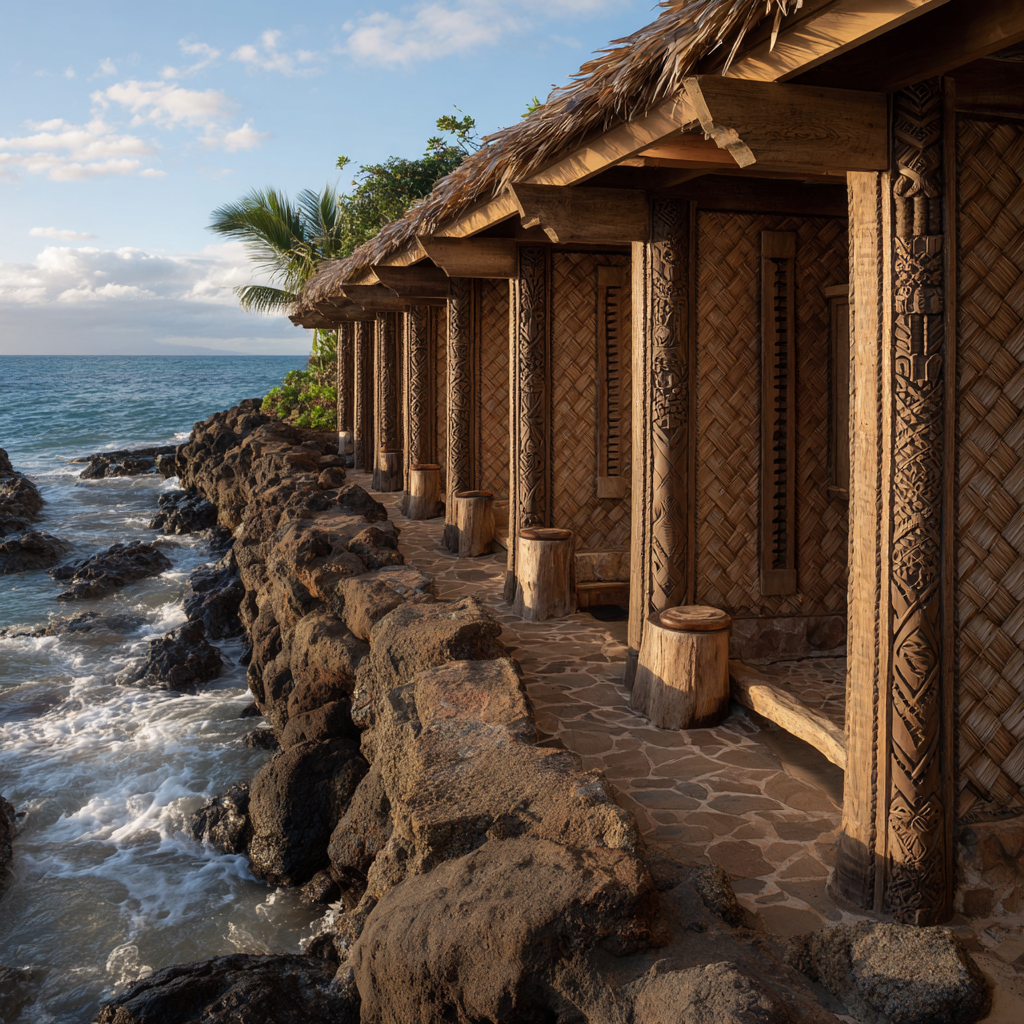
Description
The latrine consists of six individual stations arranged in a row, each providing complete privacy through walls of woven pandanus leaves reinforced with a framework of driftwood poles. These walls stand eight feet tall and are attached to the supporting structure with coconut fiber cordage that allows some flexibility during high winds while maintaining strength and stability. The walls are woven in a tight pattern that prevents visual intrusion while still allowing air circulation, an essential feature in the humid coastal environment. Each station measures approximately six feet by six feet, providing ample room for comfortable use. The entrance to each station is covered by a hanging mat of woven harakeke that can be tied closed from the inside, ensuring complete privacy while the natural weight of the mat causes it to fall closed automatically when released. Traditional patterns woven into these entrance mats include stylized representations of shells and waves, maintaining aesthetic appeal even in this utilitarian facility.
The functional heart of each station is a carefully carved wooden seat positioned over an opening in the elevated platform floor. These seats are crafted from weather-resistant mangrove wood, smoothed and oiled to create a comfortable surface that resists the constant humidity and salt air. Each seat features a hinged cover that closes when not in use, reducing odors and preventing insects from entering the waste channels below. The openings beneath the seats connect to a sophisticated system of carved wooden chutes that angle downward and outward, directing waste into tidal channels positioned directly below the structure. These channels are carved into the natural contours of the sandbar and reinforced with fitted stones along their edges, creating permanent waterways that fill with each incoming tide. The positioning and angle of the chutes are calculated based on careful observation of tidal patterns, ensuring that waste falls into areas that will be thoroughly flushed by the incoming water twice daily.
The tidal channels themselves represent impressive engineering, designed to maximize the cleansing power of the twice-daily tidal flows. Each channel measures approximately four feet wide and three feet deep at low tide, running in a straight line away from the latrine structure toward the open ocean. The channels are positioned to align with the natural flow of tidal currents, taking advantage of the powerful surge of water that rushes across the flats during the flood tide. As the tide rises, seawater fills the channels rapidly, creating a strong current that carries waste material away from the settlement and out into the deeper waters beyond the Spine Bars. The channels are angled with a gentle slope that prevents waste from settling in low spots during low tide, while strategic placement of stones creates turbulent flow patterns that enhance the cleaning action of the incoming water. By the time the tide recedes, the channels have been thoroughly scoured clean, leaving only damp stone and sand that quickly dry in the sun and constant sea breeze.
Additional features enhance the functionality and dignity of the facility. Inside each station, a small shelf carved into the support posts holds containers of crushed coral and sand that can be sprinkled down the chute after use, helping to reduce odors and absorb moisture. Woven baskets filled with large leaves from taro and breadfruit plants serve the practical purpose expected of such facilities, with the leaves being fully biodegradable and easily flushed by the tides. A hand-washing station positioned at one end of the structure features a suspended clay pot with a small spout that releases freshwater when tilted, allowing users to rinse their hands after use. This water drains into a separate channel that directs it away from both the waste channels and the main settlement. Natural soap compounds made from crushed soapberry nuts are available in carved wooden bowls beside the washing station. The entire structure is built with careful attention to wind direction, positioned so that prevailing breezes carry any odors away from residential areas toward the open ocean. A maintenance pathway along the seaward side allows attendants to inspect the chutes and channels regularly, ensuring the system continues to function properly and identifying any areas where stones may need replacement or channels may require cleaning during the brief period between tides.
Benefits
The Tidal Flush Latrine generates 2 Prestige, demonstrating the settlement's commitment to public health and its clever use of natural tidal cycles for sanitation. Proper waste management significantly reduces the incidence of disease, granting all residents a +2 bonus on saving throws against diseases transmitted through poor sanitation. The facility can comfortably serve up to 60 residents under normal use patterns, with the twice-daily tidal flushing ensuring that waste never accumulates to create health hazards or unpleasant conditions. The dignity and privacy provided by individual stations with cultural appropriate design helps maintain morale and social cohesion, preventing the discomfort and embarrassment that can arise from inadequate sanitation facilities. The strategic positioning away from living areas but still within easy walking distance ensures accessibility while maintaining appropriate separation of functions within the settlement layout.