Description
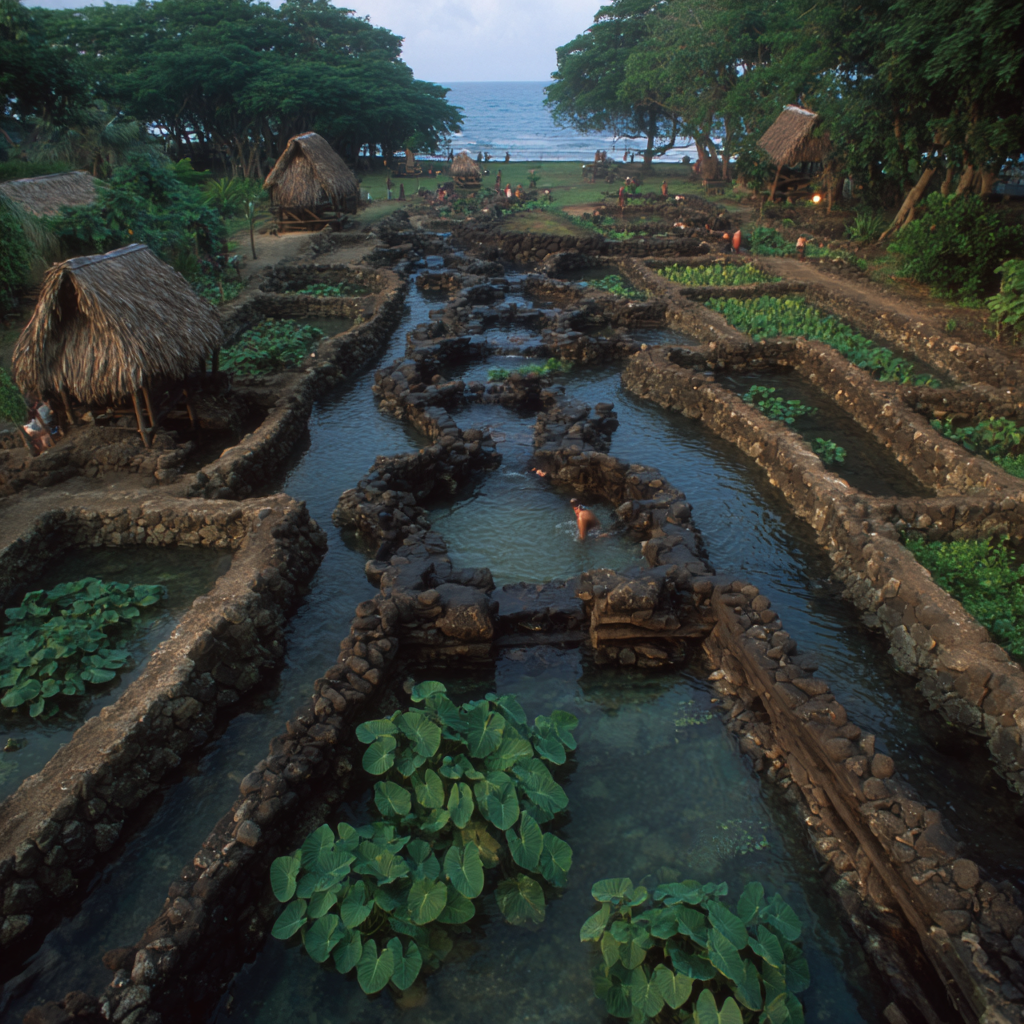
The complex is organized into six distinct agricultural zones, each optimized for specific crops and conditions. The premium taro zone grows the finest varieties in perfect freshwater conditions, producing corms of exceptional size, texture, and flavor that command premium prices and are reserved for important feasts and diplomatic gifts. The standard production zone handles the bulk of everyday taro cultivation using proven varieties and techniques. The experimental zone tests new cultivars and methods, having recently achieved success with purple taro, giant swamp taro, and several ornamental varieties whose colorful leaves add beauty while providing edible shoots. The aquatic vegetable zone produces lotus root, water chestnuts, arrowhead tubers, and aquatic taro in deep-flooded plots. The integrated fish-farming zone combines taro cultivation with aquaculture, where tilapia and other fish fertilize the plants while providing protein. The seed production zone maintains pure breeding lines of each taro variety, ensuring genetic diversity and crop security.
Revolutionary innovations distinguish this master-level facility. A sophisticated hydraulic system uses tidal power to pump fresh water into elevated storage tanks, creating water pressure that feeds the entire complex through buried ceramic pipes with minimal manual labor. Bronze valves at each plot allow precise flow control, and pressure gauges carved from wood and calibrated with remarkable accuracy help tenders maintain optimal water levels. An underground drainage network collects runoff and channels it to a filtration marsh where aquatic plants remove impurities before the water is recirculated back through the system. This closed-loop approach conserves precious freshwater in the coastal environment while maintaining the brackish balance that produces the complex's signature flavor profile.
The processing and storage facilities rival those of any mainland agricultural estate. A large processing hall features running water stations, mechanical scrubbers that clean taro faster than hand methods, and sorting lines where workers grade produce into multiple quality categories. A massive underground storage vault maintains perfect temperature and humidity for long-term taro preservation, capable of holding several months' production as a hedge against disasters or for strategic market timing. Above ground, a dedicated poi production facility processes taro specifically for fermentation, with grinding stones, pressing equipment, and fermentation vessels producing hundreds of pounds of poi weekly for both local consumption and trade. The facility has become renowned for its poi quality, with some batches achieving legendary status among connoisseurs.
Supporting structures include an agricultural research center where specialists study plant diseases, soil composition, and cultivation methods, maintaining detailed records carved into wooden tablets that document decades of accumulated knowledge. A greenhouse nurtures young plants and provides year-round seedstock production. Workers' cottages house the large cultivation team, and a master cultivator's residence sits overlooking the complex, symbolizing the importance of this position in settlement hierarchy. A sacred shrine dedicated to Rongo, god of cultivated plants, receives offerings of first fruits from each harvest. Observation towers at the complex's four corners allow supervisors to monitor all plots simultaneously, and during harvest season, the towers serve as watchtowers to prevent theft of the valuable crops. The complex operates like a well-oiled machine, with teams working in coordinated shifts to maintain constant productivity.
Benefits
The final Taro Plot upgrade generates 5 Prestige and demonstrates complete understanding of the Taro plant. The plots produce 3,000 pounds of taro corms monthly and generates an additional 500 gold per month.