Description
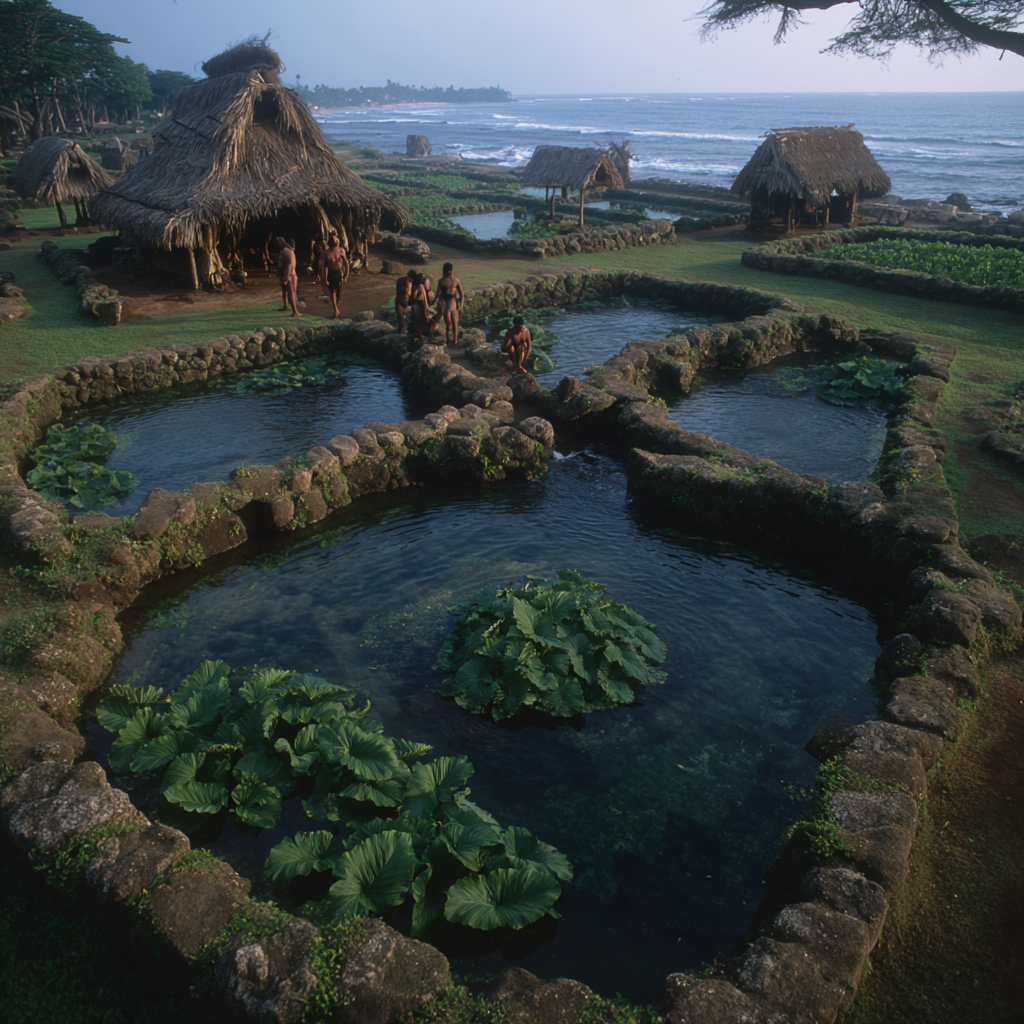
The plots are arranged in three pairs, with each pair at a slightly different elevation to take advantage of natural water flow. Fresh water is channeled from a small cistern fed by rainfall collection and a natural freshwater seep discovered during site preparation. The water flows from the highest plots down through the others via carved wooden channels, allowing each garden to be independently managed while conserving water through reuse. During heavy rains, excess water is directed away to prevent flooding, while during dry periods, water levels are carefully maintained through manual carrying from the main settlement cisterns. The brackish nature of the water, while challenging, produces taro with exceptional flavor prized by those familiar with coastal cultivation.
Within each plot, taro corms are planted in rich organic soil mixed with decomposed plant matter and carefully tended seaweed that adds beneficial nutrients. The accelerated growth from Goodberry's dimensional magic means taro that would normally require nine to twelve months to mature reaches harvest size in just two months, allowing for six growing cycles per year instead of one. The plants grow in neat rows, their broad heart-shaped leaves creating a lush canopy that shades the water and prevents excessive evaporation. Workers wade into the plots regularly to remove weeds, monitor plant health, and harvest mature corms while leaving smaller ones to continue growing.
A simple work shelter constructed from palm thatch provides shade for workers and stores the basic tools needed for taro cultivation: digging sticks for planting and harvesting, woven baskets for collecting corms, wooden paddles for managing water flow, and sharp stone blades for trimming leaves. A washing station near the plots allows workers to clean freshly harvested taro before it is transported to storage or processing areas. The cleaned corms can be cooked immediately, stored in cool sand for several weeks, or processed into poi for long-term preservation.
Maintaining the taro plots requires constant attention to water levels, as too much flooding rots the corms while too little stunts growth. Plot tenders develop an intuitive understanding of the plants' needs, recognizing subtle signs of water stress or nutrient deficiency. They also manage the delicate ecosystem within the plots, where small fish and aquatic insects help control pests while their waste provides additional fertilizer. The taro leaves themselves are harvested regularly for use as cooking wraps and cattle fodder, with the youngest, most tender leaves reserved for human consumption as a nutritious green vegetable.
Benefits
The Basic Taro Plots generate 2 Prestige, demonstrating the settlement's agricultural capability. The plots produce 600 pounds of taro corms monthly, providing a reliable staple food that feeds residents and generates 120 gold per month from surplus sales to traders.