Description
The bark preparation area occupies one quarter of the covered workspace, where bundles of inner bark harvested from paper mulberry trees and other suitable species undergo initial processing. Fresh bark arrives in long strips that must be soaked in seawater to soften the fibers and begin breaking down the woody material. Large stone-lined pools maintain the bark at various stages of soaking, with the water changed regularly to prevent unwanted fermentation. After sufficient soaking, workers scrape away any remaining outer bark and woody tissue, leaving only the fine inner bast fibers that will become cloth. These cleaned strips are then laid out on smooth wooden boards in the sun, where they dry to a consistency perfect for beating. The preparation area maintains detailed records of bark sources, as different trees and even different parts of the same tree produce fibers with distinct characteristics suited to specific uses.
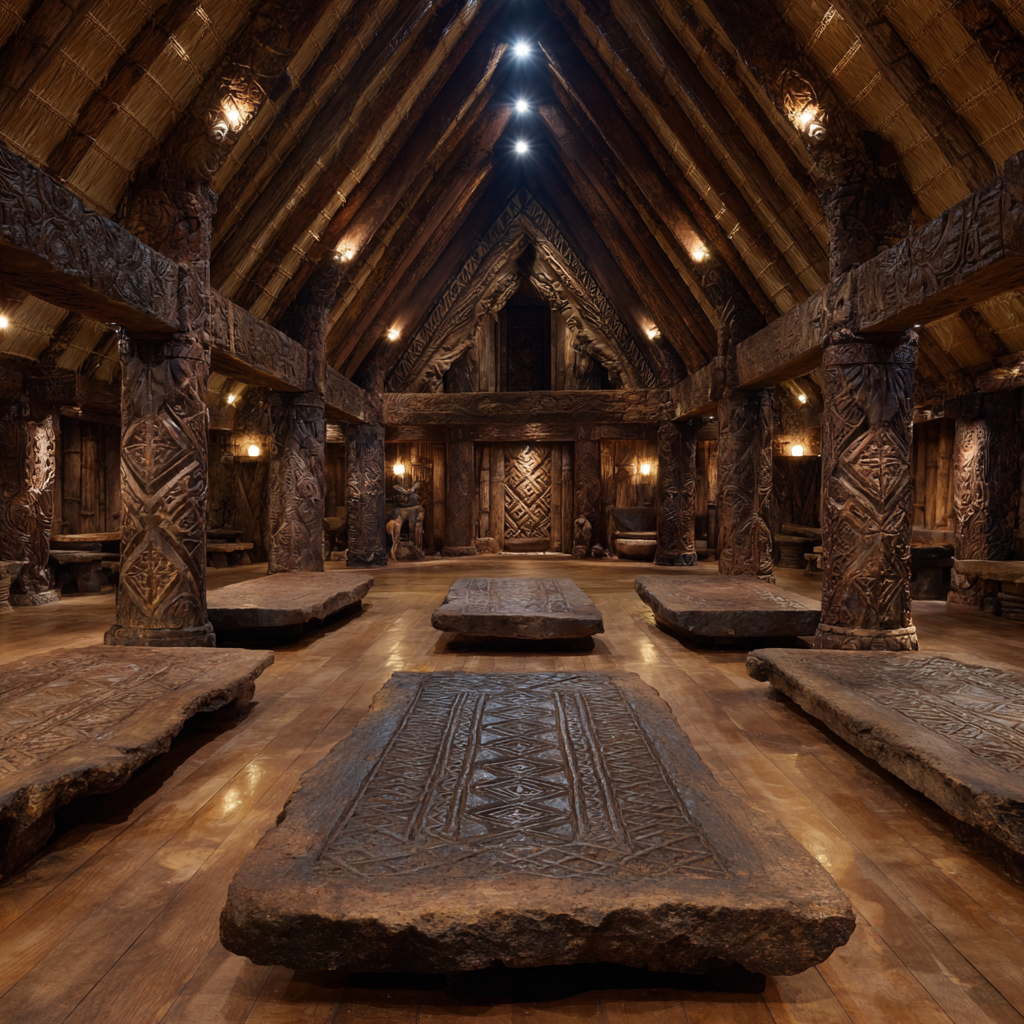
The beating stations form the heart of the workshop, arranged around the central courtyard where the distinctive rhythmic percussion of wooden mallets on bark creates a constant soundtrack during working hours. Each station consists of a massive log section, its top surface polished smooth from years of use, serving as an anvil against which the bark is beaten. Craftspeople use a progression of beaters, beginning with heavy grooved mallets that break down the fiber structure and progressively moving to lighter, smooth-faced implements that stretch and refine the cloth. The process requires exceptional skill and patience, as improper beating can tear the delicate fibers while insufficient work leaves the cloth thick and inflexible. A single piece of tapa may be beaten for hours across multiple sessions, with rest periods allowing the fibers to relax between workings. The sound of synchronized beating, when multiple craftspeople work in rhythm, becomes almost musical, a meditation in percussion that marks the passage of working hours.
Adjacent to the beating area, the joining and finishing stations transform individual beaten sheets into larger pieces of cloth. Vaitafe tapa makers employ a specialized technique using plant-based adhesives to bond sheets edge-to-edge, creating seamless expanses limited only by the workshop's space. Once joined and allowed to cure, the cloth moves to decoration stations where traditional patterns are applied using carved wooden stamps dipped in natural dyes. These dyes, prepared from local plants, minerals, and sea creatures, produce the characteristic earth tones, deep reds, and rich blacks of Vaitafe textiles. Some pieces receive freehand painting for more elaborate designs, with master artists creating intricate depictions of ancestral stories, ocean life, and geometric patterns that carry cultural significance. A final treatment with scented oils gives the cloth a pleasant fragrance and additional water resistance, while also enriching the colors and making the fabric more supple. Finished pieces are carefully folded and stored in the dry goods building, protected from moisture and insects until needed.
The Tapa Cloth Beater produces textiles that serve countless purposes throughout the settlement. Everyday clothing, sleeping mats, and household wrappings come from simpler, more quickly produced cloth. Ceremonial garments for important rituals receive weeks of careful work and elaborate decoration. Tapa serves as gifts for honored guests, trade goods for exchange with other settlements, and even as a form of wealth storage, with particularly fine pieces being treasured as family heirlooms. The workshop accepts commissions for special occasions, creating custom pieces that commemorate marriages, coming-of-age ceremonies, and important achievements. Apprentices learn not just the physical techniques of bark processing and beating, but also the cultural significance of different patterns and the protocols surrounding ceremonial cloth. The workshop becomes a center of traditional knowledge, where stories are told to the rhythm of beating mallets and ancient designs are faithfully reproduced to maintain connections with ancestral ways.
Benefits
The Tapa Cloth Beater generates 4 Prestige, demonstrating the settlement's commitment to maintaining traditional textile arts and producing materials essential to cultural identity. Each master tapa maker employed generates 200 gold per month in sales revenue from cloth sold as garments, ceremonial pieces, and trade goods. The workshop provides basic tapa cloth for settlement residents' everyday needs at no cost, ensuring that everyone can participate in traditional dress and customs regardless of personal wealth. The Duke may commission one elaborate ceremonial tapa piece per month at no cost, suitable for important rituals or diplomatic gifts. Additionally, the presence of quality tapa production attracts cultural scholars and collectors, occasionally bringing visitors who seek authentic Vaitafe textiles and contribute to the settlement's reputation for preserving traditional arts.