Description
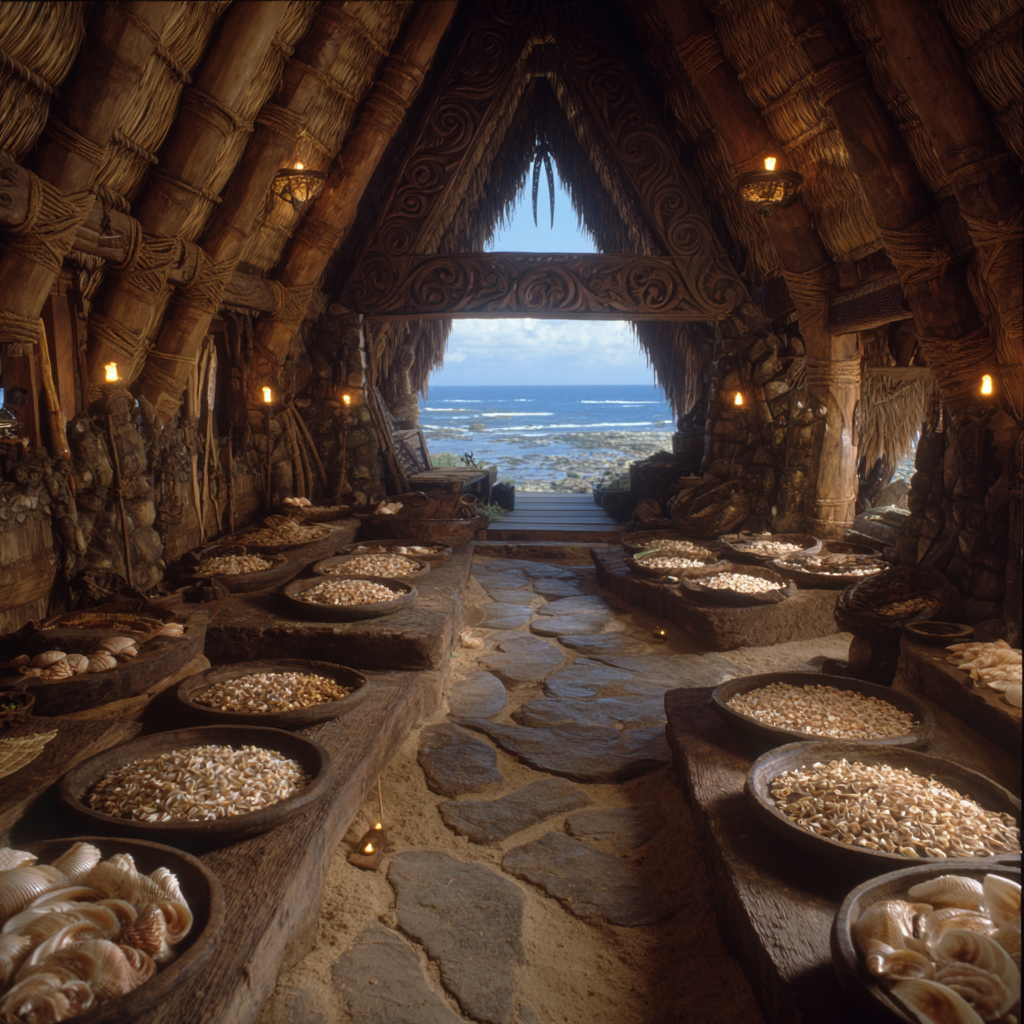
Inside, the workspace is meticulously organized with shells sorted by type, size, and color in carved wooden bins that line the back wall. Cowrie shells from the Pearl Fields gleam white and golden, while mother-of-pearl from oyster beds catches rainbow light. Spiraled conch shells tower in one corner beside delicate scallop shells thin as parchment. Reef crawler carapaces, technically not shells but equally valuable, occupy their own section, their mottled surfaces perfect for certain tools. Each variety has its purpose, known intimately by the craftsmen who have spent lifetimes learning which shells work best for specific applications.
The work benches are worn smooth by generations of use, their surfaces scattered with specialized tools passed down through families. Stone files of varying coarseness lie beside bone awls for piercing, while shark tooth saws hang from hooks overhead. Small grinding wheels powered by foot pedals allow artisans to shape shells into precise forms, their surfaces lubricated with coconut oil to prevent cracking. Bowls of sand in different grades serve for polishing, transforming rough shells into smooth treasures. In one corner, a small forge with carefully banked coals allows for heating shells to make them more pliable, a technique requiring exact timing and temperature learned only through experience.
The finished products display astounding variety and craftsmanship. Fishing hooks carved from mother-of-pearl shine with iridescent beauty while maintaining deadly sharpness. Shell scrapers and cutting tools serve practical purposes in daily life, their edges honed to rival metal blades. Decorative combs adorned with intricate patterns of inlaid shell fragments mark status within the tribe. Ceremonial necklaces strung with cowrie shells and polished reef crawler chitin represent wealth and honor, each piece requiring weeks of patient work. Small fish hooks suitable for children's first fishing lessons sit beside elaborate ceremonial pieces destined for important tribal leaders.
The artisans themselves form a tight-knit guild, their knowledge protected and passed only to dedicated apprentices willing to spend years mastering the craft. They work with steady hands and focused concentration, transforming what others might see as common beach refuse into objects of beauty and utility. The sound of shell being worked provides a constant backdrop to settlement life, a rhythmic scraping and tapping that speaks of patient craftsmanship and cultural continuity. During low tide, master craftsmen sometimes lead expeditions to collect particularly choice specimens, their trained eyes spotting treasures others would miss among the scattered debris of the Storm Debris Zone.
Benefits
The Shellwork Shop produces a steady supply of shell-based tools and ornaments. Each month, the workshop creates items valued at 200 gold pieces, generating 150 gold in profit after material costs. Additionally, any character within the settlement gains a +2 circumstance bonus to Craft checks when working with shells or similar materials, as the master craftsmen freely share their expertise. The shop also produces ceremonial items that enhance tribal prestige and cultural identity. This upgrade generates 4 Prestige.