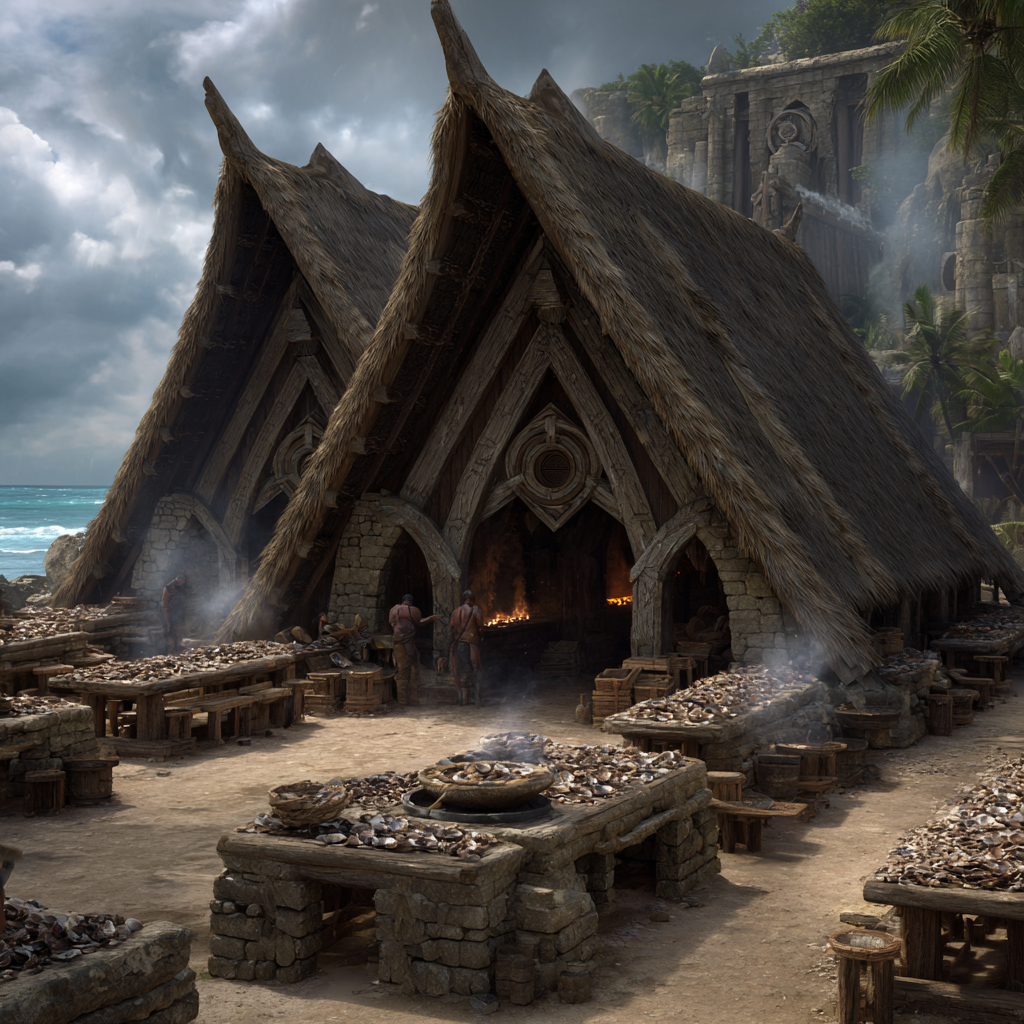
Description
The interior is divided into two distinct work zones by a central dividing wall. The first zone handles live shellfish processing, featuring several large stone-lined pits where seawater can be heated to steaming temperatures using driftwood fires. Woven baskets filled with reef crawlers, oysters, and various other shellfish are lowered into the steaming water, the heat causing shells to open and making meat extraction far easier. Heavy wooden tables with slightly concave surfaces provide workspace for cracking, prying, and picking meat from shells, with carved channels directing juices toward collection vessels where the flavorful liquid is saved for cooking stocks. Sharp tools made from salvaged metal and shaped bone hang within easy reach, each one designed for specific tasks like oyster shucking, crab leg cracking, or delicate meat extraction from spiral shells. Large clay pots stand ready to receive the precious meat, which is immediately covered with seawater or salt to maintain freshness until it can be cooked or preserved.
The second zone is dedicated to shell processing and represents an innovation born from Vaitafe practicality. Here, discarded shells undergo transformation into useful materials rather than simply accumulating as waste. A large stone mortar, carved from a single boulder hauled up from the Storm Debris Zone, allows workers to crush shells into various grades of material. Coarse crush becomes the preferred surface for pathways throughout the settlement, providing excellent drainage while creating firm walking surfaces that don't become muddy during rain. Medium crush is mixed with clay to create a surprisingly durable construction material used for building foundations and reinforcing earthworks. Fine crush, ground almost to powder, serves as an excellent agricultural amendment that enriches soil and provides essential minerals to growing plants. The finest powder of all, created by extended grinding and sifting through woven screens, becomes a component in traditional Vaitafe art, mixed with natural pigments to create the distinctive shell-paint used for decorating important structures and ceremonial objects.
A covered outdoor area extends from the main building, featuring multiple drying racks where certain types of shellfish meat can be preserved through air drying similar to fish. This area also provides space for sorting incoming catches, with woven baskets organized by shellfish type and size. A freshwater washing station allows workers to rinse their hands and tools regularly, maintaining the cleanliness standards the Vaitafe insist upon for all food processing. Stone-lined pits filled with fresh seawater hold live shellfish temporarily, keeping them alive and healthy until processing begins. The Vaitafe have learned that shellfish processed while still alive yield superior flavor and texture, so maintaining these holding tanks has become an essential part of the operation.
Beyond the practical functions, the Shellmidden Processing facility serves as a gathering place where community members share the work of processing large catches while engaging in the social interactions that strengthen tribal bonds. Traditional songs accompany the rhythmic cracking of shells, and experienced workers teach younger community members the techniques passed down through generations. The growing mounds of processed shells awaiting crushing have become landmarks visible from across the settlement, tangible proof of the ocean's bounty and the community's industrious nature. In Goodberry's accelerated environment, shellfish beds that would normally take years to replenish do so in mere months, ensuring a sustainable harvest that can support the facility's operations indefinitely while the processed shells gradually transform the settlement's infrastructure one pathway and building foundation at a time.
Benefits
The Shellmidden Processing facility can process up to 200 pounds of shellfish daily, extracting high-quality meat for consumption or preservation. The facility generates 100 pounds of shellfish meat per week along with valuable cooking stocks. Additionally, shell processing produces 300 pounds of crushed shell material weekly, which can be used for construction projects, pathway surfacing, agricultural amendments, or sold to a market. The facility also produces small quantities of fine shell powder for traditional Vaitafe art. This upgrade generates 2 Prestige and nets the settlement 200 gold every month.