Description
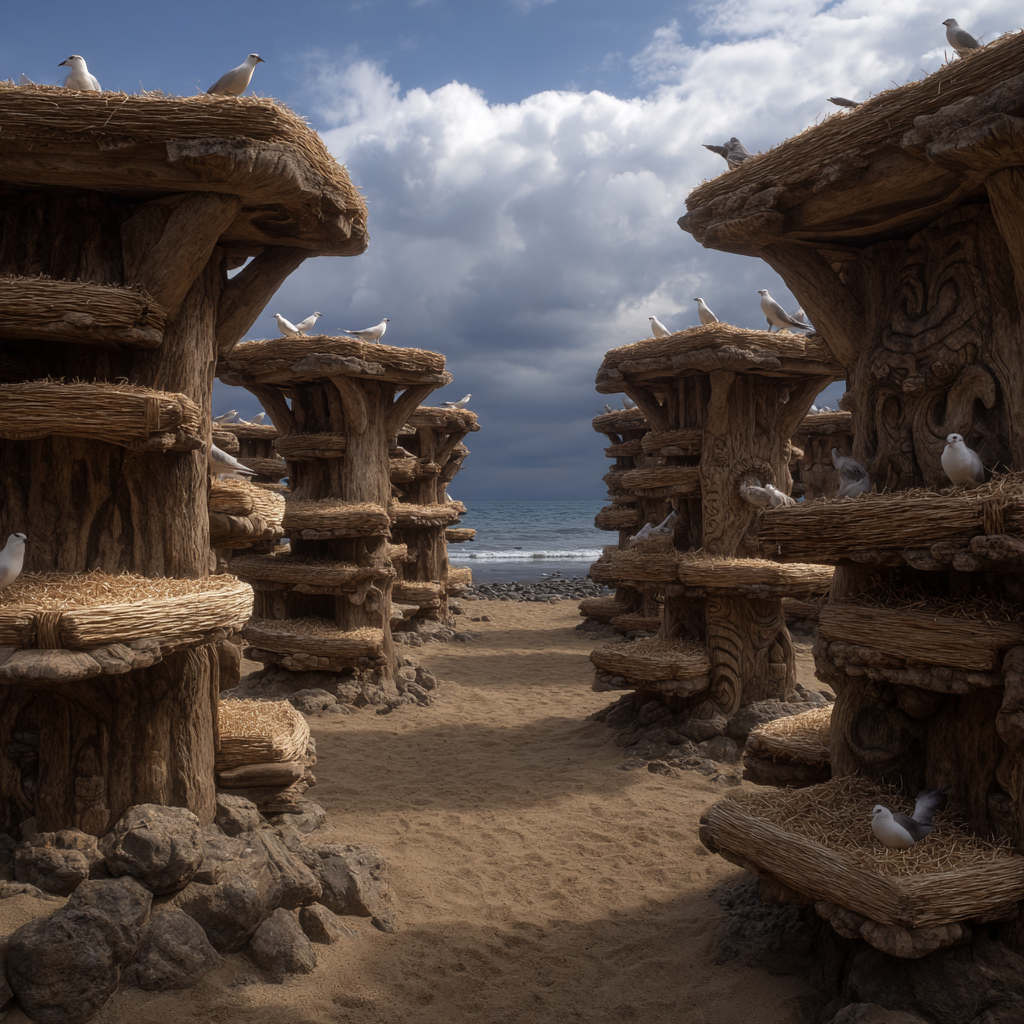
The Seabird Rookery occupies a prominent section of one of the tallest Spine Bars, positioned to catch the prevailing winds and offer commanding views of the surrounding tidal expanse. The installation consists of carefully arranged nesting platforms and protective structures designed to attract various species of seabirds, particularly the tidecaller terns native to these waters, along with gulls, petrels, and occasionally even the magnificent frigate birds that soar high above the channels.
Dozens of wooden nesting platforms are mounted on sturdy driftwood posts at varying heights, each designed to accommodate different species' preferences. The platforms are constructed from woven pandanus mats stretched over bamboo frames, providing stable surfaces that drain quickly after rain. Natural depressions in each platform encourage proper nest formation, while raised edges prevent eggs from rolling away during strong winds. Small carved totems depicting bird spirits stand at the corners of several platforms, honoring the Vaitafe belief that these guardians watch over the nesting colonies.
Between the platforms, strategically placed windbreaks made from woven coconut fronds provide shelter from harsh weather while maintaining the open, airy environment seabirds prefer. These barriers are positioned to block the strongest winds without creating the enclosed feeling that might discourage nesting. The entire rookery area is marked with sacred boundary posts carved with protective symbols, and traditional tapu restrictions govern when and how eggs and feathers may be harvested to ensure the colonies remain healthy and productive.
At the base of the nesting area, collection screens fashioned from finely woven coconut fiber are angled to catch fallen feathers during molting season. These screens are regularly checked and cleared, with the pristine feathers sorted by size and color for various uses. A small stone-lined collection pit captures the valuable guano that accumulates beneath the most populated nesting platforms, which is left to age before being harvested as powerful fertilizer.
A narrow boardwalk made from lashed driftwood planks allows careful access through the rookery for egg collection and maintenance without disturbing the birds excessively. According to traditional Vaitafe practice, only a portion of each nest's eggs are taken, always leaving at least one for the parent birds to raise. This sustainable harvesting ensures the colony thrives year after year. The constant cries of the seabirds, their graceful flights, and the occasional dramatic dive into the tidal channels for fish create a vibrant, living spectacle that has become one of the settlement's most distinctive features.
Benefits
The rookery attracts and maintains a colony of approximately 60-80 nesting pairs of various seabird species. Following traditional sustainable harvesting practices, collectors can gather an average of 20 eggs per week during nesting season (roughly 8 months of the year due to the accelerated breeding cycles). The eggs are larger and richer than chicken eggs, valued in cooking and trade. Additionally, the rookery produces approximately 200 pounds of aged guano every three months, which can be used as fertilizer for any future agricultural upgrades or sold to farmers for 75 gold per month. The settlement gains 2 Prestige from demonstrating traditional environmental stewardship and sustainable resource management.