Description
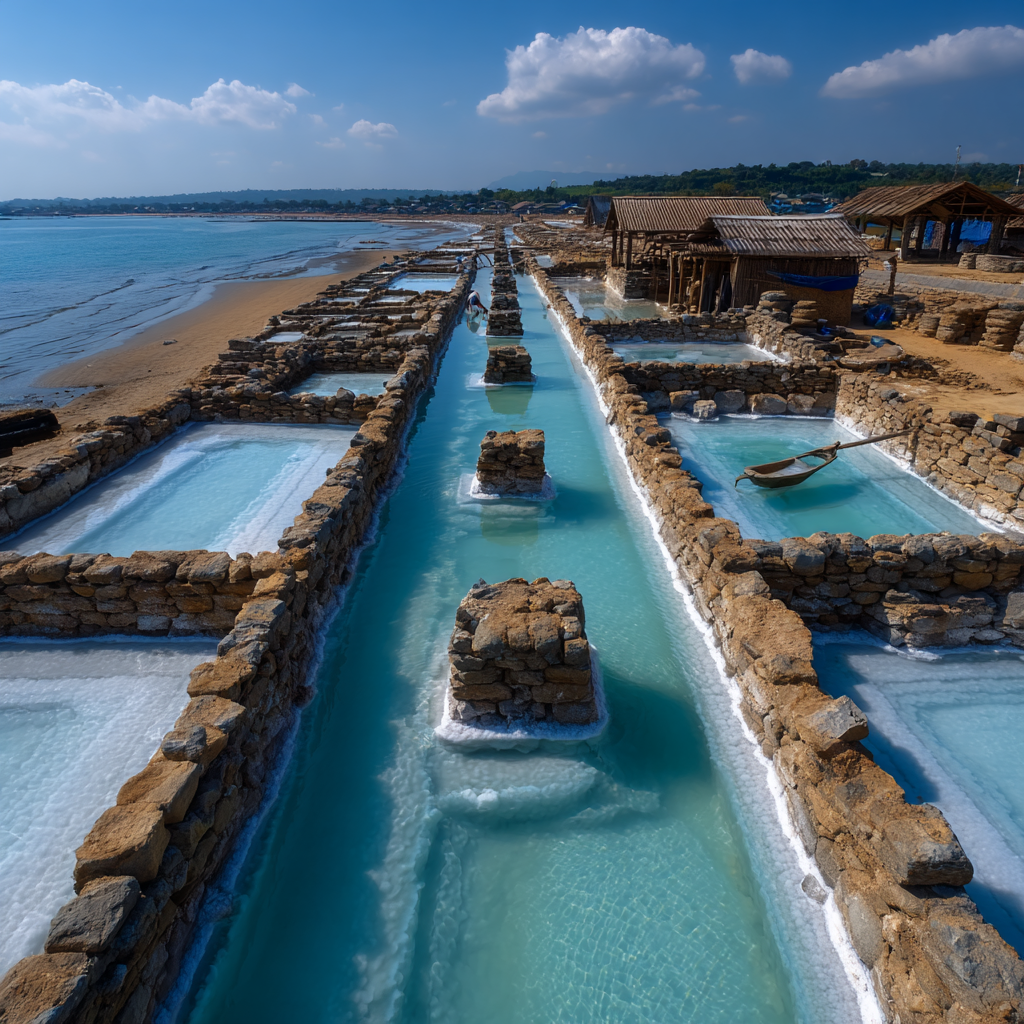
The salt production process begins at the highest point of the facility where a large collection pool receives seawater pumped up from the tidal channels during high tide. This initial pool, deeper than the evaporation ponds at nearly three feet, serves as both a reservoir and a preliminary settling basin where heavier particles and suspended sediment drop out of the water before it enters the production system. Long-handled paddles attached to simple lever mechanisms allow workers to move water from the collection pool into the first row of evaporation ponds, where the sun and wind begin their work. The ponds in this first row are filled to a depth of approximately six inches, creating a large surface area relative to volume that maximizes evaporation rates. As water evaporates over the course of several days, the salinity of the remaining brine increases steadily. Workers monitor the concentration carefully by observing the formation of salt crystals around the pond edges and by testing the density using a floating wooden gauge marked with calibration lines.
When the brine in the first-row ponds reaches optimal concentration, sluice gates are opened to transfer it to the second row of ponds where evaporation continues at a shallower depth of just three inches. This staged approach allows for more controlled crystallization and produces salt of higher quality than single-stage evaporation. The second-row ponds serve as concentration vessels where the brine becomes so saturated that salt crystals begin forming in suspension, creating a shimmering layer that catches sunlight. Finally, the super-saturated brine flows to the third row of crystallization ponds, the shallowest at just one inch deep, where the final evaporation occurs and thick layers of pure white salt crystals accumulate on the pond bottoms. The Vaitafe have learned through experimentation that this three-stage process produces superior salt with fewer impurities and better flavor compared to single-stage evaporation, as undesirable minerals precipitate out in the earlier ponds while the sodium chloride concentrates in the final stages.
Harvesting the salt occurs during the lowest tides when the intense sun has evaporated the last traces of moisture from the crystallization ponds. Workers equipped with wooden rakes and flat-bladed scoops enter the ponds and carefully gather the salt crystals, which form a crust several inches thick across the pond bottoms. The salt is transferred to woven baskets that allow any residual brine to drain away, then carried to a covered drying shed positioned at the edge of the pond complex. Here, the salt is spread on elevated racks where additional air drying removes the last moisture and helps the crystals achieve their characteristic bright white color and crunchy texture. The dried salt is then sorted into different grades based on crystal size and purity. The finest crystals, often called flower of salt, command premium prices and are reserved for special dishes. Medium-grade salt serves everyday cooking and preservation needs. Coarser crystals mixed with trace minerals are used for curing fish and preserving meats. Even the first-stage precipitates rich in minerals have value, being collected and used as supplements for livestock or sold to herbalists who use them in traditional remedies.
The Salt Evaporation Ponds operate on a continuous cycle in Goodberry's environment, where the intense and reliable sunlight combined with constant sea breezes creates ideal evaporation conditions. What would normally require weeks of evaporation occurs in just days, with complete cycles from initial filling to final harvest taking approximately ten days under optimal conditions. This accelerated production allows the facility to generate substantial quantities of salt year-round, with only the occasional heavy rainstorm interrupting operations by diluting the brine and requiring ponds to be drained and refilled. The salt has become an essential commodity for the settlement, crucial for preserving the abundant fish harvests that would otherwise spoil in the tropical heat. It also represents a valuable trade good, as high-quality sea salt commands excellent prices in inland markets where salt is scarce. The distinctive sight of the gleaming white ponds arranged in precise rows has become another iconic feature of the Tidal Expanse settlement, visible from considerable distances and serving as a beacon that announces the Vaitafe people's mastery over their challenging environment.
Benefits
The Salt Evaporation Ponds produce approximately 300 pounds of sea salt per week under optimal conditions, providing essential preservation materials for the settlement's fishing industry and valuable trade goods, netting the settlement 400 gold every month. The facility ensures the settlement never lacks this crucial commodity. This upgrade generates 4 Prestige.