Description
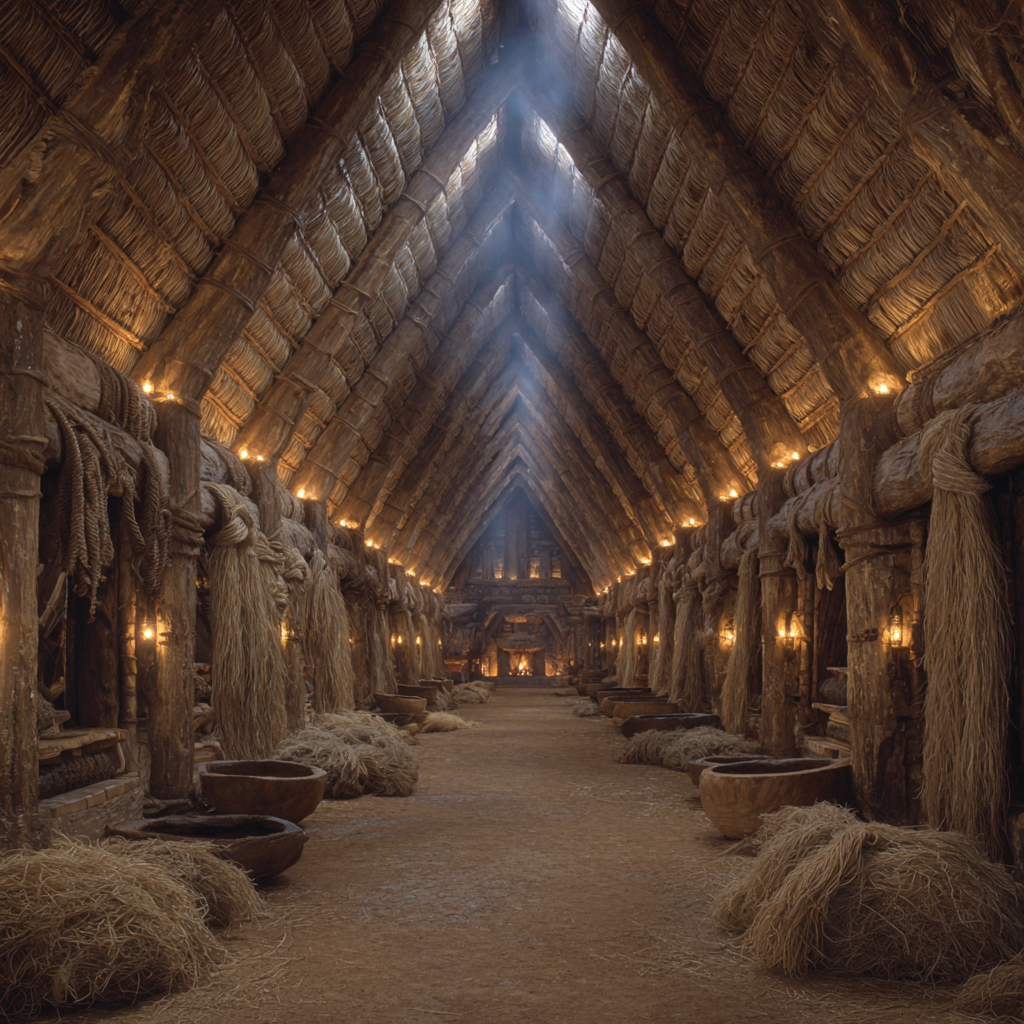
The facility's workflow begins at the preparation end, where raw materials arrive and undergo initial processing. Bundles of harakeke leaves, harvested from plants growing in freshwater seeps scattered across the expanse, are soaked in large wooden vats to soften the fibers before scraping. Workers use specialized shell scrapers to strip away the leaf's outer layers, revealing the long, strong fibers within. These fibers are then washed, graded by quality, and hung to dry on overhead racks that crisscross the ceiling. Coconut husk fiber arrives already partially processed, gathered from nuts that wash up in the Storm Debris Zone, but still requires cleaning, combing, and sorting before use. A separate vat system treats fibers with various preparations: some are soaked in salt water for marine use, others receive oil treatments for flexibility, and specialized batches are dyed using traditional pigments for decorative purposes or identification marking. The preparation area maintains organized storage for processed fiber bundles, sorted by type, quality, and intended use.
The central section of the facility is dominated by twining stations where the actual rope-making occurs. Simple tools belie the considerable skill required: wooden spindles for twisting individual strands, weighted whorls to maintain consistent tension, and specialized frames for combining multiple twisted cords into thicker rope. Rope makers work in pairs or small teams, with one person feeding fiber while another maintains the twist, walking slowly backward down the length of the building as the cord grows. For the heaviest cables, up to six workers coordinate their movements in a carefully choreographed process that can take hours to produce a single length. The rhythm of their work creates a meditative atmosphere, with experienced rope makers able to maintain conversation while their hands work seemingly independently, twisting and splicing with practiced precision. Different techniques produce cordage with different properties: tight three-strand twist for strength, loose braiding for flexibility, or specialized hollow-core construction for lightweight applications. Master rope makers can gauge proper tension by feel alone, ensuring consistent quality throughout each piece.
The finishing area occupies the far end of the building, where completed cordage receives final treatments and quality inspection. Finished rope is coiled using traditional methods that prevent kinking and tangling, then treated with waterproofing compounds for marine use or left natural for applications where grip is more important than weather resistance. A small heat source allows the application of pitch and tar to specialized rigging for boats, while nearby racks hold coils being smoked over slow fires to discourage rot and insect damage. Quality control is rigorous, with test stations where rope is subjected to stress loading and wear testing before being approved for sale. Any piece that fails inspection is either downgraded for less critical uses or carefully unraveled and the fiber recycled into new cordage. Completed rope is bundled by type and length, labeled with maker's marks that identify both the facility and the specific rope maker, and stored in a dry goods area awaiting distribution or sale.
The Rope Twining facility produces cordage essential to virtually every activity in the settlement. Boats need rigging, lashing, and anchor lines. Builders require rope for hauling materials and securing structures. Fishermen depend on lines for nets, traps, and hand fishing. Decorative cordage adorns carvings and ceremonial items. The facility maintains an inventory of common sizes and types for immediate settlement needs while also accepting custom orders for specialized applications. The rope makers take particular pride in producing the massive cables needed for the largest waka, knowing that lives may depend on the strength and reliability of their work. Apprentices train for years to master the subtle arts of fiber preparation, consistent twisting, and proper finishing, learning to read fiber quality and adjust techniques to compensate for variations in raw materials. The facility attracts buyers from across the region, as Vaitafe rope, processed with techniques refined over generations of maritime life, is renowned for reliability and longevity even in harsh salt water conditions.
Benefits
The Rope Twining facility generates 3 Prestige, reflecting the essential nature of cordage to all settlement activities. Each master rope maker employed generates 75 gold per month in sales revenue from cordage sold to other settlements, passing traders, and boat builders. Additionally, the facility provides all basic cordage needs for settlement use at no cost, including rope for construction projects, fishing operations, and daily tasks. Any boat constructed in the settlement's Boatbuilder's Yard automatically includes superior rigging from this facility at no additional charge, improving vessel performance. Duke Karthos may commission specialized decorative cordage for ceremonial purposes once per month at no cost, suitable for important rituals or diplomatic gifts.