Description
The tower's revolutionary design uses vertical space with maximum efficiency. The ground floor houses preparation stations where foods arrive and are cleaned, trimmed, and cut for preservation. The second floor features initial drying areas where foods begin losing moisture under controlled conditions protected from direct sun that might cook rather than cure them. The third floor exposes foods to full sun and wind for rapid moisture removal, with adjustable louvered walls that can be opened or closed to optimize conditions based on weather. The fourth floor provides final conditioning and aging, where nearly-preserved foods spend days or weeks developing full flavor while reaching perfect moisture content. An internal ladder system and rope-operated lifts move foods between floors, and preservation masters stationed at each level monitor progress continuously, moving items up or down based on their assessment of preservation state.
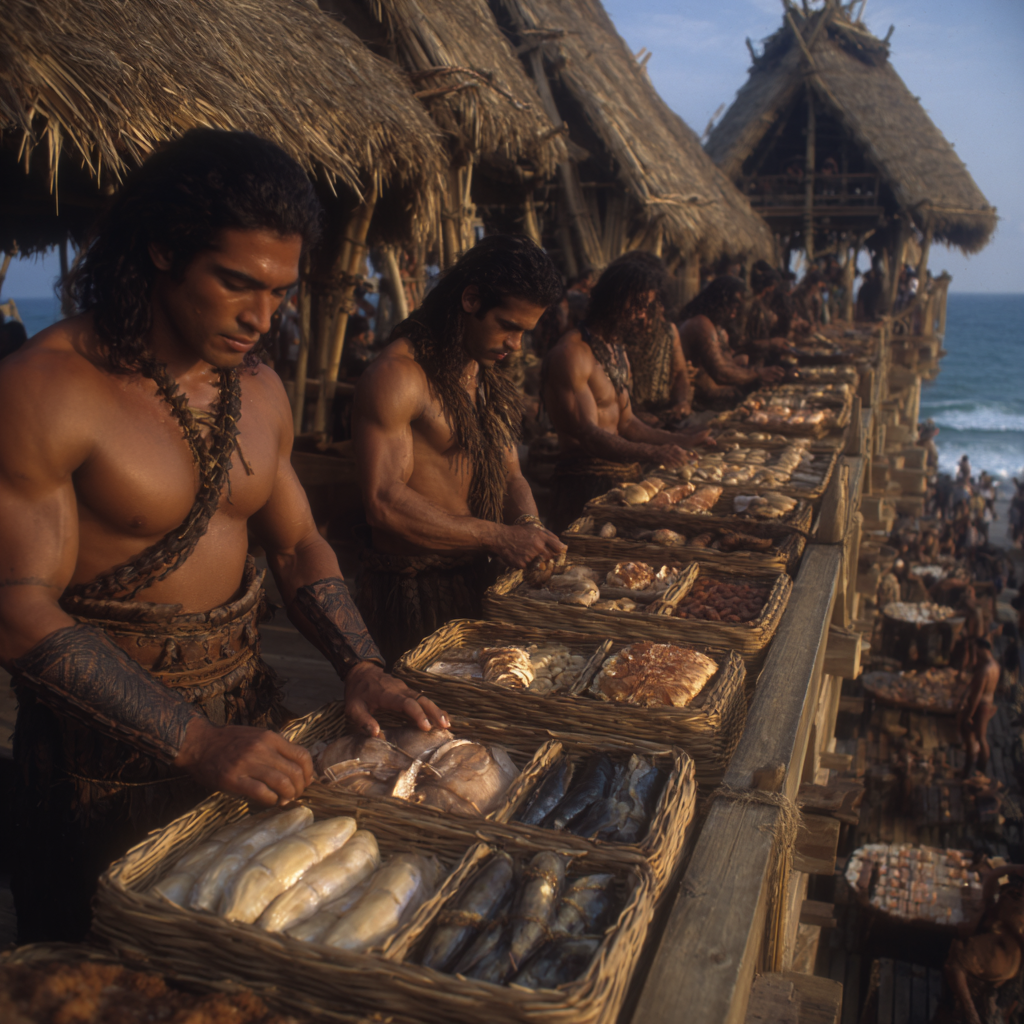
Surrounding the Grand Drying Tower are specialized preservation facilities that showcase the diversity of techniques mastered by the Vaitafe people. The Master Smokehouse contains eight separate smoking chambers, each maintained at different temperatures and smoke densities for different products. Cold smoking chambers preserve delicate fish and seafood without cooking them, hot smoking chambers produce ready-to-eat items, and specialized chambers create intensely flavored products through extended smoking with particular wood combinations. Some chambers smoke foods for days or even weeks, creating deeply complex flavors that connoisseurs consider among the finest preserved foods in the known world. A wood selection and preparation area stores dozens of wood types, each producing distinctive smoke characteristics.
The Salt Curing Pavilion has evolved into a sophisticated operation featuring multiple methods. Dry salt-curing stations layer foods with coarse salt crystals, brine tanks submerge items in precisely calculated salt solutions, and a combination method uses both techniques sequentially. An innovation unique to this facility is the use of flavored salts mixed with ground herbs, spices, and dried seaweed that impart complex flavors during the curing process. The pavilion also produces salt-preserved products that are considered delicacies rather than mere preserved foods, including salt-aged fish that develops flavors similar to aged cheese and salt-cured meats that command extraordinary prices from wealthy traders and nobles. A salt production area harvests and processes sea salt in quantities sufficient to supply the entire operation plus generate surplus for trade.
Advanced preservation methods not typically associated with traditional cultures have been developed through centuries of experimentation. A sugar-preservation facility creates candied fruits and fruit leather by cooking produce with concentrated palm sugar or honey before drying, producing confections that store for years while providing concentrated nutrition and energy. An oil-preservation operation submerges cooked foods in coconut oil, creating preserved items that remain moist and flavorful while being protected from spoilage. A fermentation-preservation collaboration with the settlement's Fermentation Hut produces unique items that combine fermentation with drying or smoking, creating complex flavors impossible to achieve through single methods. A research laboratory experiments with new preservation techniques, recently developing a method involving repeated drying and rehydrating cycles that produces exceptionally tender dried fish.
The complex includes massive storage vaults capable of holding a year's worth of preserved foods for the entire settlement, built partially underground with sophisticated ventilation that maintains ideal conditions while preventing pest access. These vaults are organized by product type and age, with the oldest items rotated to use first and new production continuously replenishing stocks. A packaging workshop produces the containers, wrappings, and seals needed to protect preserved foods, from woven baskets to ceramic jars to specially treated bark cloth. A quality assurance facility tests samples from every production batch, ensuring consistent excellence and identifying any preservation failures before products enter storage or trade. Educational facilities train preservation specialists and host visiting masters from other communities, spreading knowledge while generating income and establishing the settlement's reputation as the premier center of food preservation arts.
Benefits
The Master Preservation Industrial Complex generates an additional 5 Prestige, establishing the settlement as the world's leading center of food preservation. The complex now processes 6,000 pounds of fresh food monthly into 2,200 pounds of preserved products spanning dozens of specialized categories, generating an additional 250 gold per month from sales. P