Description
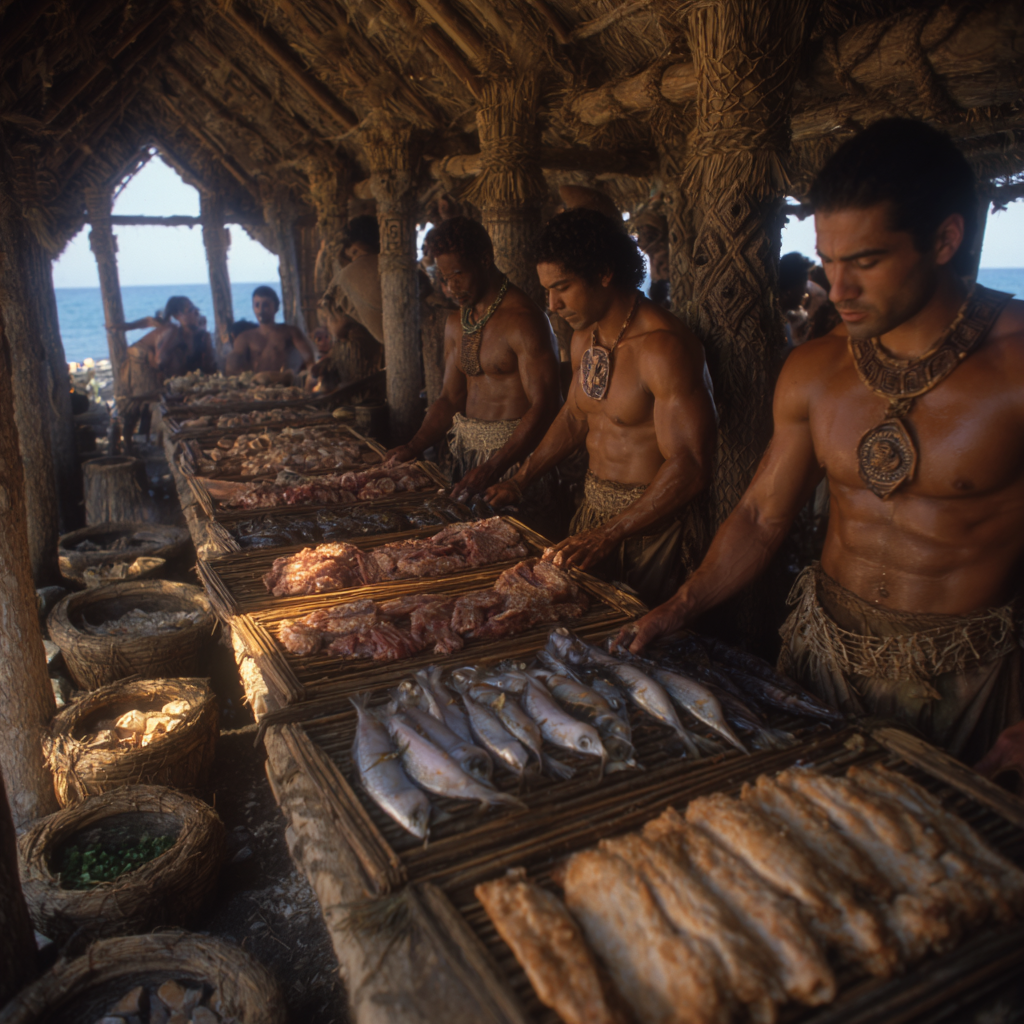
The expanded facility introduces specialized drying zones optimized for different food types. The fish drying section occupies the windward side where constant breezes prevent flies and accelerate moisture removal. Here, fillets are laid on fine mesh racks or hung from hooks, their flesh slowly transforming from soft and perishable to firm and shelf-stable. The meat smoking area features three large smoking chambers instead of one, each dedicated to different meat types or smoke flavors. One chamber handles fish and seafood exclusively, another processes land meats, and the third specializes in creating intensely smoked products for trade. The fruit and vegetable drying section occupies the sunniest area, where thin-sliced breadfruit, kumara, and other produce spread across hundreds of square feet of rack space.
A significant innovation is the addition of a salt-curing station where foods are preserved through salt application before or instead of smoking. Large shallow wooden troughs hold coarse sea salt harvested from the tidal flats, and workers layer fish or meat with salt to draw out moisture while preventing bacterial growth. After several days, the salt-cured items are rinsed and either consumed as is or further processed through smoking or drying for extended preservation. The salt-curing method produces distinctive flavors highly valued in trade and provides preservation options when weather prevents optimal sun-drying. A brine tank allows for wet-curing of larger items or whole fish that will later be smoked.
The complex includes a dedicated packaging and storage facility where finished preserved foods are protected until sale or use. This structure features sections with different humidity levels, as some preserved foods keep best in very dry conditions while others benefit from slight moisture. Dried fish are packed in woven pandanus baskets lined with banana leaves, smoked meats are wrapped in bark cloth treated with coconut oil, and dried fruits and vegetables fill ceramic jars sealed with beeswax. A quality control area allows preservation masters to inspect samples from each batch, ensuring consistent standards and identifying any items showing signs of inadequate preservation before they can contaminate entire storage containers. A record-keeping system tracks production dates, allowing older stock to be rotated out before quality degrades.
Supporting the expanded complex is a sophisticated preparation facility with multiple cleaning and processing stations where fresh foods arrive and are quickly transformed into forms suitable for preservation. Fish cleaning tables with running water speed processing of large catches, while meat cutting stations allow efficient trimming and portioning. A blanching area where vegetables are briefly cooked before drying improves color retention and preservation quality. Workers specializing in particular food types develop exceptional speed and skill, their practiced hands moving with the efficiency that comes from daily repetition. The facility operates from dawn until dusk during peak production periods, with different platforms at various stages of the drying cycle ensuring continuous productivity.
Benefits
The Expanded Preservation Complex generates an additional 3 Prestige. The complex now processes 1,600 pounds of fresh food monthly into 550 pounds of preserved products across diverse categories, generating an additional 250 gold per month from sales.