Description
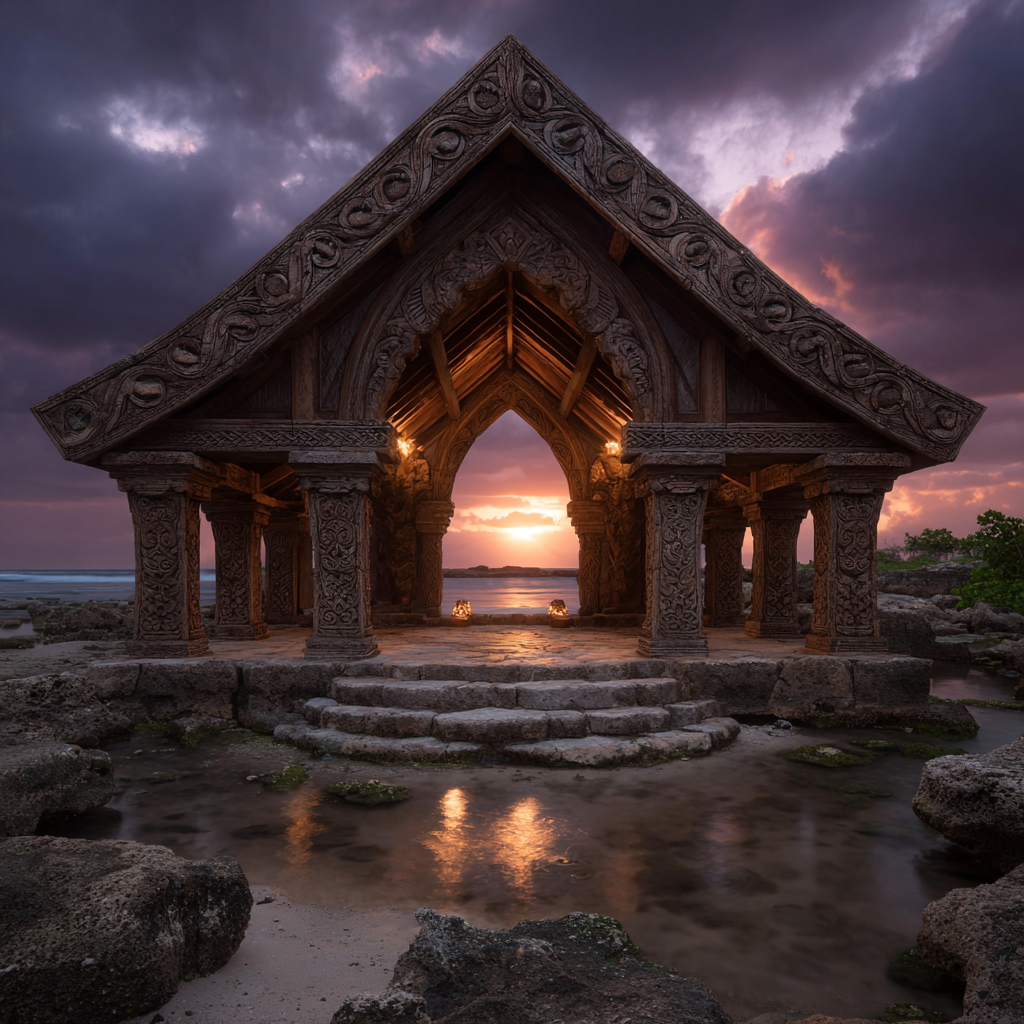
The central structure is an open pavilion built from salt-resistant timber, its roof supported by eight carved posts that represent different aspects of ocean worship common among the Vaitafe people. One post shows a massive wave, symbolizing the ocean's raw power. Another depicts a gentle current cradling fish, representing the sea's nurturing abundance. A third features a whirlpool spiral, acknowledging the dangerous unpredictability that demands respect. Each post tells a different story about why the ocean deserves reverence, and worshippers naturally gravitate toward the posts whose messages resonate with their current needs or beliefs. The roof overhead provides shelter from sun and rain while remaining open on all sides, allowing the sounds and smells of the ocean to permeate the sacred space.
Within the pavilion, a large central altar stone rises from the floor, its surface constantly damp from spray and carved with channels that guide water across its face in patterns that mimic waves and currents. This stone serves as the primary offering surface, and at any given time it bears a diverse collection of gifts left by different worshippers: carved figures of sea creatures, bundles of seaweed tied with colored cord, polished shells arranged in meaningful patterns, small bottles of precious fresh water offered back to the salt, and written prayers on bark-paper weighted down with beach stones. The variety of offerings reflects the personal nature of ocean worship, each individual bringing what feels appropriate to their own understanding of the sea's significance.
Surrounding the central pavilion are six smaller shrine alcoves built into natural rock formations and elevated sand features, each one developed organically based on what worshippers found meaningful. One alcove features a tidal pool that refills with each high tide, where people leave offerings that the ocean can claim or reject based on whether the retreating water carries them away. Another contains a collection of drift-seed specimens from distant lands, representing the ocean as a connector of far-flung places. A third holds a massive piece of coral that washed ashore during a storm, its intricate structure inspiring meditations on natural beauty and patient growth. These alcoves are not assigned specific purposes by any authority, but rather evolve as residents discover what calls to them spiritually about each space.
The shrine is never formally staffed, operating on principles of community maintenance and personal responsibility. Regular worshippers naturally take on the task of keeping the space clean, refreshing offerings before they decay into unsightliness, and repairing damage from storms. This organic stewardship reflects the Vaitafe understanding that relationship with the ocean requires active participation rather than passive observation. Some residents visit daily, incorporating a stop at the shrine into their morning or evening routines. Others come during times of crisis or transition, seeking strength or guidance from whatever ocean forces they believe might provide it. The shrine's power comes not from any organized religious structure but from the accumulated weight of sincere devotion offered freely by individuals who have found meaning in the sea.
Benefits
The Ocean God Altar generates 3 Prestige, as it demonstrates the settlement's spiritual depth and provides a beautiful focal point at the water's edge. Any character who spends at least 15 minutes in sincere meditation or prayer at the shrine gains a +1 sacred bonus on a single check related to ocean, water, or seafaring activities made within the next 24 hours. This might apply to Profession (sailor), Swim checks, Knowledge (nature) checks about marine life, or even combat checks against aquatic creatures, depending on what the character prayed for and what the GM deems appropriate. Additionally, once per week, a character may make a significant offering at the shrine (worth at least 25 gold) and meditate for one hour to gain the benefit of bless water affecting a flask of seawater, which the character may then use or give to another.