Description
The soil itself represents months of careful preparation and ongoing maintenance. Base layers of sand are mixed with decomposed kelp, crushed shells for minerals, and composted organic matter hauled from the settlement's waste management systems. This enriched growing medium, constantly amended with seaweed gathered after storms and fish waste from the daily catches, provides the nutrients that coastal medicinal plants require. The dimensional bubble's accelerated growth properties mean plants mature five times faster than normal, allowing the garden to produce usable medicinal herbs in mere weeks rather than seasons. The herbalist carefully monitors moisture levels, as the sandy base drains quickly but the salt-laden air provides humidity. Woven windbreaks made from harakeke are positioned strategically around the perimeter, reducing wind exposure while allowing adequate air circulation to prevent fungal diseases common in maritime climates.
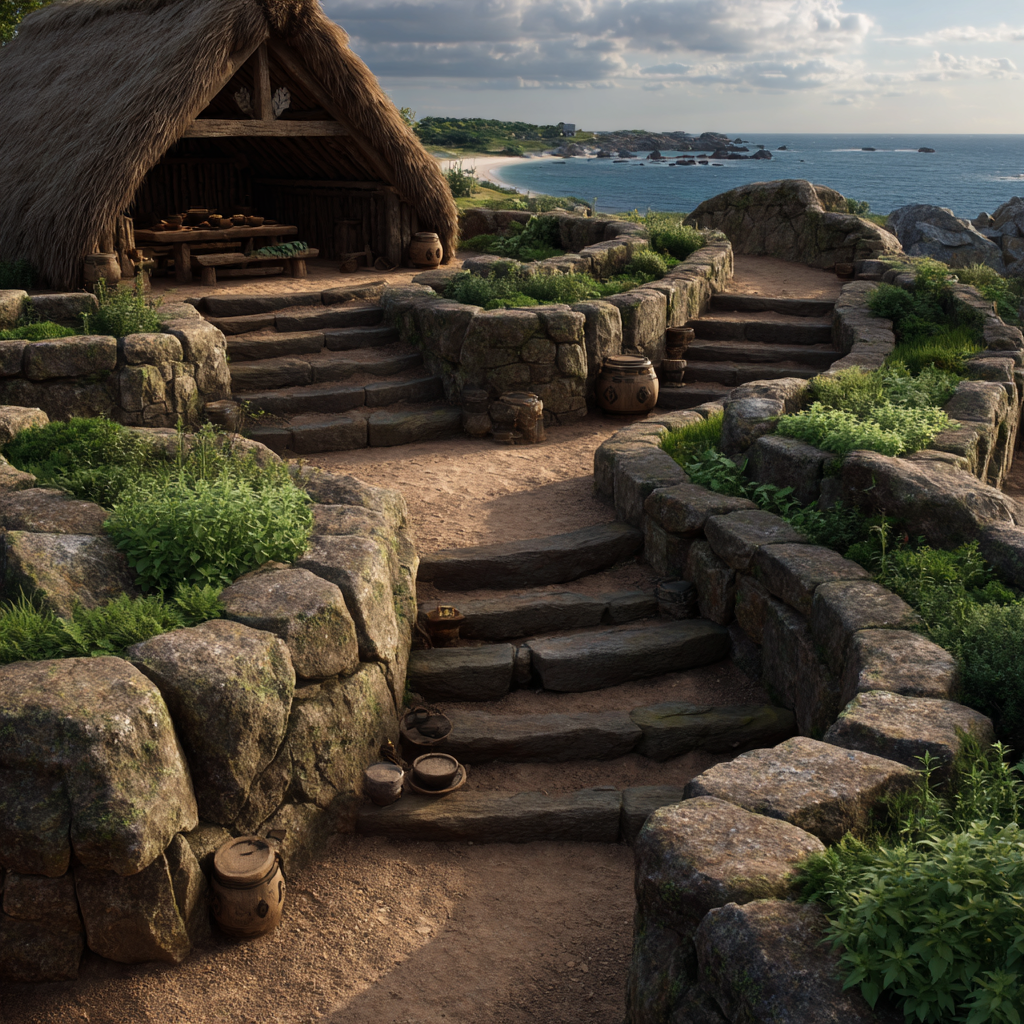
The uppermost terrace is dedicated to plants requiring full sun and excellent drainage: sea fennel with its fleshy leaves used to treat scurvy and joint pain, beach morning glory whose roots are mashed into poultices for treating wounds, and salt grass whose seeds are ground into a powder that settles upset stomachs. Wooden trellises support climbing medicinal vines, while carved markers identify each plant by its Vaitafe name and primary medicinal use. The middle terrace hosts plants preferring partial shade, protected by the upper terrace during the most intense midday sun. Here grow clusters of coastal sage used for fever reduction, beach primrose whose flowers are steeped into teas for treating anxiety and insomnia, and rare specimens of tide pool moss carefully transplanted from their natural habitat. This moss, when properly dried and powdered, creates a paste that prevents infection in open wounds. The lowest terrace, receiving the most shade and retaining the most moisture, cultivates kelp varieties in shallow pools fed by seawater during high tide. These pools, lined with clay hauled from inland sources, contain species of healing kelp: thick-blade varieties rich in nutrients that speed recovery from illness, and red kelp whose extracts reduce inflammation and promote bone healing.
Walking paths made from crushed shells wind between the terraces, providing the herbalist access to every plant without compacting the growing beds. Stone benches at strategic points offer places for rest and observation, as the herbalist must constantly monitor the garden for signs of stress, disease, or pest damage. Carved wooden boxes mounted on posts around the perimeter serve multiple functions: some contain tools like small hand trowels, pruning knives, and collection baskets, while others hold prepared compost ready for application. A small storage shed at one end of the garden, built in traditional style with woven walls and a thatched roof, houses larger tools, drying racks for harvested herbs, and sealed containers protecting dried medicinal supplies from moisture and salt air. Inside, bundles of harvested plants hang from rafters to cure, filling the space with complex aromas: the sharp tang of sea fennel, the sweet earthiness of beach primrose, the clean ocean scent of fresh kelp. A workbench allows the herbalist to prepare remedies on site, grinding dried leaves into powders, mixing healing salves, and creating the tinctures and teas that stock the Tohuanga's shelves.
The garden also serves an educational function. Young apprentice healers learn to identify plants by sight, smell, and touch, understanding which part of each plant holds medicinal value and the proper timing for harvest to ensure maximum potency. The herbalist teaches proper gathering techniques that ensure plants regenerate, sustainable practices that will allow the garden to provide healing ingredients for generations. Rare specimens discovered in the wild tidal zones are carefully transplanted here, where they can be studied and propagated. The dimensional bubble's magic allows experimentation with species that normally couldn't survive in such a harsh coastal environment, expanding the garden's medicinal repertoire beyond what natural limitations would normally allow.
Benefits
The Medicinal Garden generates 2 Prestige, demonstrating the settlement's self-sufficiency in healthcare and commitment to traditional healing knowledge. The garden produces enough medicinal herbs that the Tohuanga's daily healing ritual improves from 2d8+2 to 2d10+2 hit points restored. Additionally, the herbalist can produce five doses of antitoxin per week, three healing poultices that each heal 1d8 hit points when applied, and two fever-reducing teas that grant a +4 bonus on saves against disease.