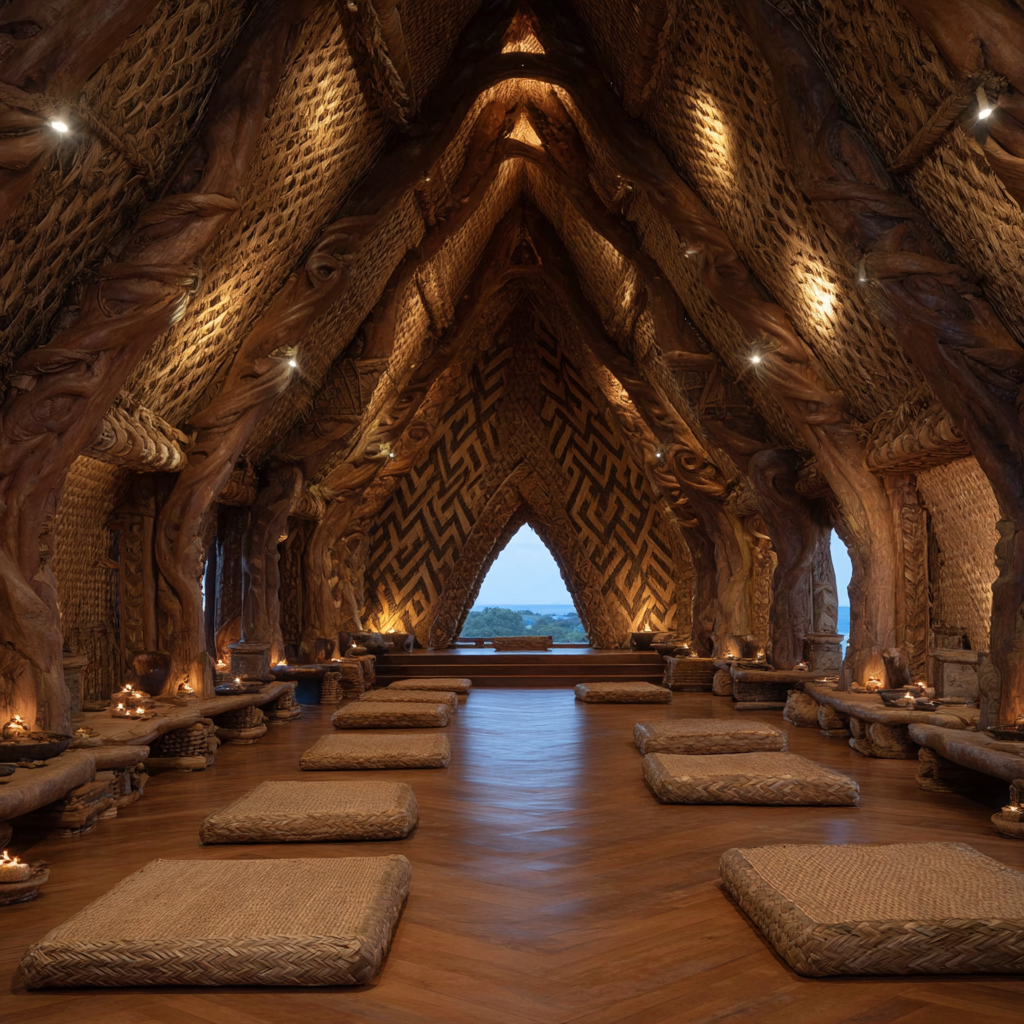
Description
The preparation area occupies approximately one-third of the workshop space, where raw pandanus leaves and bundles of sedge grass undergo processing before weaving can begin. Pandanus leaves, harvested from plants growing near freshwater seeps and in the Storm Debris Zone, arrive green and flexible but require careful treatment to achieve the proper texture and color for weaving. Workers split the thick leaves lengthwise into strips of consistent width using shell blades and bone awls, a process requiring steady hands and keen eyes to maintain uniformity. These strips are then sorted by quality, with the finest going toward ceremonial mats and lesser grades reserved for everyday items. Sedge grasses, gathered from tidal pools and marsh areas, receive different treatment, being dried completely before being dampened again just before weaving to achieve the right balance of flexibility and strength. Both materials can be dyed using traditional methods, with vats of natural colorants producing rich browns from walnut hulls, deep reds from certain seaweeds, golden yellows from turmeric root obtained through trade, and blacks from mud treatments combined with iron-rich water. Dyed materials hang from ceiling racks organized by color and material type, creating a rainbow effect overhead.
The main weaving area features multiple work stations arranged in rows, each consisting of a cushioned seat and a low working frame where mats take shape. Weavers employ various traditional techniques depending on the intended use of the finished piece. Simple over-under plaiting creates sturdy floor mats that withstand heavy foot traffic, while more complex patterns involving multiple strands and intricate crossings produce decorative pieces suitable for wall hangings or ceremonial use. The most skilled weavers create geometric patterns without written instructions, holding generations of design knowledge in their minds and fingers. Some patterns carry specific meanings: diagonal lines represent rain and abundance, zigzags symbolize the ocean's waves, and interlocking squares depict community connections. Master weavers can incorporate multiple colors into a single piece, creating images of sea creatures, ancestral figures, or abstract designs that demonstrate virtuoso control of the medium. Apprentices begin with simple plaiting and progress over years to master the complex patterns that mark truly exceptional work.
A finishing and quality control section occupies the rear of the workshop, where completed mats receive final treatments and inspection. Finished pieces are trimmed to precise dimensions, with edges either left as natural fringe or bound with dyed cordage for added durability. Some mats receive a light coating of natural oils that enhance their water resistance and bring out the colors of dyed materials, while ceremonial pieces might be scented with aromatic plant extracts. Each mat is carefully inspected for consistency of weave, structural integrity, and pattern accuracy. Those meeting the workshop's standards receive a subtle woven signature mark identifying the maker and the workshop, adding value and ensuring quality reputation. Completed mats are rolled or folded according to type and stored in a climate-controlled area where they await sale or delivery to customers who have placed special orders.
The Mat Weavers workshop produces items essential to virtually every aspect of settlement life. Sleeping mats provide cushioning and insulation from ground moisture in every dwelling. Floor mats protect wooden surfaces and define spaces within buildings. Wall hangings add beauty and additional insulation to structures. Ceremonial mats mark important occasions, serve as gifts, and function as displays of wealth and cultural refinement. The workshop accepts commissions for weddings, coming-of-age ceremonies, and other significant events, creating custom pieces that become family treasures. Beyond local needs, the workshop's production supports robust trade with other settlements and passing merchants, as Vaitafe mats are renowned for their tight weave, durability, and distinctive patterns. The workshop also serves as a social gathering place where weavers share news, tell stories, and pass down traditional knowledge, ensuring that ancient patterns and techniques survive intact for future generations while occasionally innovating new designs that reflect contemporary life in the Tidal Expanse.
Benefits
The Mat Weavers workshop generates 3 Prestige, reflecting the essential nature of mat production to comfortable living and cultural expression. Each master weaver employed generates 100 gold per month in sales revenue from mats sold locally and to traders seeking quality Vaitafe textiles. The workshop provides basic sleeping and floor mats to all settlement residents at no cost, ensuring that even the poorest families have access to comfortable, culturally appropriate furnishings. The Duke may commission one elaborate ceremonial mat per month at no cost, suitable for important gatherings or diplomatic gifts.