Description
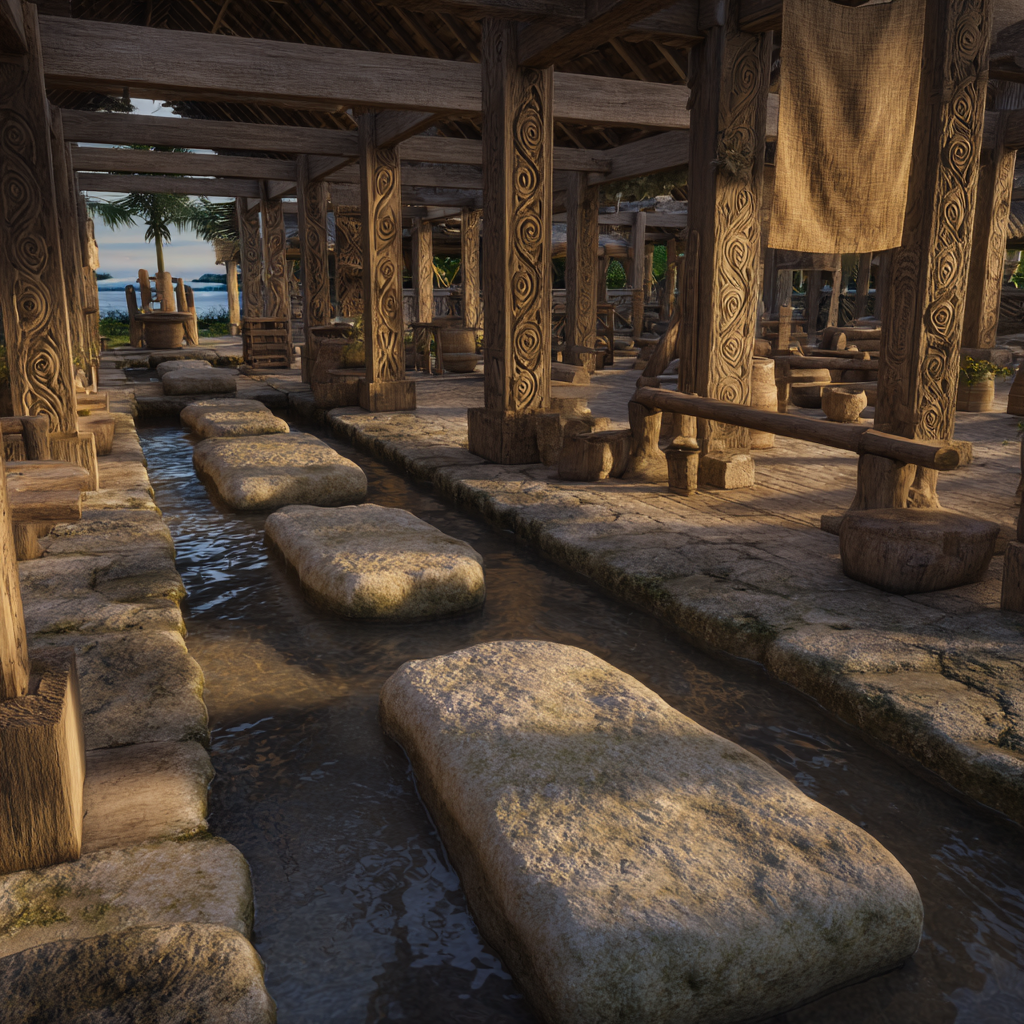
The stream itself is carved into the elevated stone platform in a graceful serpentine path, mimicking the natural flow of water across land. The channel measures eighteen inches wide and six inches deep, with smooth walls that prevent snagging of fabrics while maintaining a steady current strong enough to carry away soap, dirt, and sand. The water enters the system through a carved spout fed by bamboo pipes from the freshwater cisterns, the flow rate controlled by a simple wooden gate that can be adjusted to provide more or less water depending on the volume of washing being done. At the entry point, the water passes through a simple filter of woven coconut fiber that catches any debris from the cisterns, ensuring only clean water reaches the washing area.
Along both sides of the stream, at intervals of approximately six feet, are positioned large flat washing stones. These stones, each measuring about three feet long, two feet wide, and standing at a comfortable hip height, have been carefully selected from the Storm Debris Zone for their smooth, slightly textured surfaces that are ideal for scrubbing and beating fabrics without causing excessive wear. The stones are set into sturdy wooden frames carved from weather-resistant mangrove wood, angled slightly toward the stream to allow rinse water and soap to flow directly into the channel rather than pooling on the work surface. Each washing stone shows subtle wear patterns from use, the repeated beating of wet cloth gradually smoothing depressions into the rock where washers most commonly strike.
Between the washing stones, carved wooden benches provide seating for those who prefer to work sitting down or who need to rest between the vigorous activity of scrubbing and beating. These benches are positioned at an angle that allows washers to easily reach both the stone and the stream, facilitating the rhythmic process of wetting, soaping, scrubbing, rinsing, and wringing that defines traditional Vaitafe laundry methods. Storage niches carved into posts supporting a partial roof structure hold supplies of washing compounds, traditionally made from crushed soapberry nuts, volcanic ash that acts as an abrasive cleanser, and various plant extracts that impart pleasant scents while discouraging insects from infesting stored textiles.
The downstream section of the facility features a shallow soaking basin, carved as a widening of the main stream channel into a pool approximately ten feet long, six feet wide, and eight inches deep. This basin allows heavily soiled items to soak in flowing water before washing, loosening ground-in sand and salt that would otherwise require excessive scrubbing. The basin bottom is lined with small smooth pebbles that allow particularly stubborn stains to be ground out by treading on the soaked fabric, a traditional technique that is both effective and less wearing on textiles than harsh beating. Beyond the soaking basin, the stream continues through a final rinsing section where washed items can be dunked in clean flowing water one last time to remove any remaining soap before wringing and hanging.
An extensive drying area occupies the space adjacent to the washing stations, taking advantage of the constant sea breezes that sweep across the Spine Bars. Parallel wooden racks stand at regular intervals, constructed from driftwood poles lashed together with coconut fiber cordage. These racks stand seven feet tall, allowing long pieces of tapa cloth and large woven mats to be draped over the upper bars while keeping them high enough above the sand to prevent contamination. Lower horizontal bars at various heights accommodate smaller items, with the entire structure designed to allow air circulation from all directions for efficient drying. The racks are positioned in rows oriented perpendicular to the prevailing winds, maximizing air flow while the elevation prevents spray from the ocean during all but the most severe weather. A secondary set of ground-level drying areas features flat stones arranged in a sunny clearing where items can be spread flat to dry, particularly useful for smaller pieces or items that need the sun's bleaching effect to remove stubborn stains.
Benefits
The Laundry Stream generates 2 Prestige, as it demonstrates the settlement's commitment to cleanliness and proper resource management. Having dedicated washing facilities with flowing freshwater allows residents to keep their clothing and bedding clean and free from the salt buildup and sand infiltration that would otherwise cause health problems and material degradation. The facility grants all residents a +1 bonus on saving throws against disease caused by poor hygiene. Additionally, the communal nature of laundry work creates strong social bonds among those who wash together, providing opportunities for conversation, storytelling, and the transmission of traditional knowledge. Once per week, the settlement can perform a large-scale washing of all communal textiles, maintaining morale and preventing the accumulation of pests that thrive in dirty fabrics.