Description
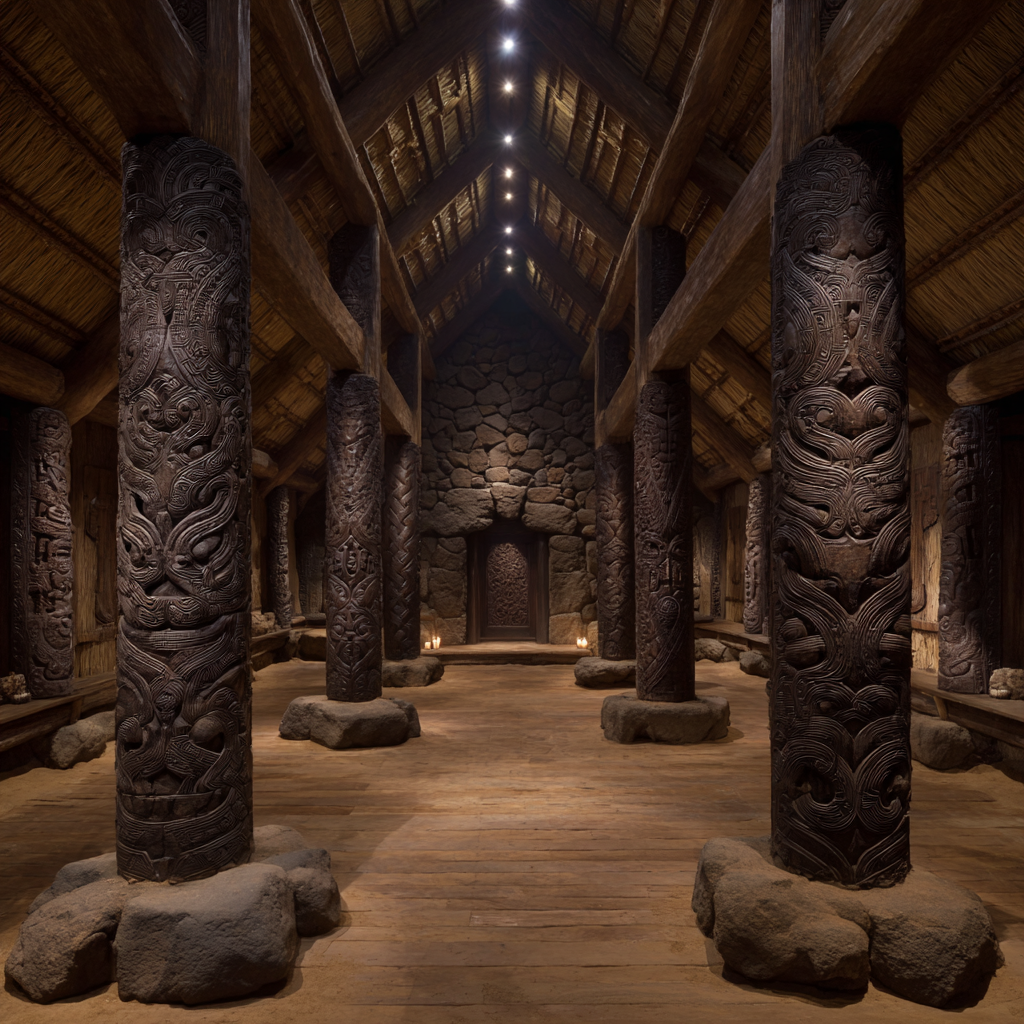
The Genealogy House stands as one of the most revered structures in the entire settlement, built on the most stable section of the central Spine Bar where flooding has never been recorded even during the fiercest king tides. The building is constructed with exceptional care, its foundation raised a full ten feet on massive stone pillars quarried from inland mountains and transported at great expense. The structure itself is rectangular and spacious, measuring forty feet long by twenty-five feet wide, with walls made from tightly fitted planks of weather-resistant hardwood sealed with tree resin to prevent any moisture infiltration. The peaked roof is triple-layered with palm thatch, bamboo matting, and an outer shell of overlapping wooden shingles, creating an impenetrable barrier against rain and salt spray. Ventilation gaps near the roof peak allow air circulation while preventing water entry, ensuring the precious records within remain dry in all conditions.
Inside, the Genealogy House is divided into three distinct chambers, each serving a specific purpose in the preservation of tribal knowledge. The main hall dominates the space, its walls lined floor to ceiling with carved wooden panels and woven flax hangings upon which genealogical information is meticulously recorded. Each family line is represented by a vertical column of names carved into hardwood boards, starting with legendary ancestors at the top and descending through generations to living members at the bottom. These boards are removable, allowing them to be taken down for updating when births, marriages, or deaths occur. Color-coded shell beads strung on cords connect related family lines, showing marriages and alliances between different tribal branches, creating a visual web of relationships that trained genealogists can read at a glance.
The second chamber serves as a working space for the tohunga whakapapa, the keeper of genealogies, and their assistants. Here, large tables provide space for laying out genealogical charts when researching specific lineages or settling disputes over inheritance and tribal standing. Shelves hold carefully organized bundles of harakeke fiber cords with complex knot patterns, each knot sequence encoding genealogical information in a tactile format that can be read even in darkness. These knotted cords serve as backup records, ensuring that if the carved boards are somehow damaged, the knowledge is not lost. Clay tablets inscribed with simplified family trees provide yet another layer of redundancy, sealed in waterproof baskets and stored in the chamber's driest corner. The walls here display teaching charts showing the correct forms of relationship terminology and the proper ways to recite one's lineage during formal ceremonies.
The third and most sacred chamber is the repository of ancient lineages, accessible only to the Duke, high-ranking tohunga, and family members researching their direct ancestry with proper authorization. This inner sanctum contains the oldest genealogical records, some dating back thirty or more generations to the legendary founders of the Vaitafe people. These ancient records are carved into precious materials including whalebone, turtle shell, and rare hardwoods that resist decay. The chamber is kept deliberately dark to protect these treasures from light damage, with only a single lamp lit when the room is in use. A small altar in the corner holds offerings to the ancestors whose names fill the room, acknowledging that these records represent not merely information but the spiritual connection between the living and those who came before.
The Genealogy House functions as the authoritative source for all matters of lineage within the settlement. Families visit regularly to update their records when children are born, to register marriages that link different bloodlines, and to record the passing of elders. The tohunga whakapapa spend countless hours memorizing the complex relationships between families, as oral recitation remains the primary method of preserving genealogy despite the physical records. Young people of high rank come here to learn their complete ancestry, spending weeks memorizing the names of their forebears stretching back generations, a recitation that may take hours to perform correctly. The house also serves judicial functions, as disputes over land rights, inheritance, or tribal standing are settled by consulting the authoritative genealogical records maintained within its walls. The building represents the Vaitafe people's deepest values, their belief that knowing where you come from defines who you are and your place in the community.
Benefits
The Genealogy House provides comprehensive genealogical services to the settlement. Any character of Vaitafe descent can research their ancestry here, potentially uncovering important family connections, forgotten alliances, or hereditary rights. Such individuals may roll 1d100. On a roll of 12 or less, the character can discover that their bloodline is actually differenent then they thought, effectively asking the GM to give them a new one. Within one month (provided the character is at least 10 years old) the character will develop this new bloodline, though power levels are never guaranteed.