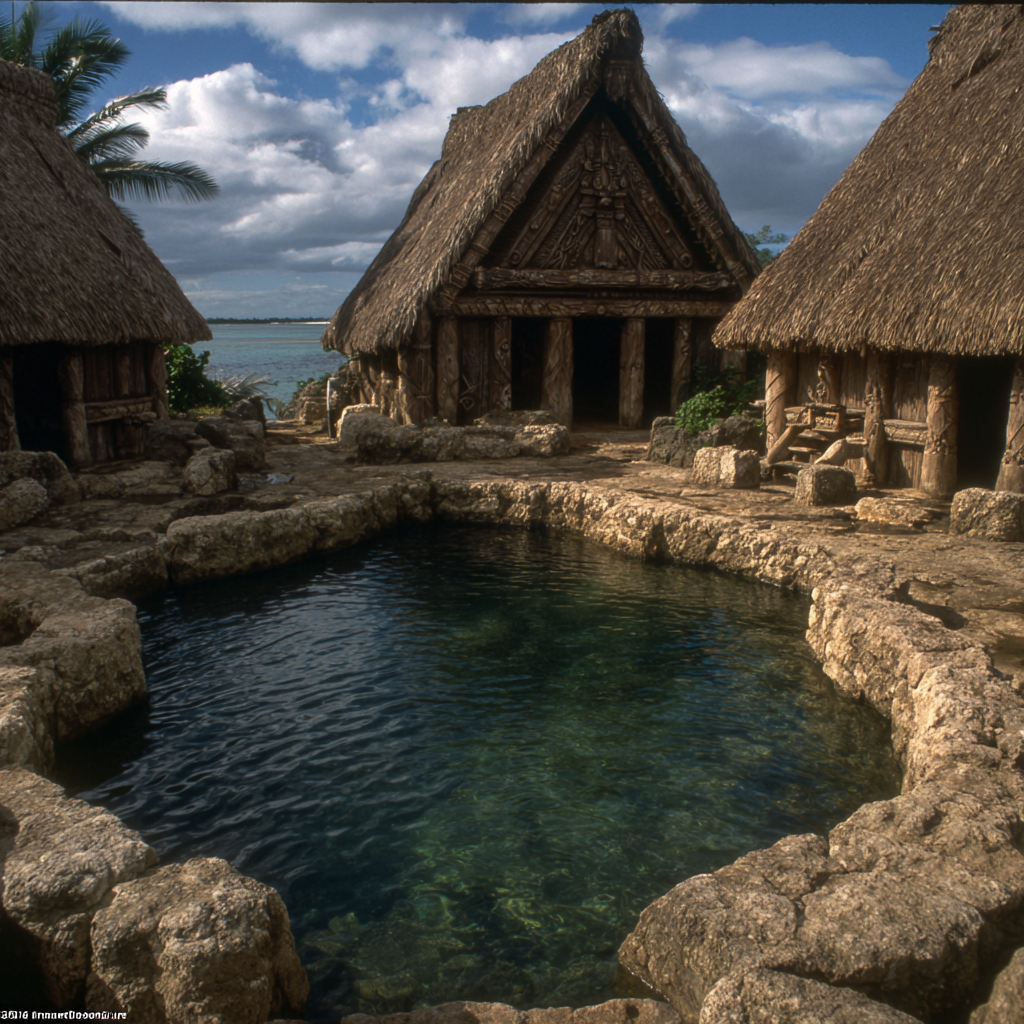
Description
The collection infrastructure has evolved into a settlement-wide system that captures rainfall from every structure and designated surface. An intricate network of gutters, pipes, and channels transforms the entire settlement into a giant water-harvesting machine. The system includes primary collectors on major buildings, secondary collectors on minor structures, and tertiary collectors that are simply low-lying areas contoured to channel water toward collection points. Every surface has been evaluated for its water-collection potential, and the system extracts maximum value from every rainfall event. Advanced meteorological knowledge allows water tenders to predict rainfall and prepare the system accordingly, closing or opening various collection paths to direct water toward cisterns with available capacity.
The distribution network has expanded into a sophisticated dual-pipe system that delivers different water qualities for different uses. The premium distribution line carries highly filtered water suitable for drinking and cooking directly from the main reservoirs through an extensive pipe network with standpipes positioned every fifty feet throughout the settlement. The utility distribution line carries less-filtered water suitable for agriculture, cleaning, and industrial processes, allowing conservation of premium water for essential uses. The pipes themselves are now constructed from carefully fitted sections of ceramic fired specifically for water transport, superior to wooden pipes in durability and cleanliness. Bronze fittings at key junctions provide leak-proof connections and adjustable flow control. The entire system operates through gravity, though several elevated tanks positioned on towers provide pressure for serving upper areas of the settlement.
Water treatment has reached remarkable sophistication for a traditional culture. The filtration system includes five progressive stages: coarse screening removes large debris, sand filtration removes particles, biological filtration using special algae and plants removes organic contaminants, charcoal filtration removes odors and improves taste, and final mineral filtration through crushed coral adds beneficial minerals while making a final purity pass. The result is water so clean and sweet-tasting that traders sometimes purchase it specifically for drinking rather than just for ship supplies. A revolutionary addition is a limited water distillation system that uses solar heat to evaporate and recondense water, removing even dissolved salts and producing ultra-pure water for special medical and ceremonial uses.
The infrastructure includes sophisticated water reuse and conservation systems that extract maximum value from every gallon. Graywater from washing and cleaning is collected separately and channeled to irrigation systems for agriculture, preventing contamination of fresh water while conserving resources. Rainwater runoff from paved areas is captured and stored in separate cisterns for non-drinking uses. Condensation collection systems harvest moisture from the humid sea air using large surfaces that cool at night, producing small but meaningful amounts of additional fresh water. Storm surge barriers protect cisterns from salt water intrusion during extreme high tides. Emergency protocols can quickly isolate contaminated sections of the system while maintaining supply from clean sources.
The entire operation is managed from the Master Water House, an impressive structure housing the largest settlement team outside of food production. Inside, a three-dimensional model of the entire system allows operators to visualize water flow throughout the settlement. Detailed records tracking decades of rainfall patterns, consumption rates, and seasonal variations inform predictions and planning. A research laboratory develops new filtration methods and tests innovations in water management. Educational facilities train water tenders and host visiting engineers from other settlements, spreading knowledge while generating income. A sacred shrine dedicated to water deities receives offerings thanking the gods for rainfall, and traditional ceremonies are performed during droughts to call the rains. The Master Hydraulic Infrastructure ensures that fresh water, the most precious resource in any coastal settlement, is never a limiting factor in the community's growth and prosperity.
Benefits
The Master Hydraulic Infrastructure generates an additional 3 Prestige, establishing the settlement as possessing mainland-quality water management. The system provides over 200,000 gallons of storage capacity, ensuring absolute water security under all conditions and supporting unlimited settlement growth. This final improvement boosts all settlement income by another 5%.