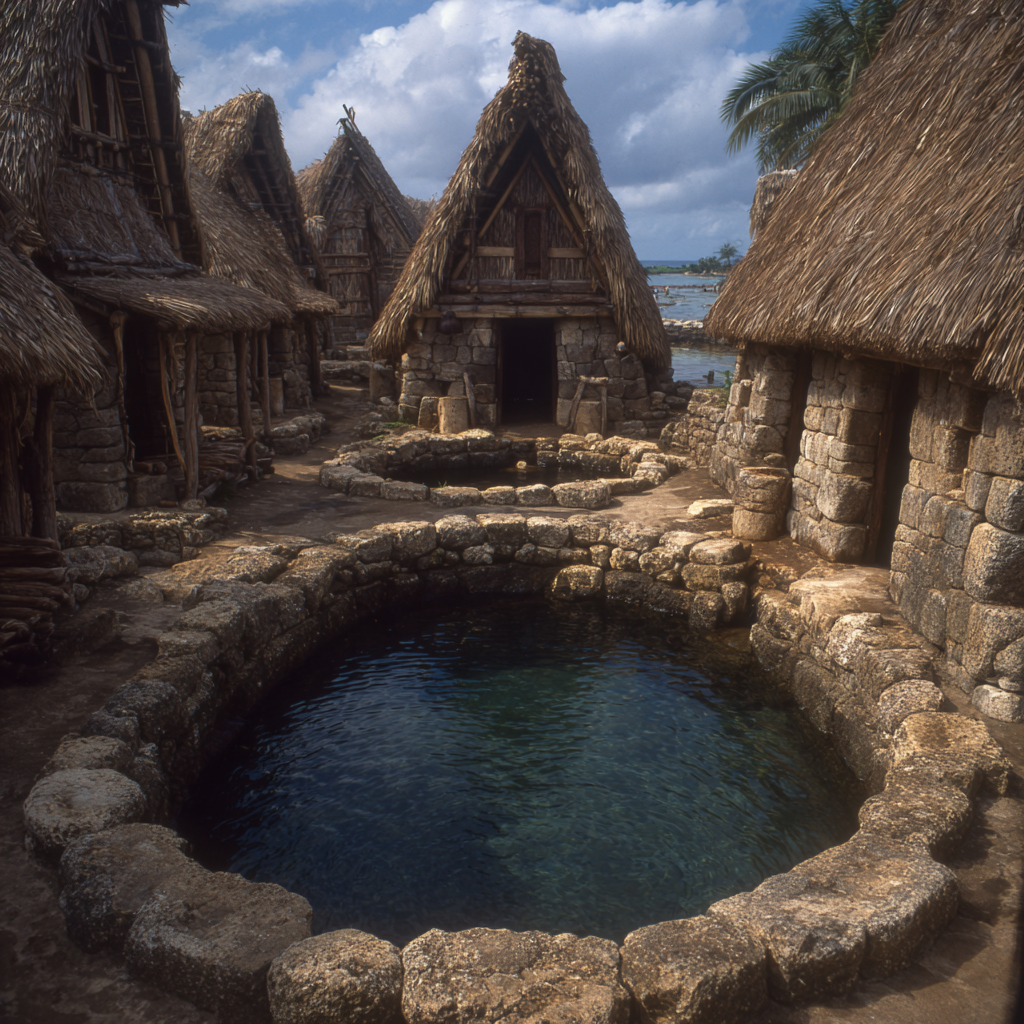
Description
The expanded system features dramatically improved rainwater capture infrastructure. Large collection surfaces have been constructed specifically for water gathering, including several purpose-built roofs that serve no function except to catch rainfall. These roofs, some measuring thirty feet across, are constructed with precise angles calculated to maximize water flow toward collection points while shedding wind effectively during storms. The roofs use woven pandanus treated with special preparations that prevent rot while remaining flexible enough to withstand strong winds. A network of interconnected gutters and pipes creates a comprehensive collection system that can capture nearly every drop of rain that falls on designated areas.
Revolutionary for a traditional settlement is the integrated distribution system that delivers water throughout the settlement using gravity-fed pipes. Carved wooden pipes, some hollowed from single logs and others constructed from curved staves bound together, run from the main reservoir to major activity areas. The pipes are buried partially underground to protect them from damage and keep water cool. Simple valves carved from hardwood control flow at distribution points, and the system includes vertical standpipes where users can fill vessels without traveling to the main cisterns. The distribution network dramatically reduces labor time spent carrying water while ensuring more equitable access across the settlement.
The system incorporates multiple filtration stages that significantly improve water quality. Initial fiber filters remove debris from collected rainwater, but now the water passes through additional filtration before reaching the main reservoir. Sand filters, constructed by filling wooden boxes with layers of fine sand, crushed shell, and charcoal, remove smaller particles and improve taste. Some cisterns include bio-filtration where aquatic plants grown in separate chambers naturally purify water through their roots before it enters storage. The multi-stage filtration produces exceptionally clean water that remains fresh-tasting even after weeks in storage. A dedicated testing protocol ensures water quality, with tenders checking for cloudiness, unusual odors, or taste problems that might indicate contamination.
Supporting the expanded system is a water management house where the growing team of water tenders coordinates operations. Inside, carved wooden panels display the entire cistern network with movable markers indicating current water levels in each container. Records track rainfall patterns, seasonal variations, and consumption rates, allowing predictions about water availability and need. A tool workshop maintains the extensive pipe network, replacing sections damaged by roots or weathering, and manufactures the specialized valves and connections that keep the system functioning. Educational displays teach residents about water conservation, proper cistern use, and the importance of keeping collection surfaces clean. A small laboratory tests water samples and develops improved filtration methods.
Benefits
The Expanded Water Management System generates an additional 3 Prestige. The system provides 28,000 gallons of storage capacity, sufficient for all settlement needs including expanded agriculture, manufacturing, and personal use. The distribution network increases overall settlement productivity by reducing time spent on water carrying, effectively granting a 5% increase in efficiency for all labor-intensive activities. The system can sustain the settlement through two months of drought with moderate conservation measures. The increased availability of this fresh water now increases settlement income by another 5%