Description
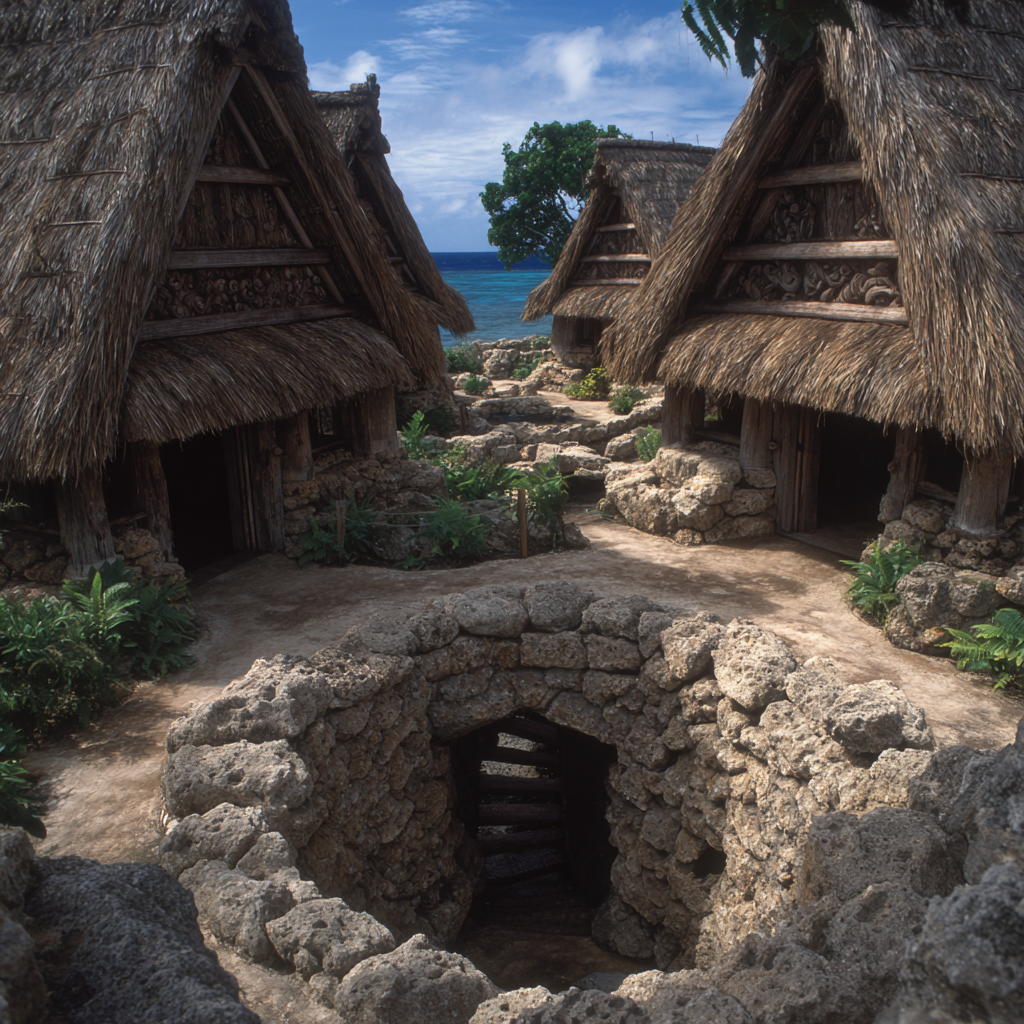
The cisterns are fed by simple but effective rainwater collection systems. Woven palm-thatch roofs angled for maximum water capture are positioned above and around each cistern, their surfaces treated with coconut oil to repel debris while allowing clean water to flow toward central collection points. Carved wooden gutters channel rainfall from these roofs into clay pipes that direct water through woven fiber filters before it enters the cisterns. The filters, made from layers of fine-mesh coconut fiber and crushed shell, remove leaves, insects, and larger debris, ensuring relatively clean water enters storage. The cistern tops are covered with fitted wooden lids that prevent evaporation, keep out debris and animals, and reduce algae growth that might occur if sunlight reached the stored water.
Each cistern features a simple drawing system using hollowed bamboo pipes sealed with wax at joints, allowing water to be extracted without contaminating the main supply. Clay vessels with tight-fitting lids sit near the cisterns for daily water collection, and a dedicated water tender maintains the system by cleaning filters regularly, inspecting for leaks or damage, and ensuring the water remains fresh and potable. During heavy rains, overflow pipes direct excess water away from the cisterns to prevent flooding, and this overflow is channeled toward agricultural areas where it provides supplemental irrigation. During dry periods, the stored water is carefully rationed, with drinking and cooking taking priority over other uses.
The cistern system serves multiple essential functions. Fresh water for drinking and cooking is drawn daily, with each household receiving allocations based on size and needs. The water is considered precious, and waste is actively discouraged through community standards and oversight. Agricultural operations receive supplemental water during dry spells, preventing crop failures during droughts. Basic washing and cleaning activities use cistern water sparingly, with salt water from the ocean handling most heavy cleaning tasks. The cisterns also provide a reserve for emergency situations such as extended droughts or contamination of natural water sources.
The water tender's role is one of significant responsibility in the settlement. This person monitors rainfall patterns, tracks water usage, maintains detailed records using a carved notched stick that indicates water levels and consumption rates, and makes recommendations about conservation measures when reserves run low. During the rainy season, the tender ensures all cisterns fill to capacity, performing maintenance that would be difficult when they hold water. The community has learned that proper water management can mean the difference between prosperity and hardship in the challenging coastal environment.
Benefits
The Basic Cistern System generates 2 Prestige, demonstrating the settlement's capacity for essential infrastructure. The cisterns provide 3,500 gallons of freshwater storage capacity, sufficient for the settlement's basic drinking, cooking, and agricultural needs under normal rainfall conditions. During the rainy season, the cisterns capture and store sufficient water to sustain the settlement through several weeks of drought. This clean water also increases all aspects of the settlement's life, increasing all income by 5%.