Description
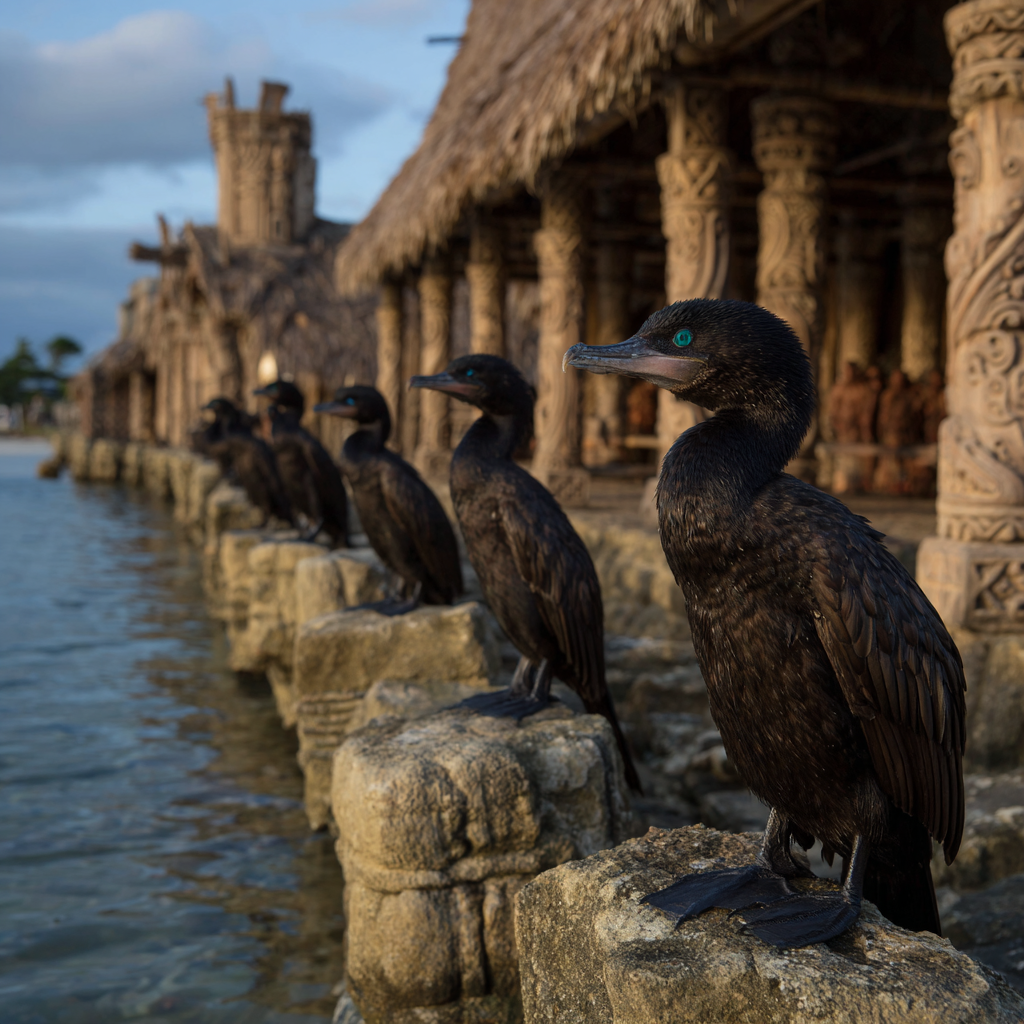
The Fishing Bird Platforms rise from the shallow waters at the edge of a prominent Spine Bar, positioned where tidal channels create natural fish runs during the changing tides. A series of tall posts crafted from ironwood and salt-cured driftwood stand in a curved line extending into the water, each topped with a carefully shaped perching platform. The platforms are carved with subtle grooves and ridges that provide secure footing for wet talons, and each features a small raised section where birds can rest between fishing sessions. Traditional protective carvings adorn the base of each post, invoking the blessing of the ocean spirits upon both bird and fisherman.
On the shore, a covered training pavilion built in classic Vaitafe style houses the birds when they are not working. The structure features a sloped pandanus-thatched roof and walls of woven palm fronds that can be opened wide during the day for ventilation or secured during storms. Inside, individual perches are arranged at various heights, each assigned to a specific bird and marked with carved identification symbols. Shallow stone basins filled with fresh water allow the birds to drink and preen, while the sandy floor is regularly raked clean of droppings and fish scales. Strings of dried fish and preserved shellfish hang from the rafters, rewards used during training sessions.
The birds themselves are a mix of sleek black cormorants with striking turquoise eyes and the distinctive tidecaller terns native to these waters. Each bird wears a small, carefully fitted neck ring woven from coconut fiber and decorated with a single colored bead that identifies its handler. The rings are designed with traditional Vaitafe precision to prevent the birds from swallowing larger fish while still allowing them to breathe comfortably and consume smaller prey for their own sustenance. Young birds are trained using patient, time-honored methods passed down through generations, learning to dive on command, retrieve fish to their handlers, and return to their designated perches.
During fishing sessions, handlers wade into the shallow channels or paddle small outrigger canoes to optimal positions, reading the water for signs of fish schools. With practiced calls and hand signals, they direct their birds to dive. The well-trained cormorants plunge beneath the surface with remarkable speed and agility, their streamlined bodies perfectly adapted for underwater pursuit. Tidecaller terns perform spectacular aerial dives, striking the water like feathered arrows to snatch fish swimming near the surface. The birds return to the platforms or directly to their handlers' outstretched arms, depositing their catches into woven baskets before launching again at the next signal.
The practice of fishing with birds is not merely practical but deeply cultural, representing the Vaitafe ideal of working in harmony with nature rather than dominating it. Successful bird fishers earn great respect in the community, and their birds are treated with reverence as partners rather than mere tools. The sight of the fishing birds at work, dark silhouettes diving against the setting sun while handlers call encouragement from the channels, has become one of the settlement's most iconic and beautiful daily rituals. Children gather to watch and learn, absorbing the patient techniques they will one day employ with birds of their own.
Benefits
The platforms support a working flock of 12-15 trained fishing birds (mix of cormorants and tidecaller terns). When actively employed, the birds can catch approximately 40-50 pounds of fish per day, providing a steady supplemental food source that reduces the settlement's dependence on traditional fishing methods. The accelerated growth rate means young birds can be fully trained in approximately 2 months rather than the typical 8-10 months. Once per week, the Duke may employ the birds for an exhibition fishing demonstration for visitors or dignitaries, granting a +2 bonus to Diplomacy checks with those who witness the display, as it showcases the settlement's mastery of traditional techniques and harmony with nature. The settlement gains 2 Prestige from maintaining this revered cultural practice. Additionally, surplus trained birds can occasionally be traded to other Vaitafe communities for 100 gold a month, though such sales are conducted with appropriate ceremony and respect.