Description
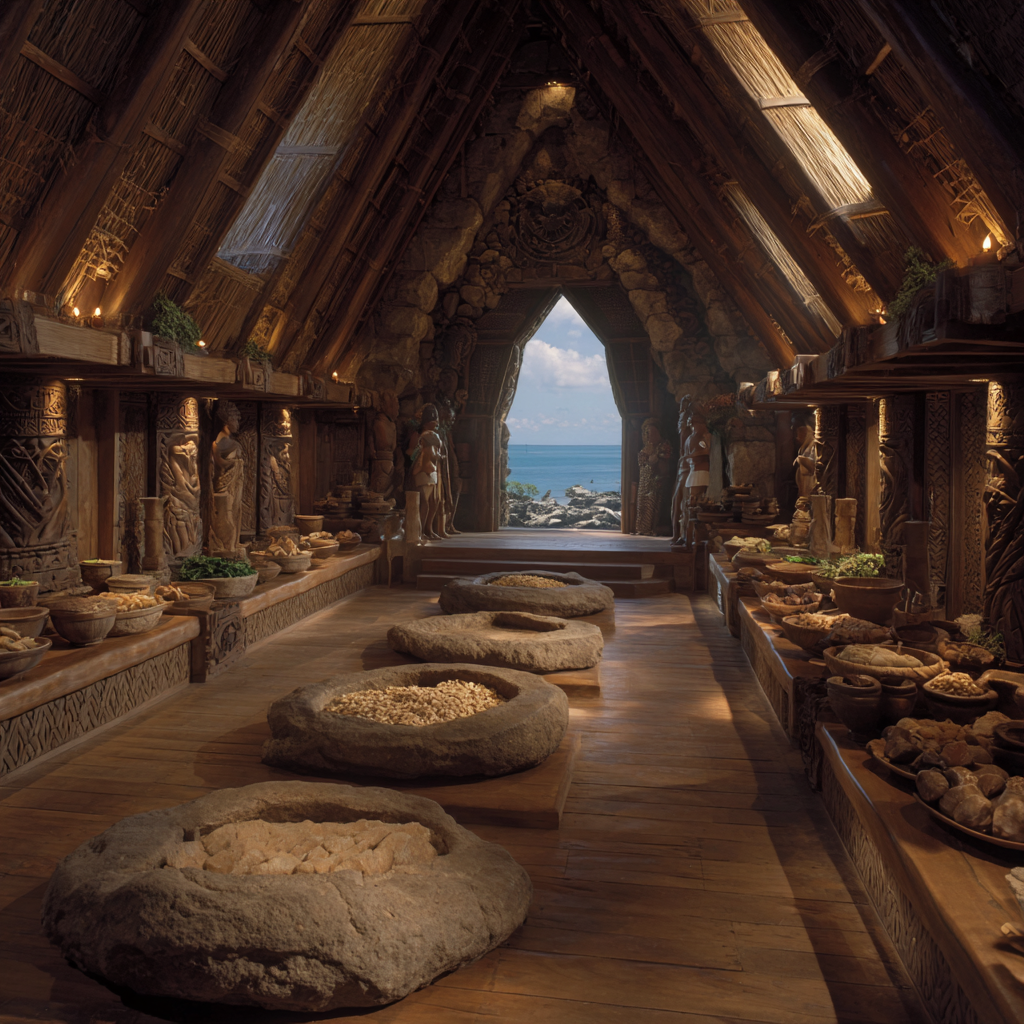
Inside, the hut is divided into distinct zones for different fermentation processes. The largest area contains rows of carved wooden vessels and large gourds where taro paste is fermented into poi, the staple preserved food of the Vaitafe people. Each vessel holds between five and ten pounds of pounded taro mixed with water, covered with woven mats that allow gases to escape while preventing insects and debris from contaminating the contents. The vessels are arranged on sturdy shelves at varying heights, with the most active fermentations at eye level where they can be easily monitored and the aging batches higher up where temperature remains most stable.
A second section focuses on fermented breadfruit, another critical preserved food. Here, cooked and mashed breadfruit is packed into pit-like wooden containers lined with banana leaves. The containers are sealed with more leaves and weighted with smooth stones, creating anaerobic conditions that allow beneficial bacteria to transform the breadfruit into a tangy, long-lasting paste. The process requires careful attention to prevent contamination, and the fermentation master checks each container daily, noting changes in aroma and appearance in a carved record stick marked with symbolic notations only other fermentation masters can read.
The third area contains smaller clay vessels where fish paste is fermented with sea salt and aromatic herbs. This pungent condiment, while not appealing to those unfamiliar with it, provides concentrated protein and flavor to many Vaitafe dishes. The vessels are sealed with woven palm fiber plugs that allow pressure to escape while keeping the contents protected. Goodberry's dimensional magic accelerates the fermentation process, reducing what would normally take weeks to mere days, though the fermentation masters have learned to adjust their techniques to account for this acceleration while still producing traditionally flavored results.
The hut includes a small preparation area where fresh ingredients are cleaned and processed before fermentation begins. A stone grinding bowl sits in one corner, used for pounding taro until it reaches the perfect consistency for poi. Woven baskets hold supplies of sea salt harvested from the tidal flats, and bundles of herbs hang from the rafters, drying until needed. A fresh water station with ceramic vessels allows the fermentation master to maintain cleanliness, critical when working with foods that will be stored for extended periods. The entire operation is managed with an understanding that fermentation is as much art as science. The master knows by smell when poi has reached perfect tartness, by touch when breadfruit paste has achieved proper texture, and by taste when fish paste has developed the complex flavors that mark properly aged product. This knowledge, passed down through generations and now adapted to the unique conditions of the Tidal Expanse, ensures the settlement always has stores of preserved foods that provide nutrition even when fresh ingredients are scarce.
Benefits
The Basic Fermentation Hut generates 2 Prestige, demonstrating the settlement's commitment to traditional food preservation. The facility produces 200 pounds of fermented foods monthly, providing preserved rations that never spoil and can sustain the population during storms or other periods when fresh food is unavailable. Additionally, surplus fermented foods can be traded monthly for 150 gold, as coastal traders value these distinctive preserved goods.