Description
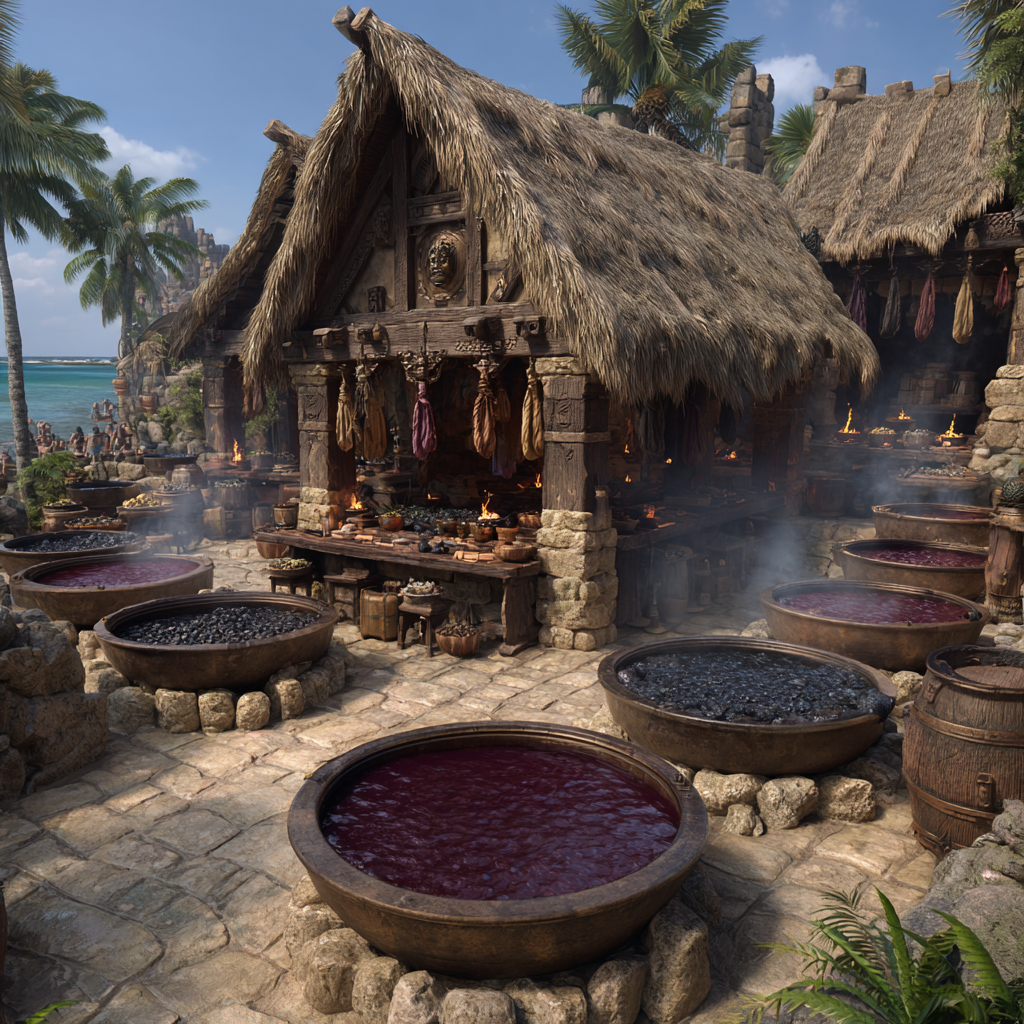
The interior is organized around multiple dye vat stations, each dedicated to specific color families and processing methods. Large ceramic vessels imported through trade sit embedded in brick frameworks that allow controlled heating from small fires beneath. Bronze cauldrons obtained at considerable expense handle the most demanding extractions, resistant to corrosion from salt water and the acidic or alkaline solutions used in various processes. Each station maintains its own set of tools: wooden paddles for stirring, woven baskets for straining, stone mortars for grinding dried materials, and carefully calibrated measures for combining ingredients in precise proportions. The most prized station processes the rare purple dye extracted from specific shellfish gathered during particular tidal conditions, a laborious process that requires crushing thousands of tiny snails to produce even small quantities of the royal color that commands extraordinary prices. Other stations handle more common but equally important colors: deep reds from certain seaweeds combined with mineral salts, golden yellows from sea urchin roe mixed with plant materials, rich browns from kelp treated with iron-rich mud, and blacks achieved through complex multi-stage processes involving fermented marine plants.
The material preparation area occupies one end of the building, where freshly gathered ocean resources undergo initial processing before extraction. Seaweeds are rinsed of salt and sand, then sorted by species and desired color output. Shellfish are cleaned and separated, with some being dried for later use while others are processed fresh when tidal gathering provides abundant supply. Sea urchins are carefully opened, their roe collected and preserved in salt or immediately used in dye baths. Tidal pool minerals, including iron-rich deposits and copper-bearing stones, are crushed and sorted by color potential. The workshop maintains detailed records of gathering locations and tidal conditions, as the same species of seaweed gathered from different areas or at different moon phases can produce significantly different colors. This accumulated knowledge represents generations of careful observation and experimentation, making the dye masters' expertise as valuable as their technical skills. Raw materials are stored in a climate-controlled section where darkness and proper humidity prevent degradation, ensuring consistent color results throughout the year despite seasonal variations in gathering opportunities.
The testing and quality control area features sample boards where dye results are meticulously recorded. Small swatches of different fibers, each treated with specific dye formulations, are mounted and labeled with detailed notes about materials, proportions, processing time, and mordants used. This reference library allows dye masters to recreate successful colors consistently and troubleshoot problems when results don't match expectations. Separate from the main production area, a small finishing room handles the final treatment of dyed materials. Fibers receive fixative treatments that prevent color bleeding and improve lightfastness, ensuring that finished products maintain their vibrant colors despite exposure to sun and salt air. Some dyes require multiple immersions interspersed with drying periods, a process that can take weeks for the deepest, most color-saturated results. The finishing room also experiments with overdyeing techniques, layering colors to achieve complex shades impossible through single-color processes, and tests new material combinations in the ongoing quest to expand the workshop's color palette.
The Dye House serves as the color source for virtually every decorative craft in the settlement. Tapa makers depend on reliable supplies of consistent dyes for their cloth patterns. Mat weavers require dyed materials for their geometric designs. Rope makers need colored cordage for decorative purposes and identification marking. Bone carvers use dyes to accent their work with color highlights. The workshop maintains a stock of common colors for immediate settlement needs while accepting special orders for unusual shades or large quantities needed for major projects. The dye masters take particular pride in recreating traditional colors that appear in ancestral works, ensuring continuity with the past, while also innovating new shades that reflect contemporary aesthetic preferences. The facility attracts buyers from distant settlements seeking colors unavailable in their regions, particularly the prized purple that has become synonymous with Vaitafe dye work. Apprentices train for years to master the subtle chemistry of dye extraction, learning to read the changing colors during processing and understanding how different fibers accept colors differently, knowledge that can only be gained through patient observation and repeated practice under master guidance.
Benefits
The Dye House generates 4 Prestige, reflecting both the specialized knowledge required and the cultural importance of color in Vaitafe artistic expression. Each master dye maker employed generates 100 gold per month in sales revenue from dyed materials sold to craftspeople and traders seeking authentic ocean-derived colors. The workshop provides basic dye services for settlement craftspeople at no cost, ensuring that all workshops producing textiles and decorated items have access to quality colors. The Duke may commission special dye batches for ceremonial purposes once per month at no cost, suitable for important rituals or unique diplomatic gifts.