Description
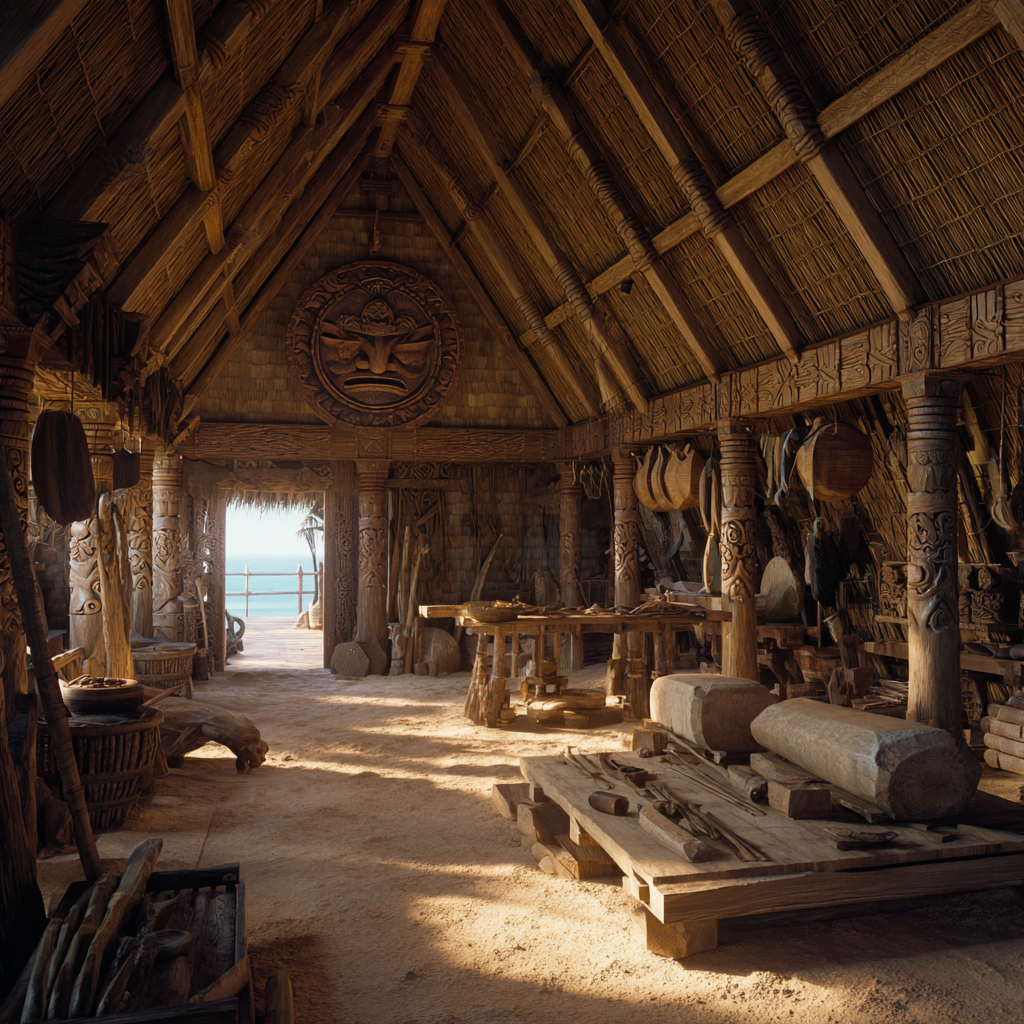
Inside, the workshop is organized around the different stages of drum creation. One corner houses the timber selection area, where logs of varying sizes rest on racks after being retrieved from the Storm Debris Zone or harvested from rare hardwood trees found on distant shores. The master drum maker possesses an almost supernatural ability to assess each log's potential, tapping it with calloused knuckles and listening to the subtle tones that reveal internal structure and density. Logs destined for pahu drums, the great standing drums used in ceremonies, must be perfectly straight and free of hidden flaws. Smaller pieces suitable for hand drums or talking drums occupy separate storage, organized by wood type and the specific sound qualities each will produce.
The central workspace features heavy carving benches worn smooth by generations of craftsmen, their surfaces marked with oil stains and tool marks that tell stories of countless drums brought to life. Adzes of varying sizes hang within easy reach, their stone or shell blades honed to razor sharpness for hollowing drum bodies. Curved knives for detailed work rest beside straight chisels for roughing out the initial form. A large grinding stone sits in one corner, its surface kept wet with seawater for sharpening tools between sessions. The air carries the rich scent of fresh-cut wood mixed with the tang of fish oil used to treat the finished surfaces, creating an aroma unique to this workshop.
Drum skins demand equal attention to the wooden bodies they will eventually crown. Racks along one wall display skins in various stages of preparation, from raw hides freshly scraped of fat and tissue to fully processed membranes stretched on frames for final curing. Shark skin provides the most resonant tone for certain drums, its rough texture carefully removed to leave a smooth, flexible membrane. Larger drums require composite skins from ripfang sharks or even salvaged sail canvas treated with special resins. The tanning process uses traditional methods passed down through families, involving specific seaweeds and salt treatments that take weeks to complete properly. Apprentices learn to judge skin thickness by touch alone, knowing that a membrane too thick produces dull tones while one too thin lacks projection.
The final assembly area showcases the master's artistry. Here, skins are stretched over completed drum bodies using techniques that balance tension perfectly across the entire surface. Lashing patterns follow traditional designs, each style producing slightly different tonal qualities. Some drums receive elaborate carved decorations depicting ocean spirits, ancestral stories, or tribal history. Others remain plain, their voices speaking more powerfully than any visual ornamentation. Testing involves careful tapping and listening, adjustments made by minutely altering skin tension or applying dampening compounds to specific areas. When a drum finally achieves its true voice, the moment carries spiritual weight, the instrument considered awakened and ready to serve its purpose in ceremonies, celebrations, or the vital task of long-distance communication across the tidal expanse where drum signals carry farther than any human shout.
Benefits
The Drum Making Hut produces traditional percussion instruments that enhance settlement culture and communication. Each month, the workshop creates drums valued at 120 gold pieces, with 80 gold available for sale after keeping the finest instruments for community use. Characters using drums crafted here gain a +2 circumstance bonus to Perform (percussion) checks. Additionally, the settlement gains an enhanced communication system, allowing messages to be drummed across the tidal flats with a range of 2 miles during clear weather. This upgrade generates 4 Prestige as the quality of the settlement's drums becomes known to neighboring communities.