Description
The crab pots themselves represent generations of Vaitafe engineering refined specifically for the conditions of the Tidal Expanse. Each pot is constructed from a framework of flexible wooden strips that have been steamed and bent into a dome shape approximately three feet in diameter and two feet high. The frame is then wrapped with tightly woven harakeke netting that creates small openings large enough for reef crawlers to enter but designed with inward-pointing fingers that make escape nearly impossible once the crustaceans have ventured inside seeking the bait. The top of each pot features a hinged access door secured with a simple peg mechanism that allows harvesting without dismantling the entire structure. Stone weights wrapped in protective coverings are lashed to the base of each pot, providing the mass needed to keep them stable on the channel bottom even when strong currents flow during tidal changes. Long marker lines made from treated harakeke fiber attach to each pot, leading to carved wooden floats that bob on the surface and allow trappers to locate and retrieve their pots regardless of water clarity or tide conditions.
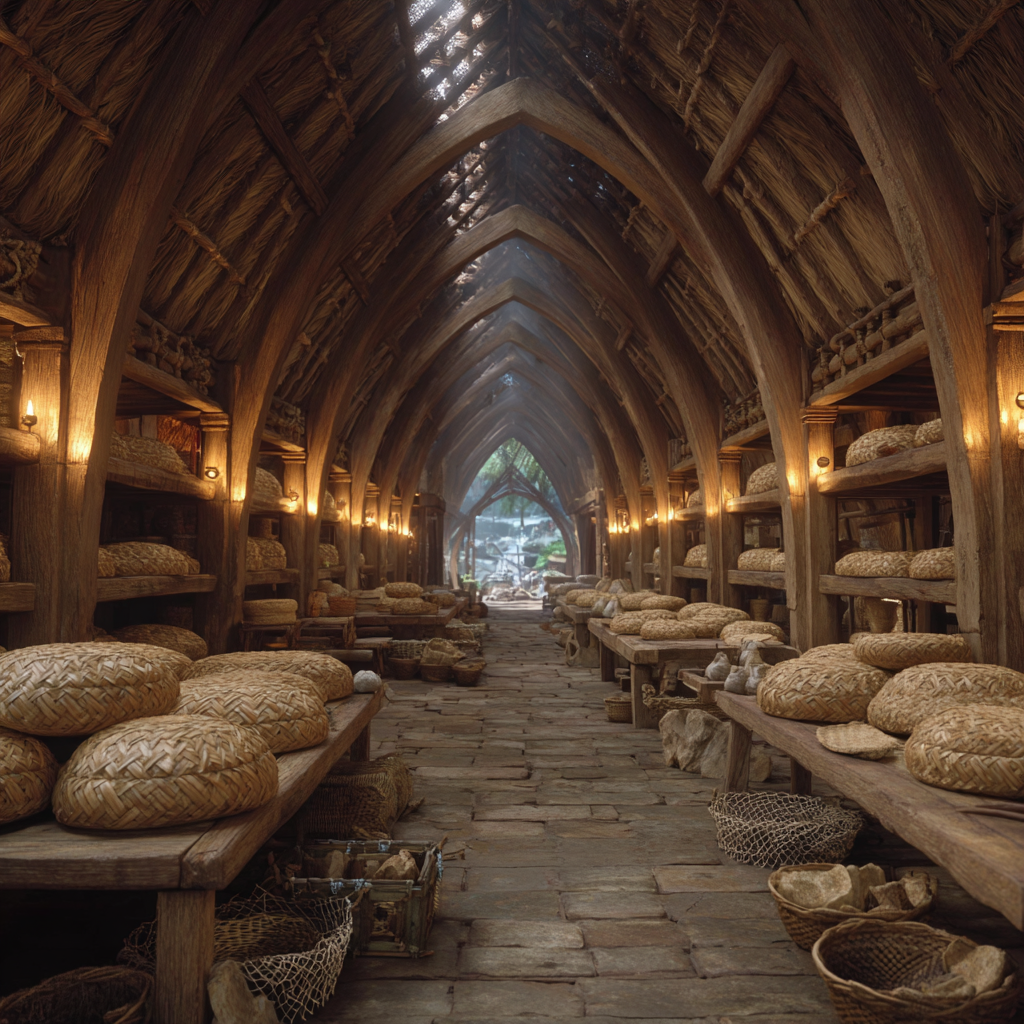
Inside the storage facility, the crab pots are organized with remarkable precision. Wooden racks line both long walls, each rack featuring multiple tiers that allow pots to be stacked efficiently while remaining easily accessible. Pots are grouped by condition, with one section dedicated to equipment ready for immediate deployment, another for pots requiring minor repairs, and a third for those needing more extensive restoration. A dedicated maintenance area occupies one end of the building, featuring workbenches equipped with the tools necessary for pot repair including replacement netting, spare wooden strips, stone scrapers for removing barnacles and accumulated growth, and supplies of the protective coating applied to extend the life of the wooden components. Large baskets hold various grades of bait from fish scraps to specially prepared mixtures that experienced trappers swear attract the largest reef crawlers. A detailed logbook records which pots are deployed where, when they were last checked, and the typical yield from each location, creating a valuable knowledge base that helps optimize trapping efforts.
The operation of the crab pot system follows a carefully managed rotation. Teams deploy pots during low tide when access to the channels is easiest, placing them in locations where reef crawlers are known to travel or feed. The pots remain in position for one complete tidal cycle, allowing time for crustaceans to discover the bait and enter the traps. On the following low tide, crews retrieve the pots using the marker lines, empty the catch into carrying baskets, replenish the bait, and either redeploy the pots in the same locations or move them to different areas based on recent success rates. Each pot is inspected during retrieval, with any damaged netting or loose lashing immediately flagged for repair. Pots showing significant wear are rotated out of service for maintenance, ensuring the fleet remains in excellent condition. The careful attention to equipment maintenance reflects the Vaitafe understanding that well-maintained tools are essential for sustainable harvesting, and the investment in proper storage and care pays dividends in consistent catches and extended equipment lifespan.
The reef crawlers and other crustaceans harvested through the pot system have become an important part of the settlement's diet and economy. The sweet, delicate meat commands excellent prices in coastal markets, while the shells contribute to the materials processed at the Shellmidden facility. In Goodberry's accelerated environment, reef crawler populations reproduce and mature at remarkable rates, reaching harvestable size in one-fifth the normal time. This allows the settlement to maintain dozens of pots in regular rotation without depleting the resource, as the crustacean populations replenish faster than they are harvested. The Crab Pot Storage facility has become a hub of activity where trappers gather to share information about productive locations, exchange techniques for building more effective pots, and celebrate particularly impressive catches. The distinctive sight of workers carrying stacks of dome-shaped pots down to the channels has become as emblematic of the settlement as the waka or the pearl divers, another thread in the tapestry of Vaitafe life woven around the rhythms of the tide.
Benefits
The Crab Pot Storage facility maintains a fleet of 30 crab pots that can be rotated through the tidal channels, generating approximately 400 pounds of reef crawlers and other crustaceans per month, most of which is consumed by the settlement. The remaing bits are sold off at 250 gold every month. The facility includes all necessary maintenance equipment and supplies, extending the operational life of crab pots significantly. This upgrade generates 2 Prestige.