Description
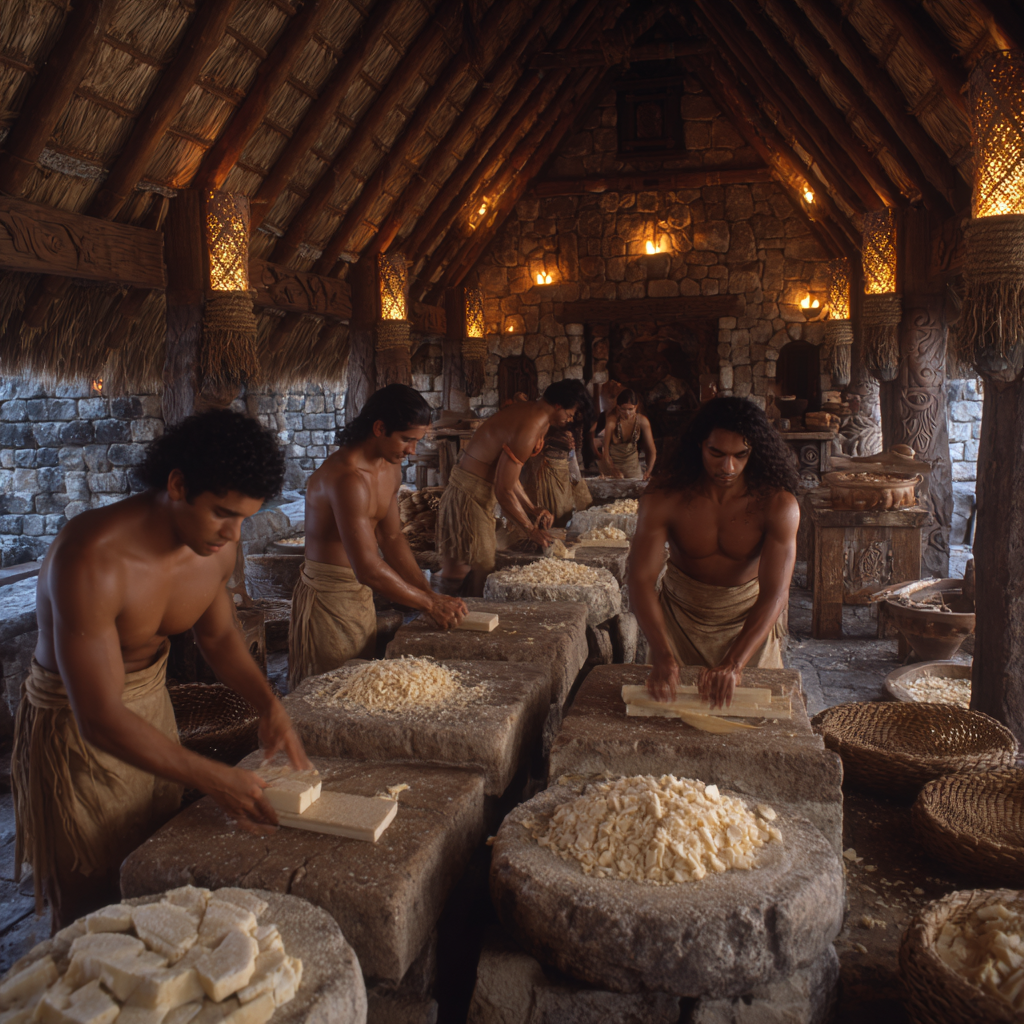
A significant innovation is the addition of specialized equipment that increases efficiency while remaining true to traditional methods. Large communal graters mounted on sturdy frames allow workers to process coconut meat much faster than individual hand scraping. These graters feature serrated shells or coral pieces embedded in wooden surfaces, and workers can feed halved coconuts across them in smooth, rapid motions. The grated coconut falls into collection troughs below, ready for pressing. Multiple pressing stations equipped with improved screw presses can extract milk and cream from dozens of coconuts simultaneously, with workers rotating between grating and pressing to maintain continuous production flow.
The complex includes a dedicated oil house, a specialized structure designed specifically for coconut oil production and storage. This building features sophisticated temperature control through underground cooling channels and strategic ventilation, keeping the interior consistently cool to prevent oil from going rancid. Inside, an advanced pressing system uses leveraged weight to extract maximum oil from dried coconut with minimal effort. Large ceramic vessels, each holding five to ten gallons, store the finished oil in darkness to preserve quality. A separate section produces virgin coconut oil through a cold-pressing method that yields smaller quantities but commands premium prices due to superior flavor and clarity. The oil house also contains a clarification station where raw coconut oil is heated gently and filtered through woven coconut fiber, removing impurities and extending shelf life.
A drying pavilion has been constructed with multiple levels of racks exposed to sun and wind but protected from rain by an ingeniously designed adjustable roof system. Thin-sliced coconut meat covers hundreds of square feet of drying surface, carefully monitored and rotated to ensure even curing. During the dry season, the roof panels open completely for maximum sun exposure. During rains or at night, the panels slide closed to protect the drying product. The pavilion's elevated position catches constant sea breezes that accelerate drying while the salt air adds a subtle flavor complexity to the finished product. A small smoking area allows for the production of smoked dried coconut, a delicacy that commands high prices from traders.
Supporting structures include a fermentation shed where coconut water and thin coconut milk are transformed into traditional beverages, a by-product processing area where shells are sorted by quality and prepared for crafters, and a fiber processing station where coconut husks are separated into usable fibers that are cleaned, sorted by length and strength, and prepared for rope-making. A quality control house stores samples of each production batch, allowing processors to maintain consistent standards and track seasonal variations in coconut quality. The complex employs specialized workers who have trained in particular aspects of coconut processing, developing expertise that significantly increases both efficiency and product quality.
Benefits
The Expanded Coconut Processing Complex generates an additional 3 Prestige. The facility processes more coconuts monthly, producing 120 gallons of standard coconut oil, 20 gallons of premium virgin oil, 200 gallons of coconut milk and cream, dried coconut meat, generating a total of 400 gold monthly total from sales. The complex produces enough lamp oil to illuminate the entire settlement. Additionally, the facility produces fermented coconut beverages (worth 50 gold), and provides shells and fiber in quantities sufficient to support multiple crafting industries. Additional monthly income: 250 gold.