Description
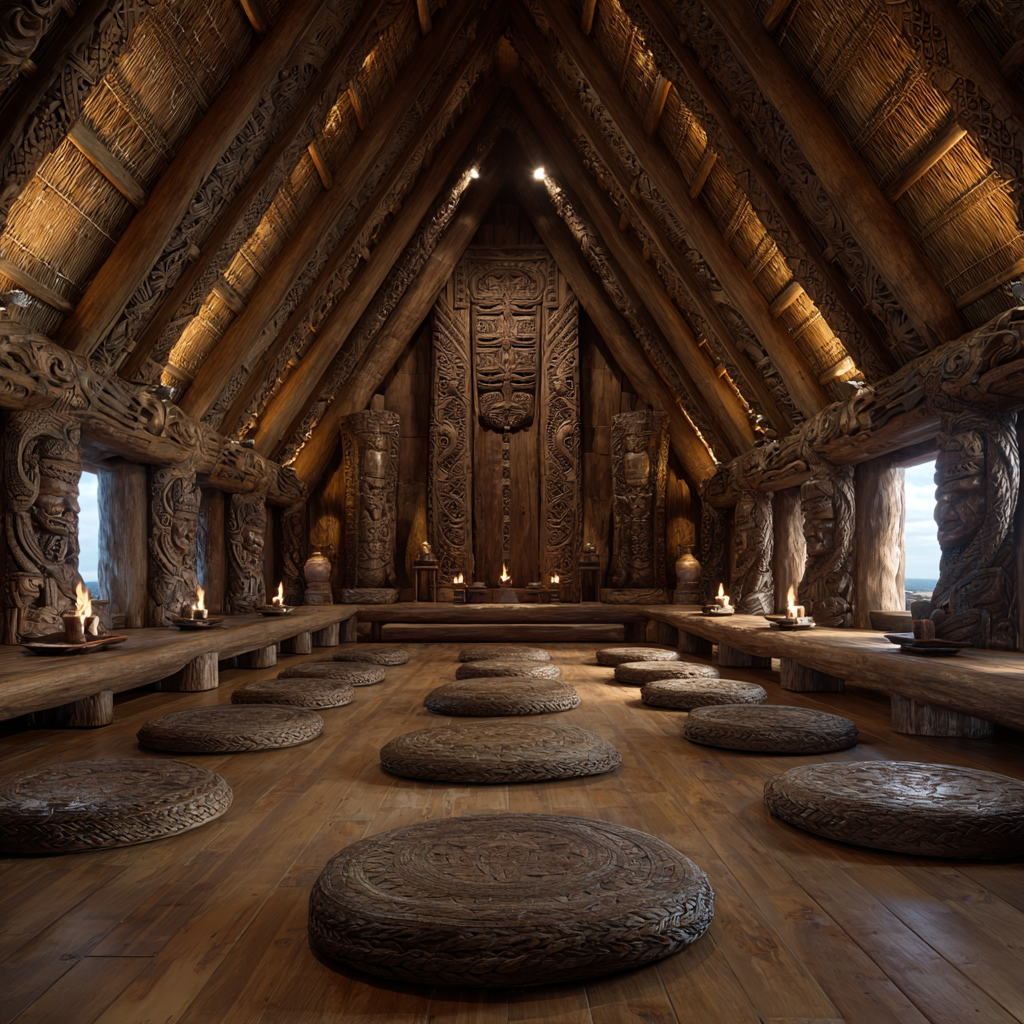
The Chanting School occupies a distinctive building positioned where natural acoustics are optimal, nestled between two elevated sand ridges that create a natural amphitheater effect. The structure is built in an elongated oval shape, fifty feet long and thirty feet wide, designed specifically to enhance vocal resonance and projection. The walls are constructed from carefully selected hardwood planks that have been aged and treated to produce ideal sound reflection properties, while the interior surfaces are polished smooth to eliminate echo distortion. The peaked roof rises to an impressive twenty feet at its highest point, creating a cathedral-like space that allows voices to soar and blend naturally. Woven reed panels hang from the ceiling at strategic intervals, positioned to fine-tune the acoustic properties and prevent sound from becoming muddy or harsh during group performances.
The main training hall features a raised platform at one end where master chanters stand to lead instruction, their elevated position ensuring every student can clearly observe proper breathing techniques, mouth positions, and body postures essential to traditional performance. The floor is covered with finely woven mats arranged in concentric semicircles facing the teaching platform, providing comfortable seating for up to forty students while maintaining the precise spacing needed for proper sound projection during group practices. Along the side walls, carved wooden panels display the texts of hundreds of traditional chants, each one meticulously inscribed in the flowing script of the Vaitafe written language. Color-coded shell markers indicate which chants are appropriate for specific ceremonies, which require ritual purification before performance, and which can only be sung by individuals of certain ranks or lineages.
Adjacent to the main hall, a series of smaller practice chambers allow individual students to work on challenging passages without disturbing others. Each chamber is roughly ten feet square, with walls thick enough to provide sound isolation while still maintaining the acoustic qualities needed for proper vocal development. These rooms are equipped with polished stone surfaces that serve as sounding boards, allowing students to hear their own voices with crystalline clarity and identify areas needing improvement. Small windows positioned near the ceiling provide ventilation and natural light while preserving the rooms' acoustic integrity. Master chanters rotate through these practice chambers throughout the day, offering individual instruction on breath control, tonal precision, and the subtle inflections that distinguish competent performance from masterful artistry.
The school includes a specialized teaching area dedicated to the sacred karakia, the powerful prayers and incantations that call upon spiritual forces and ancestral power. This chamber is separated from the main hall by carved wooden screens, marking it as a space requiring particular reverence and proper spiritual preparation before entry. Here, students learn not merely the words and melodies of sacred chants, but the underlying spiritual principles that give them power. The walls are adorned with carved representations of the ancestors and deities invoked in various karakia, serving as focal points for meditation and spiritual connection. A small altar holds offerings of flowers, shells, and carved figurines, maintained daily to honor the sources of the sacred knowledge being transmitted. Only students who have demonstrated both vocal mastery and spiritual maturity are permitted to study in this chamber, as improper performance of sacred karakia is believed to invite misfortune or ancestral displeasure.
The Chanting School serves multiple essential functions within the settlement. Young children come here to learn the basic chants that mark important life transitions, from birth blessings to coming-of-age ceremonies. Warriors study the powerful haka and war chants that intimidate enemies and strengthen the spirits of fighters before battle. Fishermen learn the karakia that ensure safe voyages and abundant catches, while farmers master the chants that bless plantings and harvests. Healers study the therapeutic chants believed to drive out sickness and restore balance to the body. The most advanced students spend years perfecting the genealogical chants that can recite complete family lineages stretching back twenty or more generations without a single error, performances that may last several hours and require phenomenal memory and stamina. The school also trains the settlement's ceremonial chanters, individuals whose voices lead the community through weddings, funerals, festivals, and the countless rituals that mark the rhythm of Vaitafe life. The sound of voices rising in traditional song has become a constant presence in the settlement, a living connection to ancestors and a affirmation that their culture thrives despite the many challenges of building a new home on the shifting sands.
Benefits
The Chanting School preserves and transmits essential cultural knowledge through oral tradition. Any character who studies here for two weeks gains a +2 bonus to Perform (sing) checks and learns three traditional Vaitafe chants appropriate to their role in society. Characters who master sacred karakia gain a +1 bonus to Will saves as the spiritual discipline strengthens their mental fortitude. Warriors who learn traditional war chants can use them to grant a +1 morale bonus to attack rolls for all allies within 30 feet for 3 rounds once per day. The school's preservation of oral traditions generates 3 Prestige.