Description
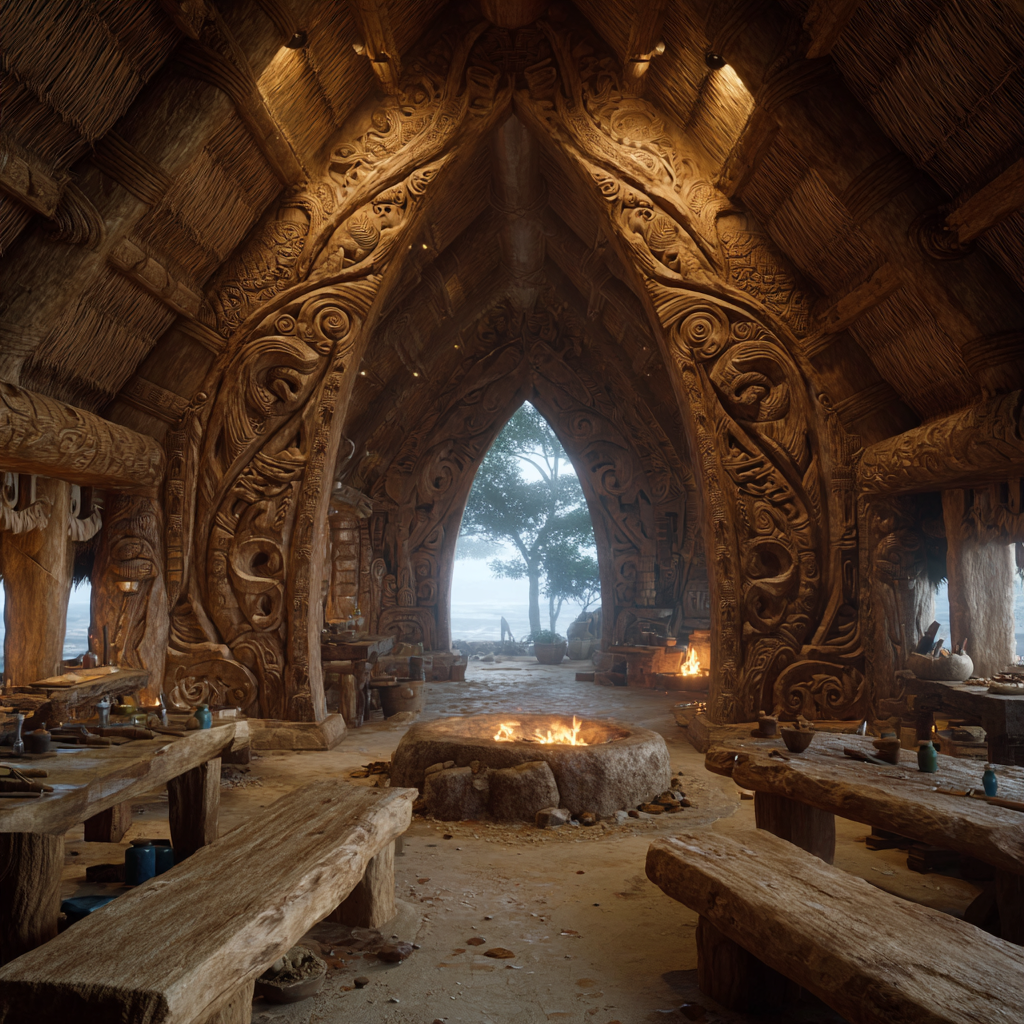
Inside, the workshop is organized into distinct areas that flow naturally from rough work to fine detail. The entrance opens into a large main workspace where massive driftwood logs and whale bones await initial processing. Heavy workbenches line the walls, their surfaces scarred and stained from years of use, each equipped with an array of traditional carving tools: adzes of various sizes, chisels crafted from sharpened stone and shell, files made from sharkskin stretched over wooden frames, and modern steel implements obtained through trade. Natural light floods through large windows positioned to catch the morning sun, providing optimal working conditions for the delicate work of carving.
The heart of the workshop is the detail carving area, where master carvers work on pieces requiring the finest precision. Here, smaller benches are arranged in a semicircle around a central brazier that provides warmth and light during overcast days and evening work sessions. The brazier's gentle heat is also used to soften certain materials and cure finishing oils. This is where the most intricate work happens: the delicate spiral patterns known as koru, the bold geometric designs of traditional moko, and the flowing curves that represent ocean currents and breaking waves. Each carver maintains their own set of specialized tools, kept razor-sharp and treated as personal treasures passed down through generations or earned through apprenticeship.
Along the back wall, a separate finishing area contains racks of pigments and oils used to protect and beautify completed works. Pigments are ground from ochre clays, charcoal, and crushed shells, mixed with fish oils and plant extracts to create paints that enhance the natural wood grain while protecting against salt air and moisture. Shelves hold various grades of sharkskin for smoothing, bundles of dried grasses for polishing, and containers of beeswax for final finishing. The air here carries the rich scent of wood shavings, oil, and the sea, a distinctive aroma that marks a master carver's workshop.
The Carving House serves as both workshop and informal school, where apprentices learn the traditional methods from experienced masters. Morning light sees the carvers already at work, the rhythmic sounds of adze on wood creating a steady percussion punctuated by discussions of technique and storytelling. Each piece created here carries meaning beyond mere decoration, as Vaitafe carving is fundamentally about preserving and transmitting cultural knowledge. A carved doorway panel might tell the story of the tribe's arrival at the Tidal Expanse, while a ceremonial paddle depicts important fishing grounds and the creatures that dwell there. Through their work, the carvers ensure that tribal history and wisdom are literally carved in wood and bone for future generations to read and remember.
Benefits
The Carving House generates 4 Prestige, demonstrating the settlement's commitment to preserving traditional arts and cultural heritage. The workshop produces fine carved pieces each month that can be sold to traders and collectors. Each master carver employed generates 100 gold per month in sales revenue from completed works (ranging from small decorative pieces to large ceremonial carvings). Additionally, the Duke may commission one custom carved item per month at no cost, suitable for diplomatic gifts or ceremonial purposes. The presence of skilled carvers also means that any wooden structures or boats constructed in the settlement can be enhanced with traditional carving at no additional cost, adding cultural significance to functional items.