Description
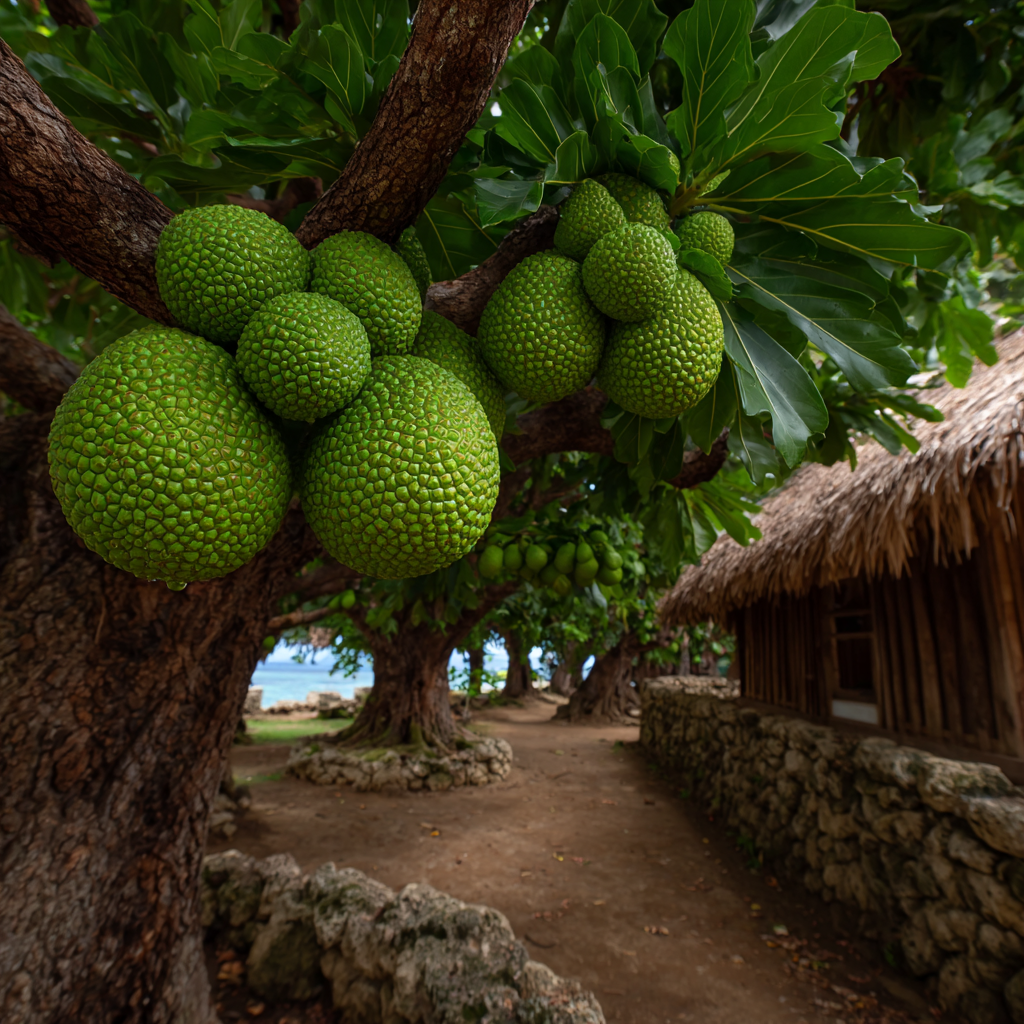
Each tree grows to an impressive height of forty to fifty feet, with broad branches forming a dense canopy of large, deeply lobed leaves that provide excellent shade. The breadfruit themselves are substantial, ranging from one to five pounds each, with green, bumpy skin and creamy-white flesh inside. Under normal conditions, a mature tree might produce 50 to 150 fruits annually during its bearing season. With Goodberry's magic, these trees produce that quantity every month, yielding an extraordinary abundance that transforms breadfruit from a seasonal staple into an ever-present food source. The fruits grow in clusters directly from the branches and trunk, hanging heavily when ripe and requiring careful harvesting to prevent bruising.
A simple harvesting and processing area sits at the grove's edge, consisting of a palm-thatch shelter housing the long poles with hooks and baskets used to harvest fruit from the tall trees. Experienced harvesters can pluck ripe breadfruit with precision, gently lowering them to waiting baskets below. The fruits must be harvested at the perfect stage of ripeness for their intended use: firm and starchy for cooking like potatoes, slightly soft for roasting, or fully ripe and sweet for eating fresh. A work table allows immediate processing of damaged fruits that might not survive transport to the main settlement kitchens.
Within the grove itself, the ground is kept clear of undergrowth to make fallen fruit easy to spot and collect. A thick layer of leaf litter and fallen fruit that proves too damaged or overripe is allowed to decompose naturally, enriching the sandy soil with organic matter and supporting the trees' vigorous growth. The trees require minimal care once established, though tenders regularly inspect for signs of pests or disease and prune dead branches that might fall dangerously. During particularly dry periods, the trees benefit from occasional watering, though their deep roots generally find sufficient moisture even in sandy coastal soil.
The breadfruit from this grove serves the settlement in multiple ways. Fresh breadfruit is roasted whole in fires or sliced and cooked in the hangi pits, where it develops a soft, potato-like texture perfect for accompanying fish and meat. Some fruits are sliced thin and sun-dried into chips that keep indefinitely and serve as portable rations. Others are cooked, mashed, and fermented into a preserved paste that adds variety to the settlement's stores of fermented staples. The versatility of breadfruit, combined with its abundance and nutritional value, makes it invaluable to the growing community.
Benefits
The Basic Breadfruit Grove generates 2 Prestige, demonstrating successful cultivation of a traditional staple crop. The grove produces breadfruit monthly, providing substantial food for residents and generating 100 gold per month from surplus sales. Breadfruit is filling and nutritious. The grove also produces 200 pounds of breadfruit suitable for drying into flour monthly, extending the settlement's food preservation options. The grove's shade provides a pleasant community gathering space, and the large leaves are harvested for use as food wraps, serving platters, and thatching material.