Description
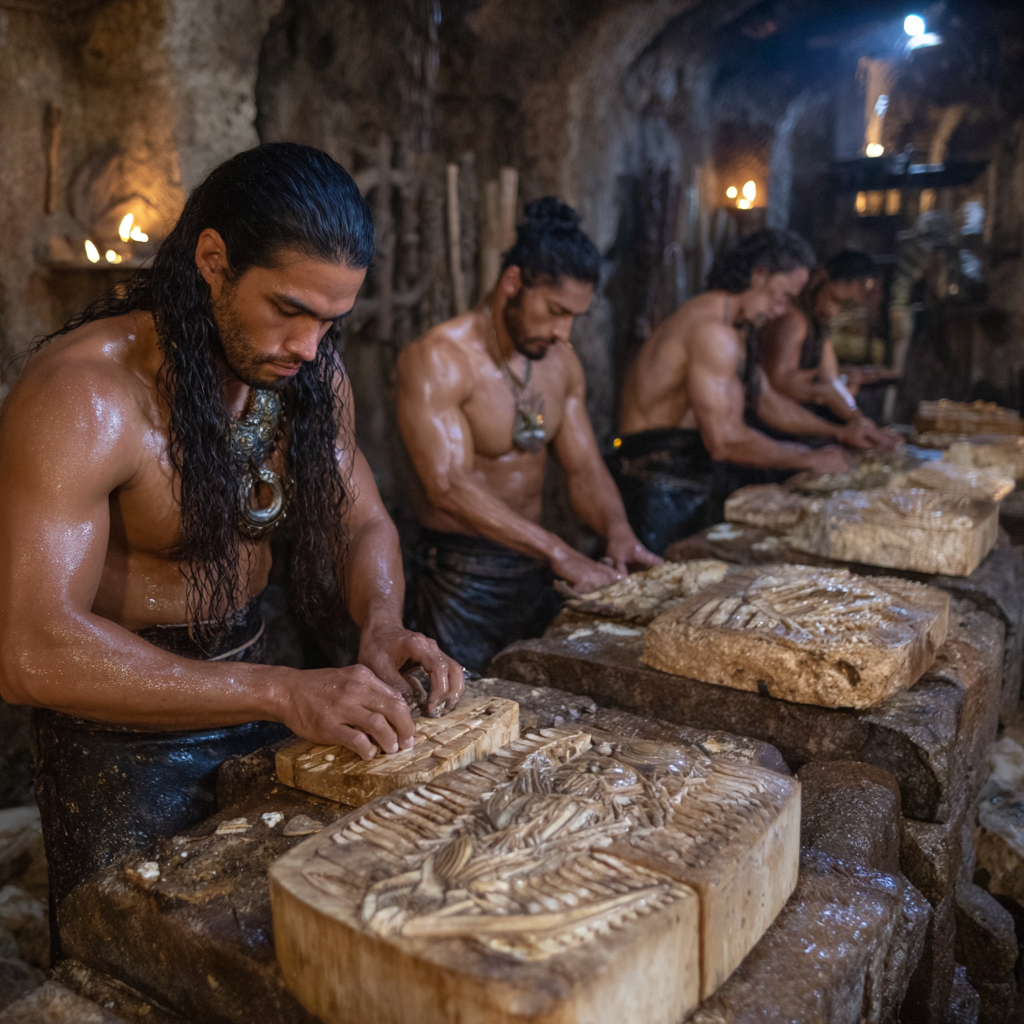
The interior work area is organized around the specific requirements of bone and shell carving, which demand different techniques than wood carving despite some superficial similarities. Heavy workbenches line the walls, their surfaces covered with leather pads that protect both the work and the bench surface. Unlike wood carving that removes material through cutting and splitting, bone work relies primarily on abrasion, requiring extensive collections of files, rasps, and sanding materials in graduated grades from coarse to mirror-fine. Master carvers maintain personal tool sets accumulated over decades, including specialized implements created for specific tasks that no standard tool can accomplish. A central grinding station features multiple grades of abrasive stones mounted on rotating wheels, allowing carvers to shape pieces quickly before moving to hand finishing. Water basins positioned at each workbench provide constant moisture for cooling materials during grinding and for the wet sanding that produces the luminous polish characteristic of fine bone work. The studio maintains meticulous cleanliness, as bone dust can cause respiratory problems if allowed to accumulate, with floors swept multiple times daily and work areas wiped clean after each session.
The range of items produced reflects both practical needs and cultural significance. Practical pieces include fishing hooks carved from bone in sizes ranging from tiny implements for catching baitfish to massive hooks capable of landing sharks, fish gorges cunningly shaped to lodge in predators' throats, needles for sewing sails and clothing with eyes carefully drilled to exact specifications, and awls for working leather and piercing materials. Decorative jewelry forms another major category, with shell and bone combined to create pendants, earrings, bracelets, and the distinctive hei-tiki figures that serve as both ornament and spiritual protection. These pieces often incorporate traditional spiral patterns, stylized ancestral faces, and representations of important animals like whales, turtles, and fish. Ceremonial items include the prestigious rei puta (whale tooth pendants) that mark high status, hair combs carved with intricate patterns, and breast ornaments worn during important rituals. The studio also produces specialized items for tattoo artists: the uhi (bone chisels) used for traditional ta moko require exceptional precision in their creation, as irregular edges produce poor results that mar both the work and the artist's reputation.
The carving process for bone differs substantially from shell work, requiring master carvers to maintain expertise in both materials. Bone must be carefully selected and prepared, with different skeletal elements offering distinct properties: dense leg bones provide strength for tools, while lighter skull bones suit decorative work. Pieces are cut to rough shape using fine saws, then ground to basic form before detailed work begins. The carver must constantly evaluate the piece, as bone's internal structure includes variations in density that can cause unexpected breaks if not respected. Shell work demands different skills, as the layered structure and brittle nature require gentler handling and different tool approaches. The rainbow iridescence of certain shells like paua can be showcased through careful grinding that removes outer layers to reveal the luminous interior, while other shells are valued for their pure white color or distinctive patterns. Polishing represents the final critical stage, with master carvers spending hours working through progressively finer abrasives until the surface achieves a glass-like finish that seems to glow with internal light. Some pieces receive additional decoration through the careful application of traditional dyes or the inlaying of contrasting materials, creating color accents that enhance the natural beauty of bone and shell.
Beyond commercial production, the Bone Carving Studio serves as a repository of specialized knowledge essential to Vaitafe culture. Certain bone pieces carry spiritual significance and can only be created by carvers who have undergone specific training and ceremonies. The studio maintains records of traditional designs, ensuring that important patterns are preserved and properly executed. Apprentices spend years learning not just the physical techniques but also the cultural meanings behind different pieces, the protocols for creating sacred objects, and the stories associated with traditional forms. The studio attracts commissions from throughout the region, as Vaitafe bone carvers are renowned for their technical precision and artistic sensitivity. Wealthy clients commission elaborate personal ornaments, warriors seek powerful protective amulets, and families order commemorative pieces to mark significant life events, creating a steady stream of custom work that supplements the production of standard items for general trade.
Benefits
The Bone Carving Studio generates 4 Prestige, reflecting the skill required to master this delicate craft and the cultural importance of bone and shell ornaments. Each master bone carver employed generates 100 gold per month in sales revenue from jewelry, tools, and ceremonial pieces sold locally and to distant buyers seeking authentic Vaitafe work. The Duke may commission one elaborate bone or shell piece per month at no cost, suitable for personal use, ceremonial occasions, or diplomatic gifts. The settlement's fishermen benefit from access to superior bone hooks and tools at cost, improving fishing efficiency. Additionally, any character who commissions a custom piece from this studio and wears it gains a +1 bonus to Charisma-based checks when dealing with others who recognize quality Vaitafe craftsmanship, as such pieces mark the wearer as someone of taste and cultural appreciation.