Description
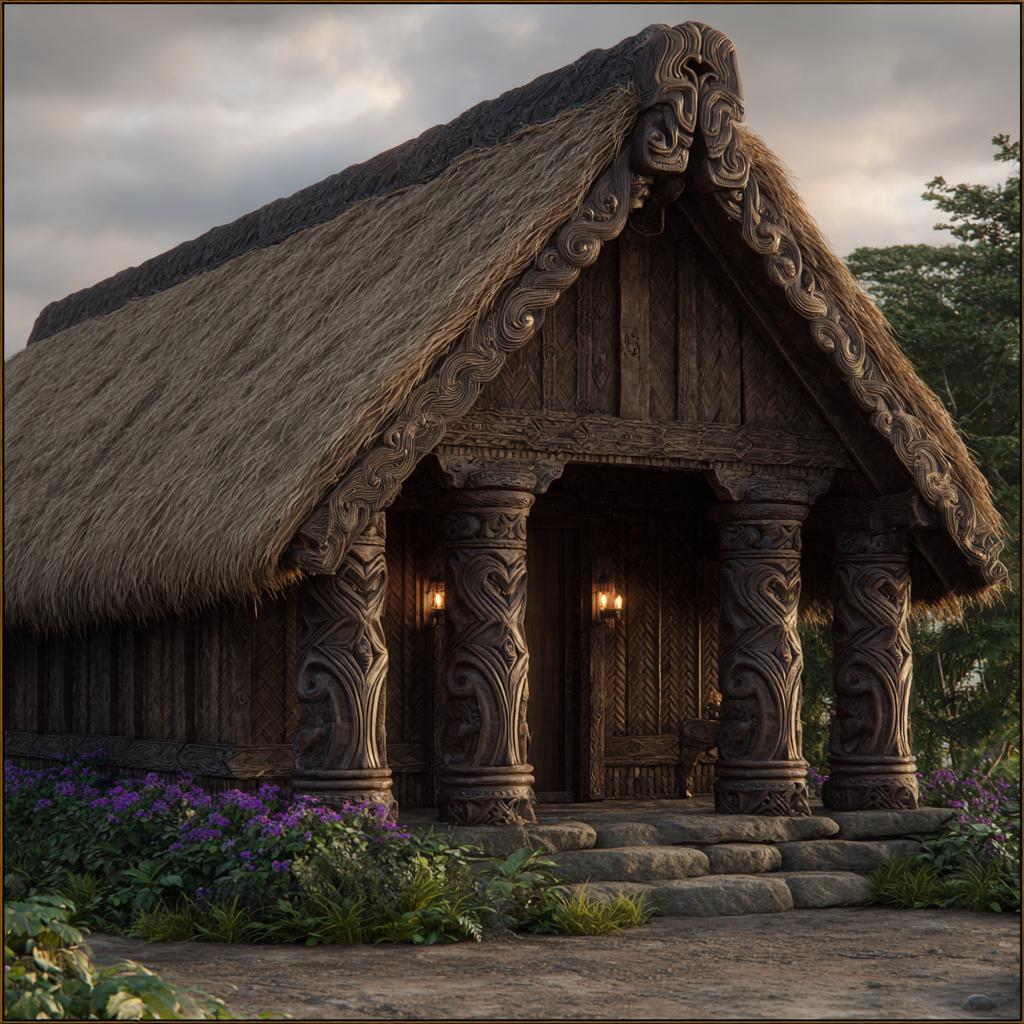
The exterior walls are woven from the finest harakeke, treated with natural oils to shed water while allowing air circulation. The thatching is double-layered and exceptionally thick, providing superior insulation and creating a space that remains warm during cool nights and comfortable during hot days. The roof peak is adorned with a carved wooden finial depicting a mother cradling an infant, blessed by the settlement's spiritual leaders and serving as a beacon of the house's sacred purpose. A covered walkway extends from the entrance, allowing pregnant women to enter without exposure to rain or harsh sun, and a small garden of flowering plants surrounds the immediate area, their blooms symbolizing life and beauty.
Entry to the Birthing House is restricted according to traditional tapu, the sacred protocols that govern who may enter and when. Only women are permitted inside during birthing times, with the exception of the tohunga if spiritual intervention is required. A small antechamber just inside the entrance provides space for supporters to wait, equipped with benches and a water basin for ritual cleansing before proceeding further. The walls here display woven panels depicting the stories of legendary ancestral mothers, their courage and strength serving as inspiration to those about to give birth. Offerings of flowers, shells, and small carved figures are placed on a shelf beneath these panels, prayers made tangible for safe delivery and healthy children.
The main birthing chamber occupies the center of the structure, dominated by a specially constructed birthing platform. This platform, waist-high and padded with multiple layers of the softest woven mats, allows the mother to labor in a semi-upright position, supported by thick posts wrapped in cloth that she can grip during contractions. The design draws from centuries of Vaitafe wisdom, positioning the mother to work with gravity rather than against it, reducing complications and easing delivery. Woven screens can be positioned around the platform to provide privacy while still allowing the midwives to move freely. The floor around the birthing platform is covered with fresh sand brought up from the cleanest tidal pools and mixed with dried, aromatic grasses that release pleasant scents when walked upon, helping to create a calm atmosphere despite the intensity of labor.
Natural light enters through high windows positioned to provide illumination without compromising privacy, supplemented by shell oil lamps that can be adjusted to create the soft, warm lighting that helps laboring mothers relax. A brazier in one corner burns aromatic woods and medicinal plants, the smoke believed to ward off malevolent spirits while creating a peaceful environment. The midwives maintain careful control over temperature and air quality, knowing that a comfortable mother is more likely to have a successful delivery. Bundles of medicinal herbs hang from the rafters: pain-relieving kelp extracts, teas that strengthen contractions, and aromatic plants whose scents promote calm. Everything needed for delivery is kept in carved wooden boxes along the walls: clean woven cloths for receiving the infant, bone needles and sinew thread for any necessary stitching, obsidian blades for cutting the umbilical cord, and sacred oils for blessing the newborn.
A separate recovery area occupies the rear section of the house, furnished with two comfortable sleeping platforms where new mothers can rest in the days following birth, attended by the midwives and female family members. This area is quieter and more private, allowing the mother and child to bond while recovering strength. Here, the midwives teach new mothers the traditional skills of infant care, from proper nursing positions to reading the baby's signals. A small kitchen area allows the preparation of special foods for new mothers: nutrient-rich fish broths, kelp teas that promote milk production, and strengthening meals designed to speed recovery. Water storage includes both fresh water for drinking and blessed seawater used in the ceremonial first bath given to each newborn, a ritual that welcomes the child into the ocean-bound Vaitafe people.
Benefits
The Birthing House generates 3 Prestige, as proper facilities for childbirth demonstrate the settlement's maturity and care for its most vulnerable members. The skilled midwives reduce complications during childbirth, granting expectant mothers in the settlement a +2 bonus on all Constitution checks related to pregnancy and delivery. Infant mortality is significantly reduced, and mothers recover more quickly from childbirth, reducing the fatigued condition recovery time by half. The house can support up to two births simultaneously if needed. Additionally, the presence of dedicated women's health practitioners means female settlers gain a +2 bonus on all Fortitude saves against diseases.