Description
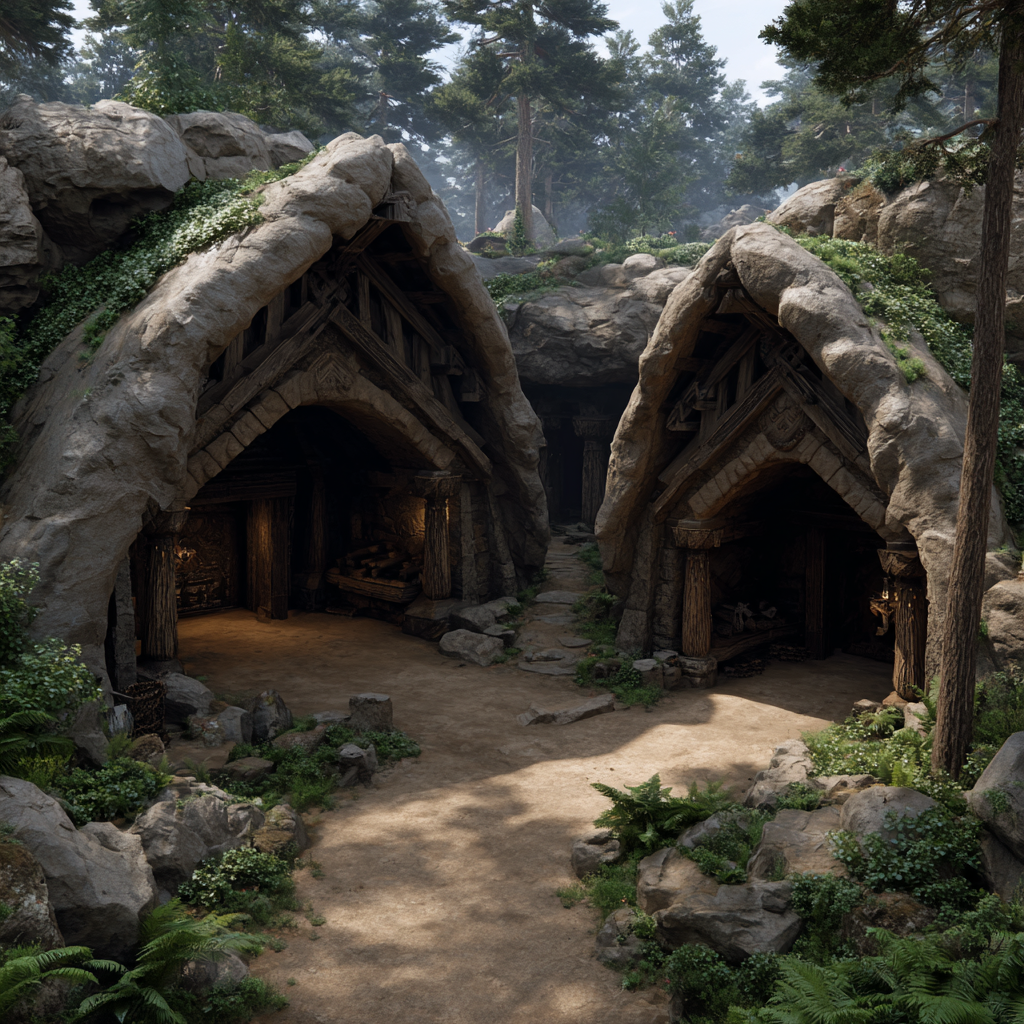
The Wolfden Stables sprawl across a heavily wooded section near the Whispering Paths, where rocky outcroppings and natural hillsides provide ideal locations for den construction. Rather than confining the animals in conventional kennels, the facility takes advantage of the landscape's existing features, enhancing natural caves and hollows with wooden reinforcements, carved sleeping platforms, and weather-sealed entrances that can be closed during severe storms but remain open most of the time. Each pack or family group has its own territory within the larger complex, marked by scent posts and natural boundaries that the animals respect through training and instinct. The main den structures are built into hillsides, creating underground chambers that stay cool in summer and warm in winter, insulated by earth and carpeted with fresh pine boughs and soft moss that handlers replace weekly. Above-ground runs extend from each den, enclosed by tall wooden fencing woven with living vines that create natural barriers while allowing the animals to see, smell, and hear the forest around them. These runs connect to larger common areas where compatible packs can interact, play, and train together. A central gathering pavilion built between ancient oaks serves as the handlers' headquarters, storage for equipment, and a sheltered space for feeding and medical care. The entire facility is designed to feel less like a stable and more like a managed wild space where the boundaries between captivity and freedom blur into partnership.
The dimensional magic permeating the grove has transformative effects on the wolves and dogs housed here. Puppies and cubs mature rapidly, reaching full physical size in just a few months rather than the year or more required outside. This accelerated growth extends to training, with young animals absorbing commands, hunting techniques, and pack discipline at five times the normal rate. A wolf pup that would normally require two years to reach full working readiness can be trained and bonded within five months, though handlers take care to ensure this compression of development doesn't sacrifice the depth of relationship or the animal's mental wellbeing. Adult wolves brought to the facility adapt more quickly to human partnership while retaining their wild dignity and instincts. Injuries heal faster here, with wounds that might sideline an animal for weeks requiring only days to mend. The wolves seem healthier overall, their coats thicker and more lustrous, their eyes brighter, their movements more fluid. Some handlers whisper that the ancient forest itself blesses these partnerships, recognizing the wolves as kin and granting them vitality as reward for their service to the grove's balance.
The facility houses a diverse population reflecting different needs and purposes. True wolves form the core population, magnificent gray and timber wolves whose wild heritage is carefully preserved even as they learn to work alongside humans. These wolves participate in hunting expeditions where their tracking abilities, pack coordination, and raw power make them invaluable for managing populations of deer, boar, and other large prey that might otherwise overgraze the forest. Alongside them live wolf-dog hybrids that combine wild intelligence with domestic tractability, often easier to train while retaining much of the wolf's capability. Large dog breeds include mastiff types used for guarding settlements and property, coursing hounds bred for speed and endurance in pursuit, and thick-coated northern breeds that excel in cold weather operations. Each animal's temperament and abilities are carefully assessed, with some suited for hunting partnerships, others for patrol and protection, and still others serving primarily as companions for residents who prove themselves worthy of such relationships. The handlers maintain detailed records of lineages, personalities, and working histories, ensuring compatible animals are bred and trained partnerships are carefully matched to human handlers.
The philosophy governing the Wolfden reflects the same ethical framework that guides the Mewsery Hollow, treating the animals as respected partners rather than tools or property. Handlers undergo extensive training not just in animal management but in understanding wolf behavior, pack dynamics, and the deeper spiritual significance of inviting these noble predators into partnership. Each wolf or dog is given a name that reflects its individual character, not a number or generic designation. They are fed high-quality meat from ethical hunts, never scraps or refuse. Their training emphasizes cooperation and trust rather than domination and fear. Physical punishment is forbidden, replaced by patient conditioning and positive reinforcement that builds genuine loyalty rather than mere obedience. When wolves participate in hunts, they are honored with the same pre-hunt rituals performed by the falconers, acknowledging their role in the necessary cycle of predation. Wolves that age beyond working capability are not discarded but instead retired to comfortable dens where they live out their remaining years in dignity, often serving as calm mentors for younger animals learning pack behavior. This approach creates bonds between handler and animal that transcend simple utility, forging partnerships where both parties give and receive respect, trust, and something approaching genuine friendship.
Beyond practical applications, the Wolfden becomes a gathering place for those drawn to the deeper mysteries of human-animal connection. Children visit under supervision to learn proper behavior around powerful predators, gaining respect for nature's strength and beauty. Rangers and druids spend time observing pack interactions, drawing lessons about community, hierarchy, and cooperation that inform their understanding of natural systems. The howling of wolves at dawn and dusk becomes a beloved sound throughout this section of the grove, a wild chorus that reminds residents they live not in a city that conquered nature but in a settlement that exists within it. On cold winter nights, the sight of wolves sleeping peacefully in their dens, trusted companions resting after honest work, provides profound comfort. The facility includes a small memorial grove where beloved animals are buried, their markers carved with symbols honoring their service and friendship. Some residents claim the spirits of these faithful companions continue to patrol the forest, invisible guardians watching over the settlement they protected in life. Whether literal truth or comforting metaphor, the story speaks to how deeply these partnerships touch the hearts of those who experience them.
Benefits
The Wolfden Stables maintains a stable population of 15 trained wolves and large dogs suitable for hunting, patrol, and companionship. These animals provide +3 bonus on Survival checks for tracking within the grove and can assist in hunting expeditions, increasing successful hunt yields by 20% (generating 250 gold per month from improved game management). Trained animals can be assigned to residents as permanent companions, providing +2 bonus on Intimidate checks and serving as effective guards (as per guard dog statistics, though wolves use wolf statistics). The facility can train new handlers at accelerated rates (normal 1-year training compressed to 2.5 months). Fully trained wolves or dogs can be sold to worthy buyers for 600 gold each, though such sales require the Duke's approval. Any Handle Animal checks made to work with wolves or dogs gain a +3 circumstance bonus while within the Wolfden. This upgrade generates 7 Prestige, reflecting the settlement's sophisticated approach to human-animal partnership and the impressive sight of humans and wolves working in harmony.