Description
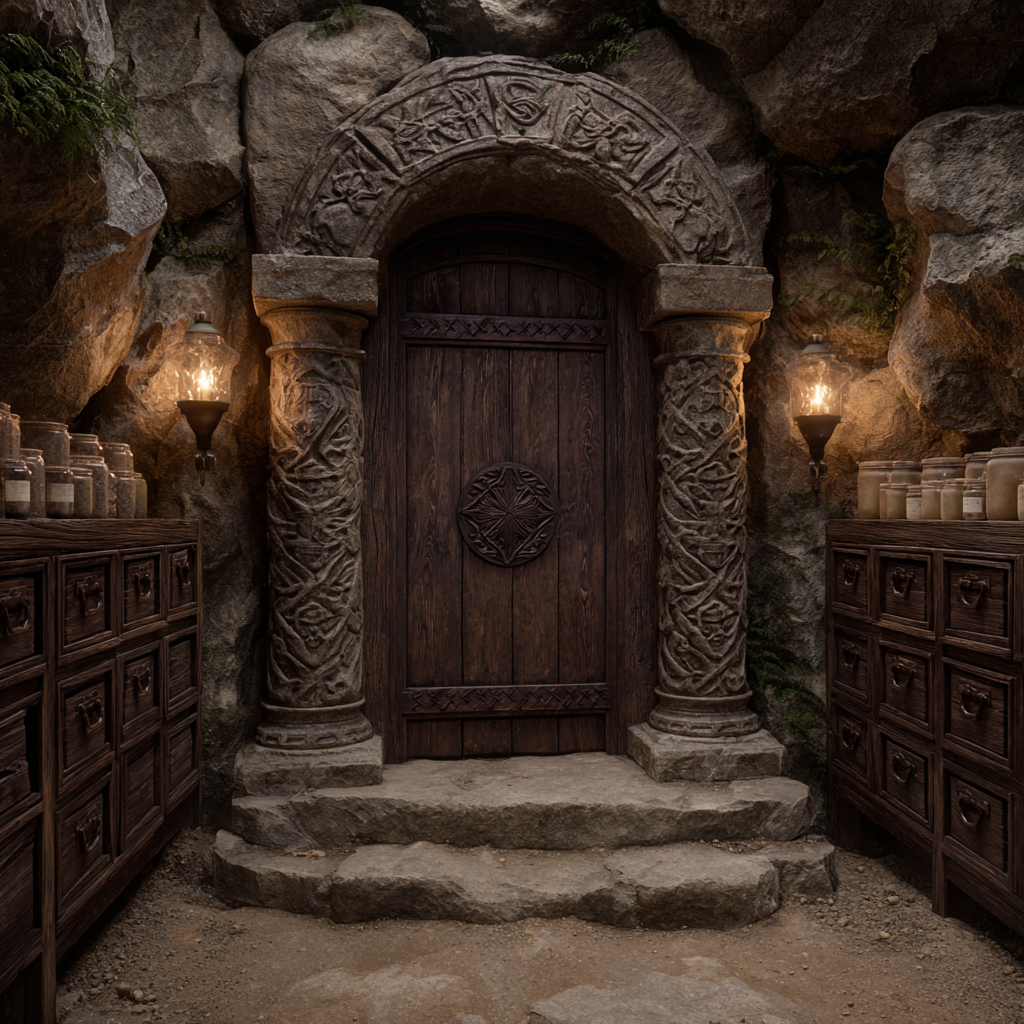
The Seed Vault is carved into solid bedrock beneath a hillside in one of the most stable geological areas of the Elderwood Grove, positioned thirty feet underground where temperature naturally remains cool and constant regardless of surface weather. The entrance is marked by a thick door of ironwood reinforced with steel bands and protected by multiple locks requiring different keys held by Duke Hotaru, the head botanist, and the settlement's council leader, ensuring no single person can access the vault alone and unauthorized entry is virtually impossible. Beyond this outer door, a sloping tunnel descends through carefully excavated stone, its walls lined with smooth granite blocks fitted together without mortar in the ancient style that creates structures capable of lasting millennia. The tunnel features secondary security measures including a heavy portcullis that can be dropped to seal the passage and enchanted alarm wards that trigger if anyone attempts entry without speaking the proper passphrase. At the tunnel's end lies the vault chamber itself, a roughly circular room forty feet in diameter with a twenty-foot ceiling supported by a central stone pillar carved with relief images of plants, trees, and seeds in endless spiraling patterns that celebrate the purpose this sacred space serves.
The vault chamber maintains precise environmental conditions through a combination of natural advantages and careful magical enhancement. The temperature remains locked between 35 and 40 degrees year-round, cold enough to slow seed metabolism and extend viability but not so cold as to damage delicate specimens through freezing. Humidity is controlled through desiccant stones placed throughout the chamber that absorb excess moisture from the air, maintaining the dry conditions essential for long-term seed preservation. The stones are rotated on a monthly schedule, removed to the surface to be dried in sunlight before being returned to service, a simple but reliable system requiring no complex magic to maintain. Air quality is ensured through enchanted vents near the ceiling that draw in fresh air from the surface while filtering out dust, spores, and pests that might contaminate or damage the collection. The chamber is kept in total darkness when not in use, as light can degrade seed viability over time, though lanterns can be lit when botanists need to work within. The floor is paved with smooth flagstones that can be easily swept clean, and drainage channels cut along the walls ensure that if water ever does seep in, it flows away from the storage containers rather than pooling where it could cause damage.
Storage within the vault is organized with meticulous precision using a system developed specifically for this purpose. Seeds are stored in small glass vials sealed with wax-dipped cork stoppers, each vial labeled with the plant's common name, scientific classification, collection location, collection date, and expected viability period. The vials are organized in wooden cabinets that line the chamber walls, each cabinet divided into dozens of small drawers that pull out smoothly on carefully fitted wooden rails. The drawers are organized first by plant type such as trees, shrubs, herbs, grasses, flowers, and food crops, then alphabetically within each category, creating a filing system that allows specific seeds to be located within minutes despite the collection numbering in the thousands. Each drawer is labeled clearly on its face, and a master catalog maintained in waterproof ledgers records every specimen in the collection with detailed notes about the plant's characteristics, growing requirements, known uses, and conservation status. Duplicate samples of the rarest and most valuable species are stored in a secondary chamber accessed through a concealed door, providing redundancy in case the primary collection suffers damage, and ensuring truly irreplaceable genetic material has multiple backups spread across different physical locations within the vault complex.
The collection itself represents years of dedicated effort by botanical specialists who scour the Elderwood Grove and surrounding regions for seeds worth preserving. Every native tree species is represented, from the mighty oaks and maples that dominate the canopy to rare understory species found in only a few locations. Wildflowers both common and endangered fill dozens of drawers, their seeds collected at peak ripeness and processed immediately to ensure maximum viability. Herbs used for medicine, cooking, and crafting are carefully documented along with information about their traditional uses and cultivation requirements. Food crops including grains, vegetables, and fruits are stored in multiple varieties, preserving both common commercial types and rare heirloom cultivars that might otherwise disappear as farming practices change. The vault also maintains samples of plants from other regions acquired through trade with distant settlements, creating a repository of botanical diversity that extends far beyond the local ecosystem. Particularly valuable specimens include seeds from plants believed extinct in the wild, preserved here as a last genetic refuge and a promise that if conditions allow, these species might someday be reintroduced to their native ranges. New additions arrive regularly as collectors return from expeditions, and each acquisition is carefully cleaned, tested for viability, cataloged, and stored according to strict protocols that ensure quality and prevent mistakes.
The vault serves multiple crucial functions beyond simple preservation. In the event of crop failure due to disease, pest infestation, or environmental disaster, the seeds stored here can be used to quickly restart agricultural production using varieties known to be resistant or adaptable. If rare plants are damaged or destroyed by storms, fires, or other calamities, the vault provides genetic material to restore lost populations. Researchers studying plant biology, developing new crop varieties, or investigating historical agricultural practices can access the collection under supervision, using it as a resource for projects that advance botanical knowledge. The vault has already proven its value several times, providing replacement seed stock after an early frost destroyed one growing season's harvest and supplying material to restore a patch of rare wildflowers after a landslide obliterated their natural habitat. The staff maintains ongoing relationships with druidic circles, agricultural colleges, and botanical gardens across Xeres, sharing seeds to create distributed backup collections while receiving specimens in return, creating a network of genetic preservation that extends the vault's impact far beyond the Elderwood Grove. The existence of this facility brings peace of mind to the settlement, knowing that no matter what disasters might strike, the genetic heritage of thousands of plant species remains safe in the cool darkness beneath the hill, waiting patiently for the day they might be needed to restore, rebuild, or simply remember what was.
Benefits
The Seed Vault provides critical insurance against agricultural disasters. Once per year, if any crop failure, blight, or plant disease threatens the settlement, the vault can provide replacement seeds that restore production within one growing cycle. The vault also grants a +2 bonus to Profession (farmer) checks as farmers can access seeds of varieties specifically suited to current conditions or resistant to known local problems. This vault can also act as a safehouse for the seeds of surrounding settlements to protect them from catastrophic losses. The facility generates 7 Prestige, reflecting the settlement's commitment to preserving natural diversity and its foresight in protecting against future catastrophes.