Description
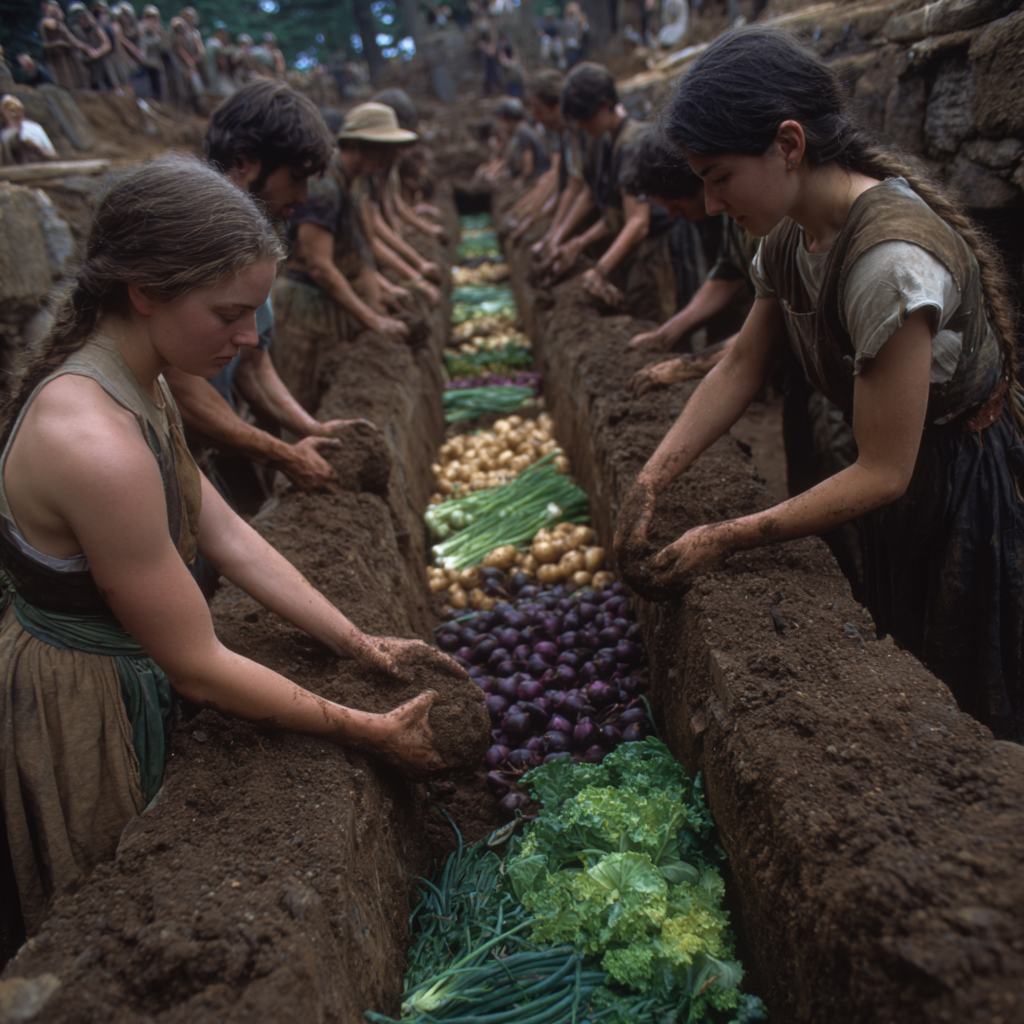
Building upon the established quick-growing varieties, this expansion adds substantial acreage and introduces longer-season crops that provide greater food security. The patches now spread throughout multiple clearings, with specialized beds matched to different root vegetables' specific needs for soil depth, drainage, and sun exposure.
Potatoes are introduced in this phase, hilling up in mounded rows where their white and purple flowers promise abundant tubers forming underground. The accelerated growth means potato harvests every two weeks rather than months, with harvesting parties working together to lift the hills and exclaim over particularly large specimens. Beets join the rotation, their burgundy-veined leaves producing both edible greens and sweet, earthy roots that store exceptionally well.
Onions and garlic now grow in dedicated sections, their pungent leaves standing in neat rows as bulbs form below. These alliums are essential for both cooking and long-term storage, their dried bulbs lasting months when properly cured. Yellow carrots supplement the original orange and purple varieties, while multiple turnip cultivars provide staggered harvests throughout the growing season.
Crop rotation principles are implemented to prevent soil depletion, with heavy feeders like potatoes followed by lighter feeders, maintaining soil health across continuous harvests. Earthworms tunnel through the expanded beds in vast numbers, their castings enriching the soil while their tunnels aerate it perfectly. The gardeners view these humble creatures as partners in cultivation.
Basic storage facilities are constructed, with cool corners of existing structures adapted for root vegetable storage. Sand-filled bins hold carrots and beets, while potatoes rest in slatted wooden bins, and braided onions and garlic hang from hooks. The magic enhances storage quality, keeping roots firm and sweet far longer than normal.
Benefits
The patches produce 400 more pounds of quick-growing root vegetables per month (primarily carrots, radishes, and turnips) valued at 0.5 gold per pound, generating 200 gold per month. These vegetables provide fresh food for the settlement with some surplus for sale. This upgrade generates 1 Prestige.